Why Your Garage Floor Sweats in July
Why Your Garage Floor Sweats in July
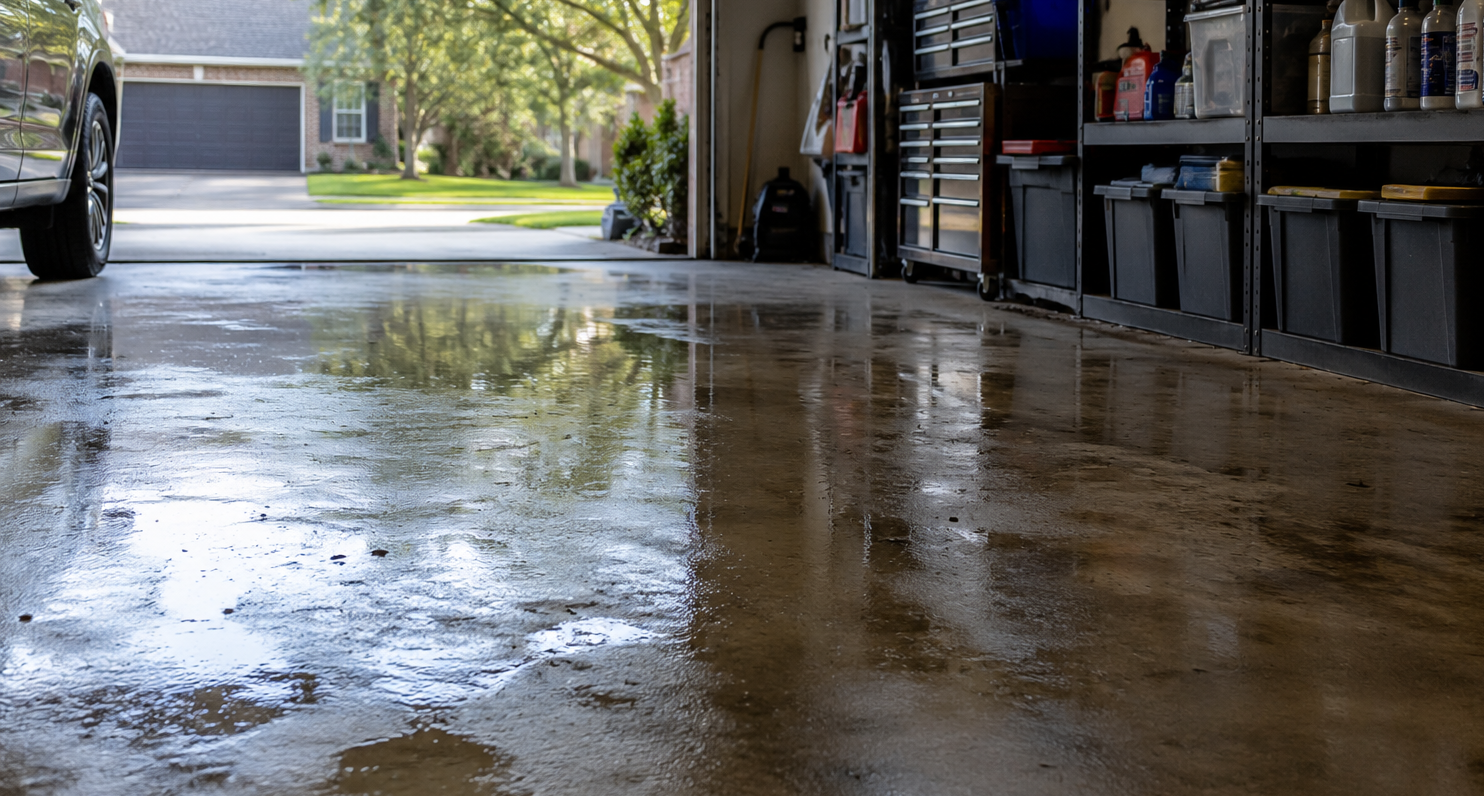
You walk into your garage on a Tuesday morning in July and the floor is wet. Not damp. Wet. You check the water heater. You look at the walls. Nothing is leaking. But the concrete looks like it just rained in there, and now you are wondering if something is wrong with your slab, or if that epoxy coating you were planning to get this summer is now off the table.
Nothing is wrong with your slab. What you are seeing is condensation, and it is one of the most common July surprises for homeowners across Weatherford and Parker County. If you have been searching for concrete coating Weatherford TX and wondering whether summer is even a viable time to move forward, this post will give you a straight answer and help you understand what is actually happening underfoot.
Cool Concrete Plus Humid Air Equals Exactly What You Are Seeing
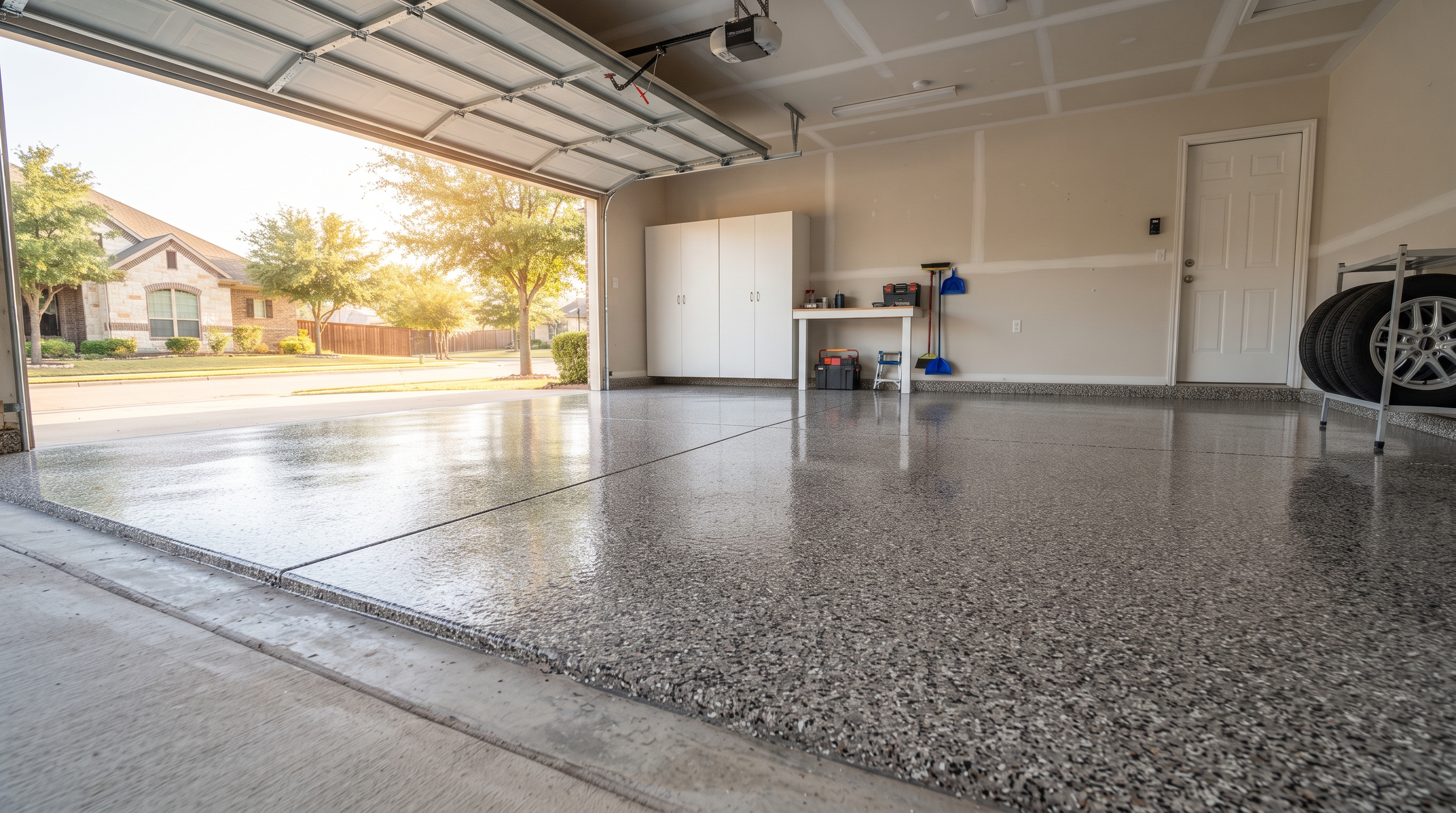
Your garage floor stays cool overnight. Texas summer nights drop into the upper 60s or low 70s, but the concrete slab holds that temperature longer than the air around it. When morning comes and humidity climbs back up, the warm moisture-laden air hits the cooler slab surface and deposits condensation. Same reason a cold glass of iced tea sweats on your porch table.
This is not a slab leak. It is not a drainage problem. It is basic physics. The concrete is collecting moisture from above, not absorbing water from below. That distinction matters enormously when you are trying to decide what to do next.
The sweating is most common in garages that face east or have good overnight airflow. The slab cools efficiently, and then July morning humidity does the rest. By mid-morning, once the slab warms to air temperature, it stops entirely.
The Moisture That Actually Destroys a Coating Lives Inside the Slab
Here is the part that surprises most homeowners: visible surface condensation is not the primary moisture threat to an epoxy coating. It is a scheduling inconvenience, not a structural problem. The moisture that causes coatings to delaminate, bubble, and peel comes from inside the slab.
Concrete is porous. Groundwater vapor migrates upward through the slab constantly, a process called vapor transmission. When that vapor pushes against a freshly applied coating from underneath, it breaks the bond. You get bubbles, lifting edges, and eventually a floor that peels in sheets.
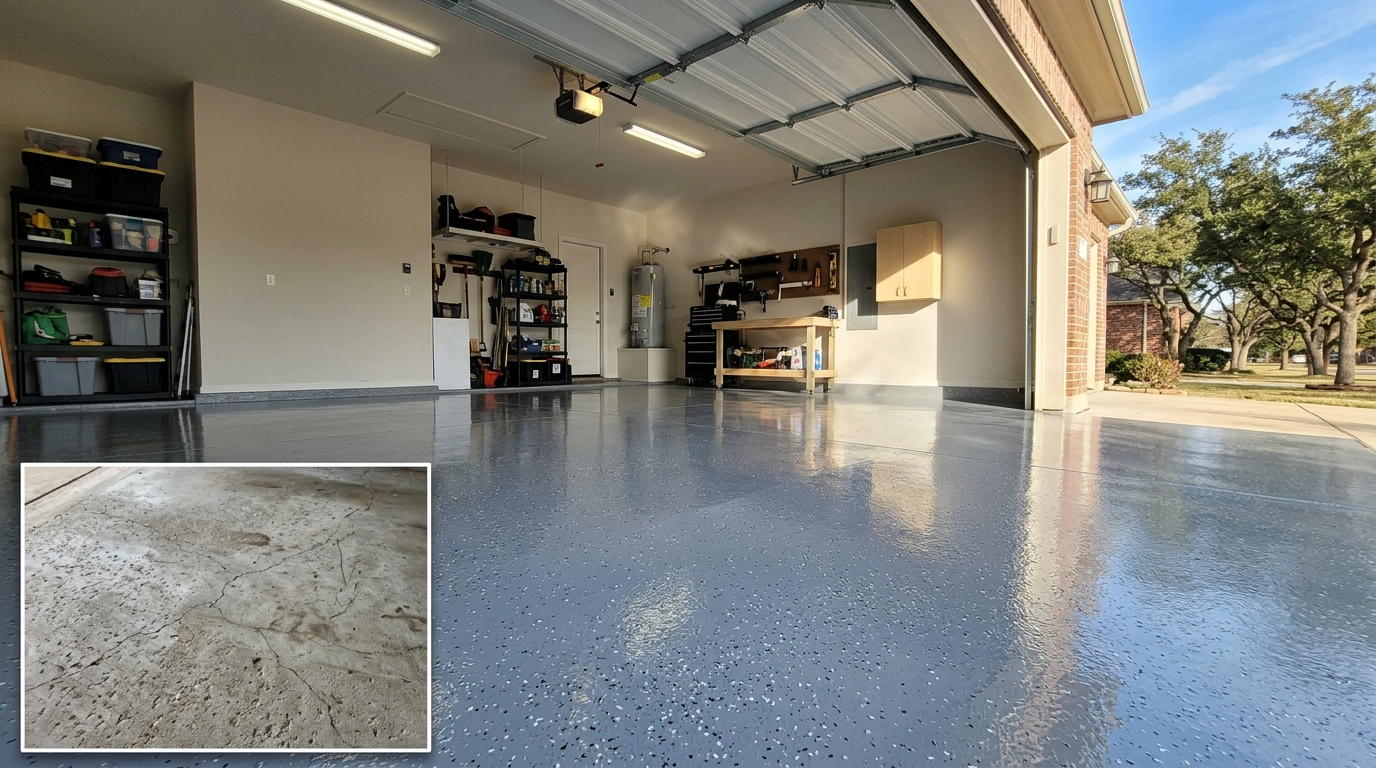
This is why surface preparation is the single most critical step in any coating installation. Mechanical diamond grinding opens the concrete surface, removes contaminants, and creates a profile that allows the coating to bond at a molecular level. It also reveals existing cracks or problem areas before anything gets applied. No amount of humidity management on application day compensates for skipping this step. Every installation NES Flooring performs starts with diamond grinding for exactly this reason.
Summer Installs Work. The Window Just Has to Be Right.
July is not an automatic disqualifier for coating work in Weatherford. The real constraints are surface temperature and dew point at application time. Epoxy requires the concrete surface temperature to be at least 5 degrees above the dew point to cure correctly. Close that margin and you trap moisture under the coating before it fully hardens.
We regularly schedule projects through the summer by working in the morning window, before afternoon heat drives surface temperatures too high and before the daily humidity peak arrives. The contractors who do not understand this are the reason homeowners end up with fish-eye bubbles after a July install.
The practical takeaway: summer coating work is viable, but only with someone who monitors conditions on the day and does not cut corners when the window is tight.
What Happens When You Coat Over a Floor That Sweated This Morning
Do not do it. If your floor has visible surface moisture, that moisture is sitting in the concrete pores. Apply epoxy over it and you seal water into the system. The coating looks fine for a few weeks. Then the bubbles start. Then the edges lift. Then you have a floor that failed, a contractor who blames the slab, and no warranty to lean on.
The fix is simple: wait. In most Weatherford garages, the slab reaches ambient air temperature by mid-morning. A moisture meter check before any coating goes down takes two minutes and removes all the guesswork. Any professional worth hiring does this without being asked.
What Weatherford Homeowners Ask Before Scheduling a Summer Install
My floor sweats every morning in July. Does that mean coating it is off the table?
No. Daily surface condensation from summer humidity is not the same as chronic vapor transmission from below, and that distinction is what actually determines whether coating is viable. A moisture meter reading and a proper pre-install assessment tell the real story. The sweating floor is a weather condition, not a diagnosis. In most cases it has no bearing on whether the project can move forward.
I got a quote from another contractor and it was a lot cheaper. What am I missing?
Usually prep. Diamond grinding takes time and equipment. Contractors who skip it and acid-etch instead, or skip surface preparation entirely, can move faster and quote lower. The problem shows up six to eighteen months later when the coating starts lifting. That cheaper floor ends up costing more once you factor in removal and a reinstall. Ask any contractor you talk to how they prepare the surface and what equipment they use. The answer tells you everything you need to know.
Can I get epoxy installed in summer, or should I wait until fall?
Summer installs happen regularly across Parker County. The key is timing the application to the right window: concrete surface temperature, dew point, and ambient conditions all factor in. Fall is more forgiving, but if your concrete is sound and you are ready now, summer is workable with a crew that knows what they are doing.
What is the difference between a solid color coating and a flake system for a garage that sees heat and oil?
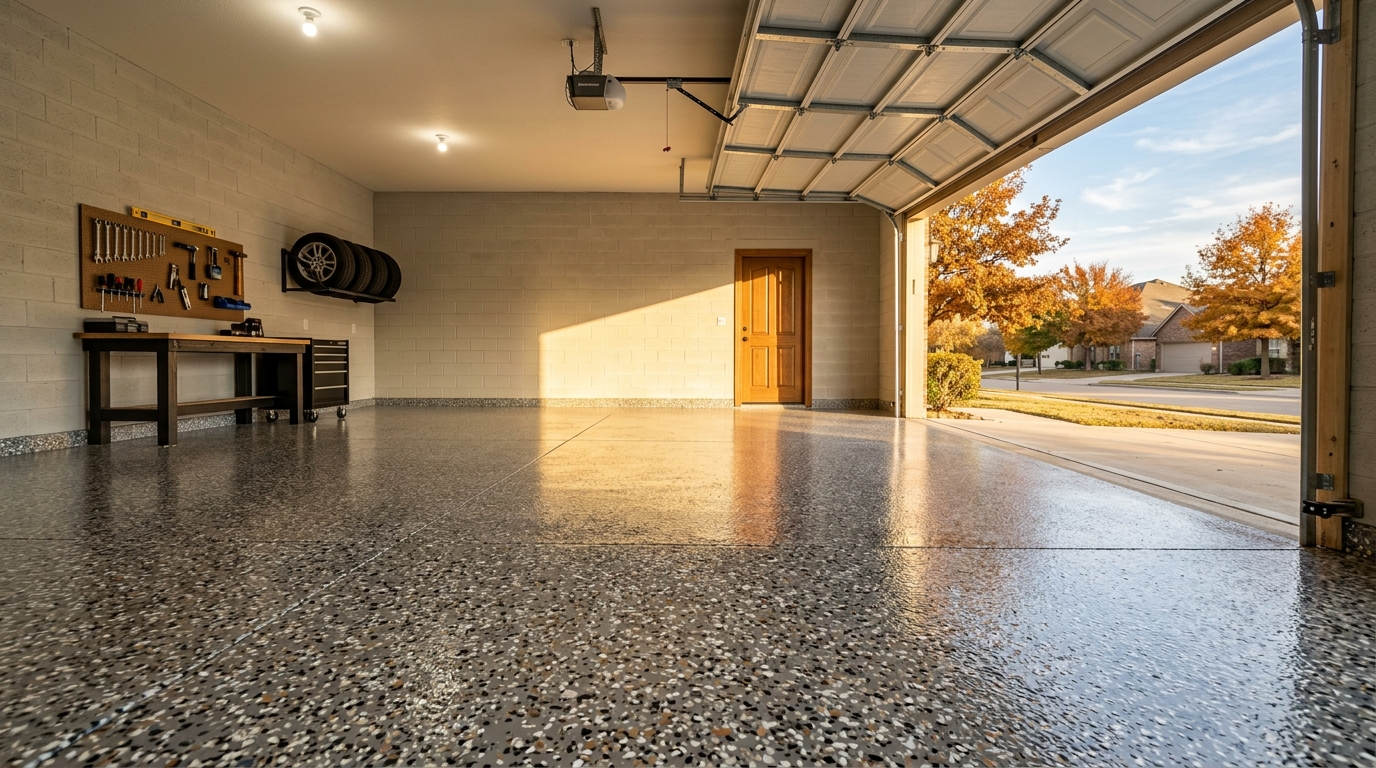
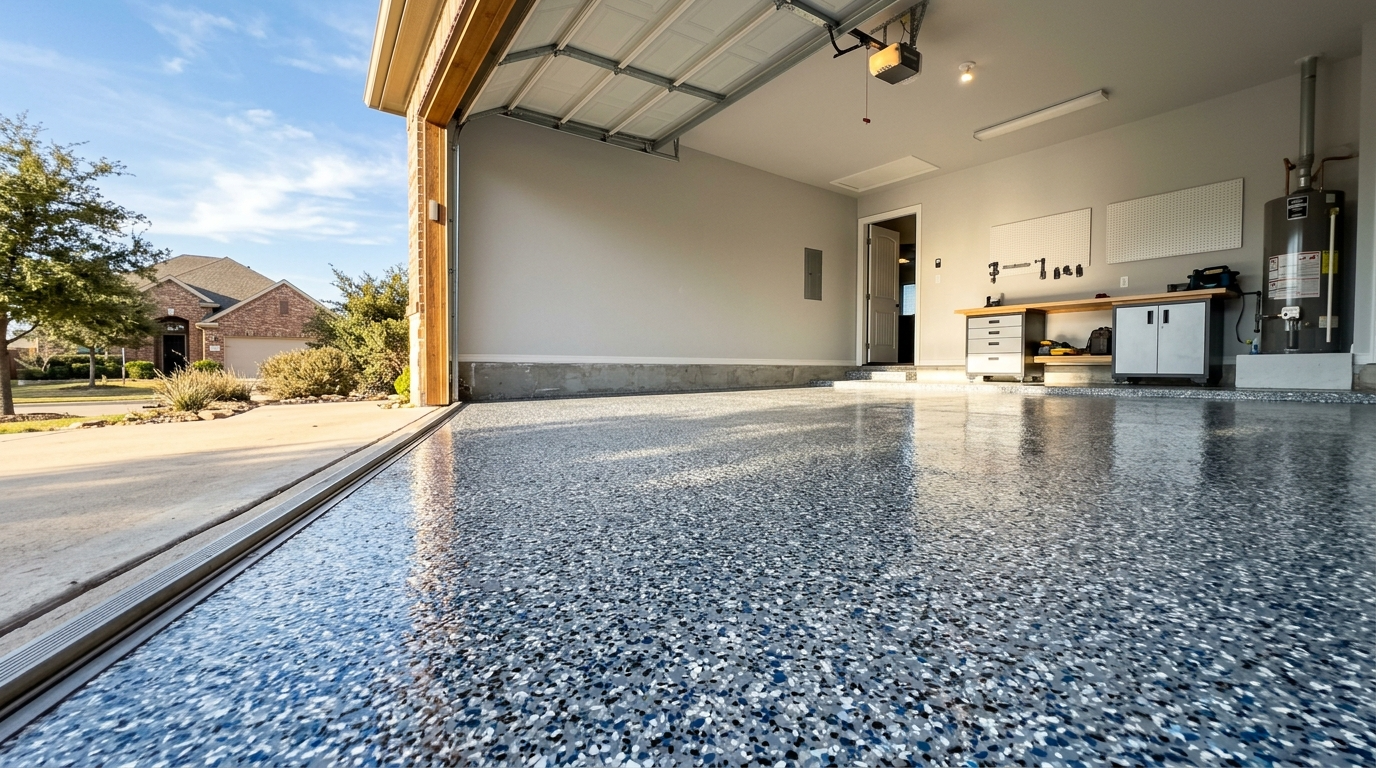
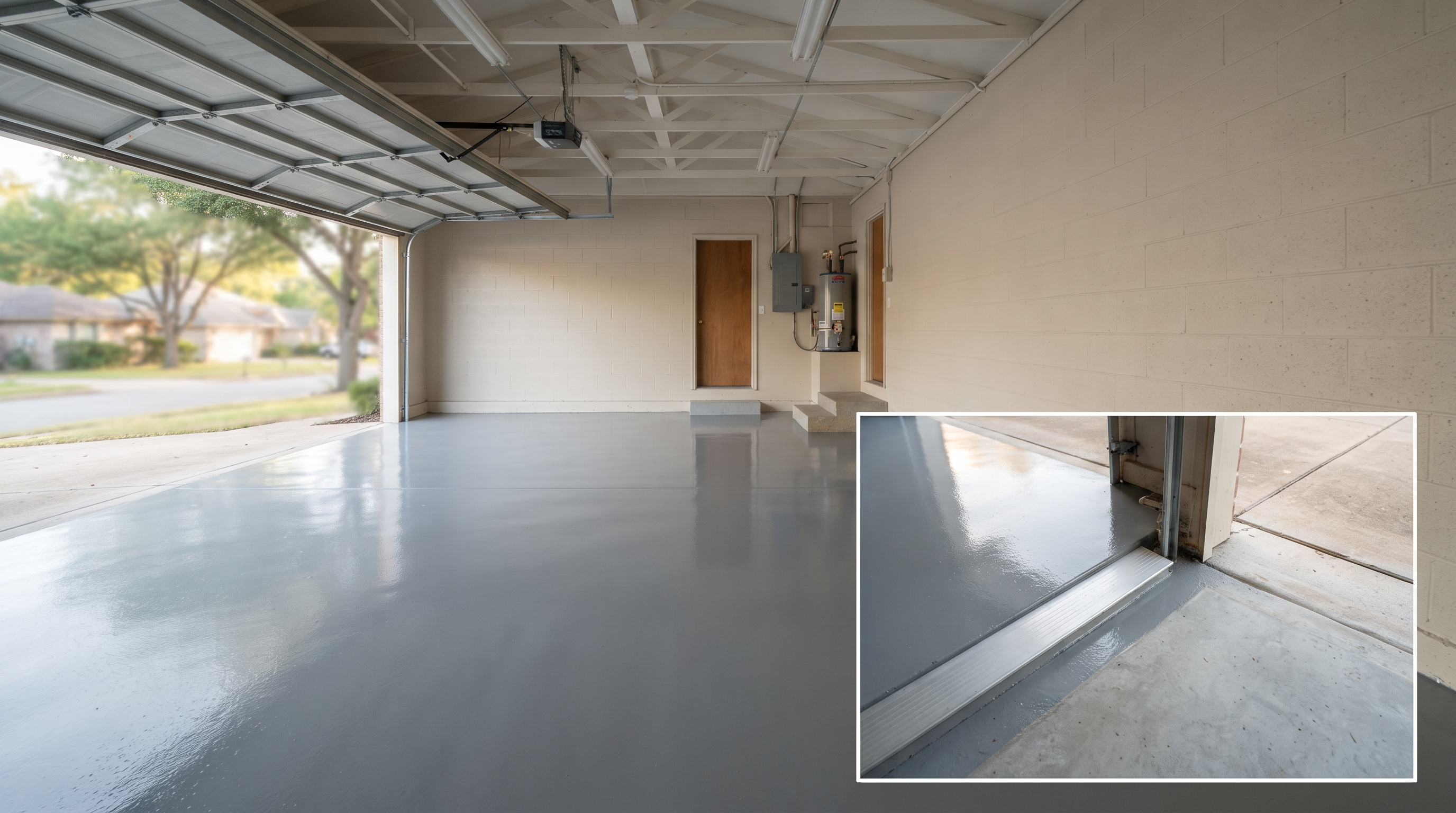
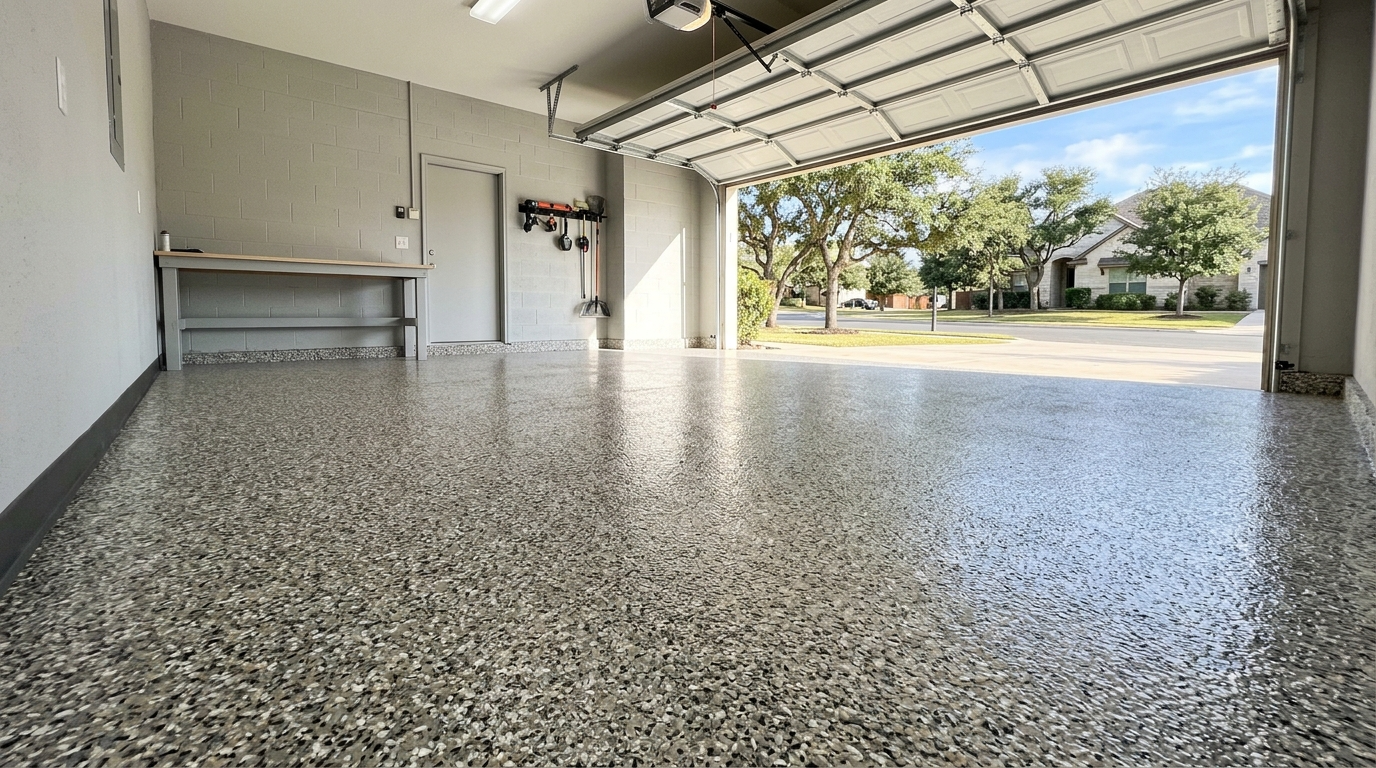
Both protect against oil, chemicals, and daily wear. Flake epoxy systems add a broadcast layer of vinyl chips between the base coat and topcoat, which provides texture, slip resistance, and a decorative finish that hides minor surface imperfections well. Solid color coatings deliver a clean, seamless look and tend to be simpler to apply and maintain. The right choice comes down to how the floor gets used and what you want it to look like. We walk through both options in every consultation.
Does NES Flooring use subcontractors?
No. The same crew that assesses your floor applies the coating. No hand-offs, no third-party crews showing up without context. You get the same people from the first visit to the final topcoat.
Get a Straight Answer About Your Slab Before Summer Gets Away From You
NES Flooring serves Weatherford, Aledo, Fort Worth, Springtown, Granbury, and the surrounding Parker County area. Every installation starts with mechanical diamond grinding, uses industrial-grade materials, and backs up with a 10-year workmanship warranty. You can walk on the floor within 12 hours and drive on it within 72.
If your garage floor is sweating every July morning and you want to know whether coating it this summer makes sense for your specific slab, call 817-668-5051 or request a free consultation. We will check moisture conditions, assess your concrete, and give you a transparent quote with no pressure and no surprises.
Ready to work with NES Flooring?
Let's connect! We’re here to help.
Send us a message and we’ll be in touch.
Or give us a call today at 817-668-5051
More from NES Flooring: