How Facility Downtime Factors Into Flooring Decisions
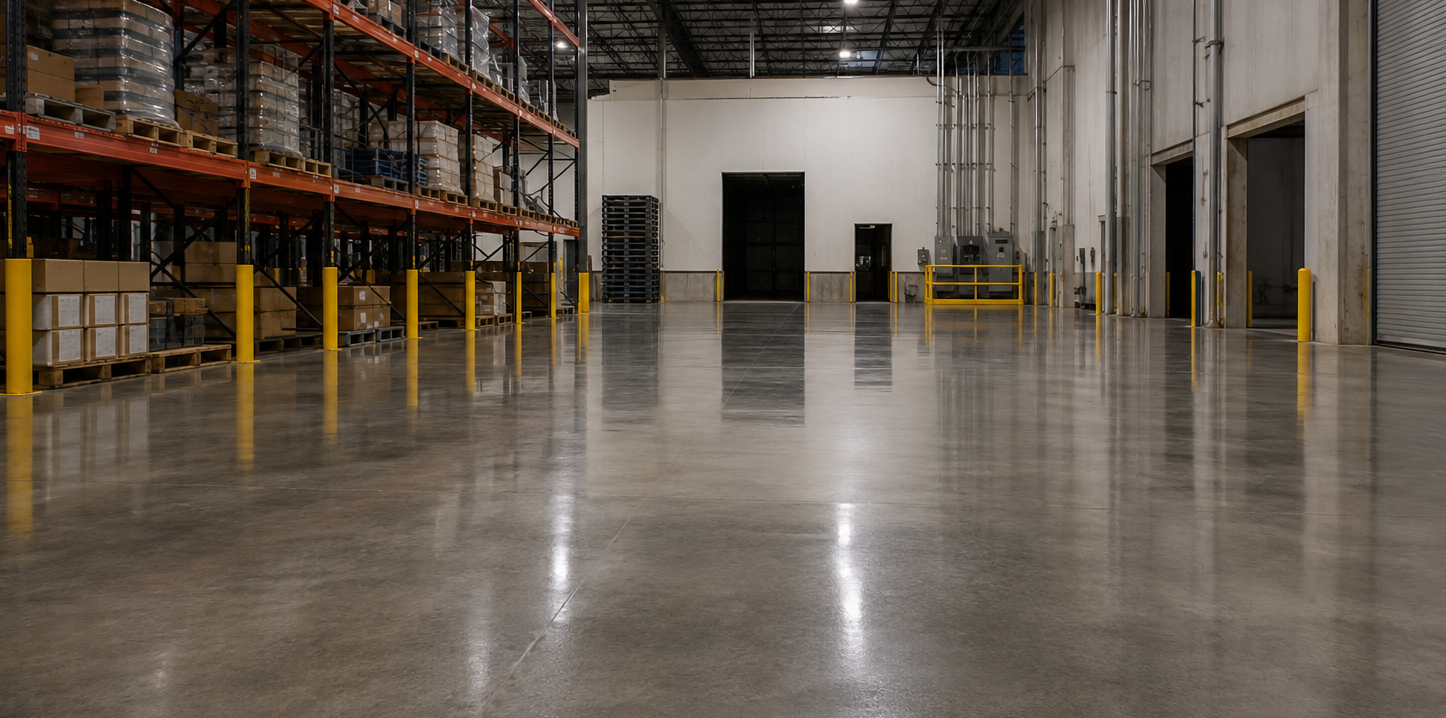
Facility downtime should be part of every commercial epoxy flooring decision. The installation cost matters, but so does the time spent moving equipment, closing work areas, changing production schedules, and waiting for the floor to return to service.
For warehouses, manufacturing plants, automotive facilities, and other active Texas businesses, the right flooring system should reduce disruption without sacrificing durability.
Downtime Affects More Than the Flooring Budget
When part of a facility closes, work often slows beyond the immediate project area. Employees may need new routes, equipment may need temporary storage, and shipping or production schedules may need to change.
Common downtime costs include:
- Reduced production
- Equipment and inventory relocation
- Overtime or schedule changes
- Delayed shipping or receiving
- Future closures caused by coating failure
These costs can make a low bid more expensive than expected. The better comparison is total project impact, not price per square foot alone.
Surface Preparation Helps Prevent Future Shutdowns
Epoxy flooring depends on strong adhesion to the concrete. Dirt, oil, moisture, old coatings, cracks, and surface damage can all weaken that bond.
Rushing preparation may shorten the first shutdown, but it can lead to peeling, bubbling, or separation later. Repairing a failed floor usually requires another closure, more equipment movement, and additional labor.
A professional contractor should inspect the slab before confirming the schedule. This helps identify repairs and preparation needs early, reducing the chance of unexpected delays.
Faster Installation Is Not Always Better
A fast return to service can be valuable, but cure time should not be the only factor in the decision.
The flooring system must match the actual use of the facility. A warehouse may need resistance to forklift traffic and pallet movement. A manufacturing plant may face chemicals, oils, abrasion, and dropped tools. Automotive spaces may deal with hot tires, fluids, and frequent vehicle traffic.
A quickly installed system that is not suited to those conditions may wear out early. That creates more downtime over the life of the floor.
The best system balances installation speed, durability, and expected service conditions.
Phased Installation Can Keep Work Moving
Some facilities can avoid a full shutdown by dividing the project into smaller sections. A warehouse may complete one aisle at a time. An automotive facility may rotate service bays. A production space may schedule work around specific departments.
Phasing can reduce disruption, but it must be planned carefully. Equipment should be moved before each stage begins, temporary travel paths should be clear, and the crew should have uninterrupted access to the work area.
Poorly planned phases can extend the project and create more confusion than a shorter controlled closure. The facility and contractor should agree on the sequence before installation begins.
Return-to-Service Times Must Be Clear
The floor may not be ready for full use as soon as coating application ends.
Light foot traffic may be allowed before forklifts, vehicles, shelving, or machinery. Chemical exposure and normal cleaning may also require additional cure time.
Facility managers should know exactly when each type of activity can resume. Bringing heavy equipment back too soon can damage the coating before it reaches the required strength.
Temperature, humidity, ventilation, and slab conditions can also affect curing. The schedule should reflect the real facility environment, not just ideal product specifications.
The Right System Reduces Long-Term Disruption
A durable epoxy floor can protect concrete, improve cleanability, and reduce damage from traffic, spills, and abrasion. These benefits can lower the need for future repairs.
However, durability depends on proper system selection. A light-duty coating may not perform well in a high-traffic industrial area. A floor exposed to oils or chemicals may need different protection than a dry storage area.
The contractor should review traffic levels, impact risks, chemical exposure, cleaning methods, and operating conditions before recommending a system.
Choosing the right floor at the start can reduce repair frequency and help avoid repeated closures.
Professional Planning Protects Facility Operations
A commercial epoxy flooring project should begin with more than a measurement of the space.
The contractor should inspect the concrete, review how the facility operates, and identify which areas are most important to keep active. Equipment movement, employee access, installation phases, cure times, and return-to-service requirements should all be discussed before work begins.
This planning gives facility managers a more accurate picture of the total project impact. It also makes it easier to compare proposals based on preparation, materials, scheduling, and expected performance.
The lowest price does not always provide the lowest total cost. A properly planned system can reduce both immediate disruption and future repair downtime.
Questions Facility Managers Should Ask
Before approving a project, facility managers should ask how the concrete will be prepared, how long each area will be unavailable, and when normal traffic can return.
They should also ask whether the work can be completed in phases, what equipment must be moved, and how hidden slab damage could affect the schedule.
Clear answers make it easier to coordinate staffing, production, deliveries, and equipment relocation. They also reduce the risk of schedule surprises once installation begins.
Plan Commercial Epoxy Flooring With NES Flooring
Facility downtime should be treated as part of the flooring investment. A well-planned installation can limit disruption while still providing the preparation and cure time needed for long-term performance.
NES Flooring installs commercial and industrial epoxy flooring systems for Texas facilities. Each project is planned around the condition of the concrete, operating schedule, traffic demands, and long-term needs of the space.
Contact NES Flooring
to discuss an epoxy flooring plan that protects your facility and keeps unnecessary downtime under control.
Ready to work with NES Flooring?
Let's connect! We’re here to help.
Send us a message and we’ll be in touch.
Or give us a call today at 817-668-5051
More from NES Flooring: