What Separates a Professional Epoxy System from a Budget Install
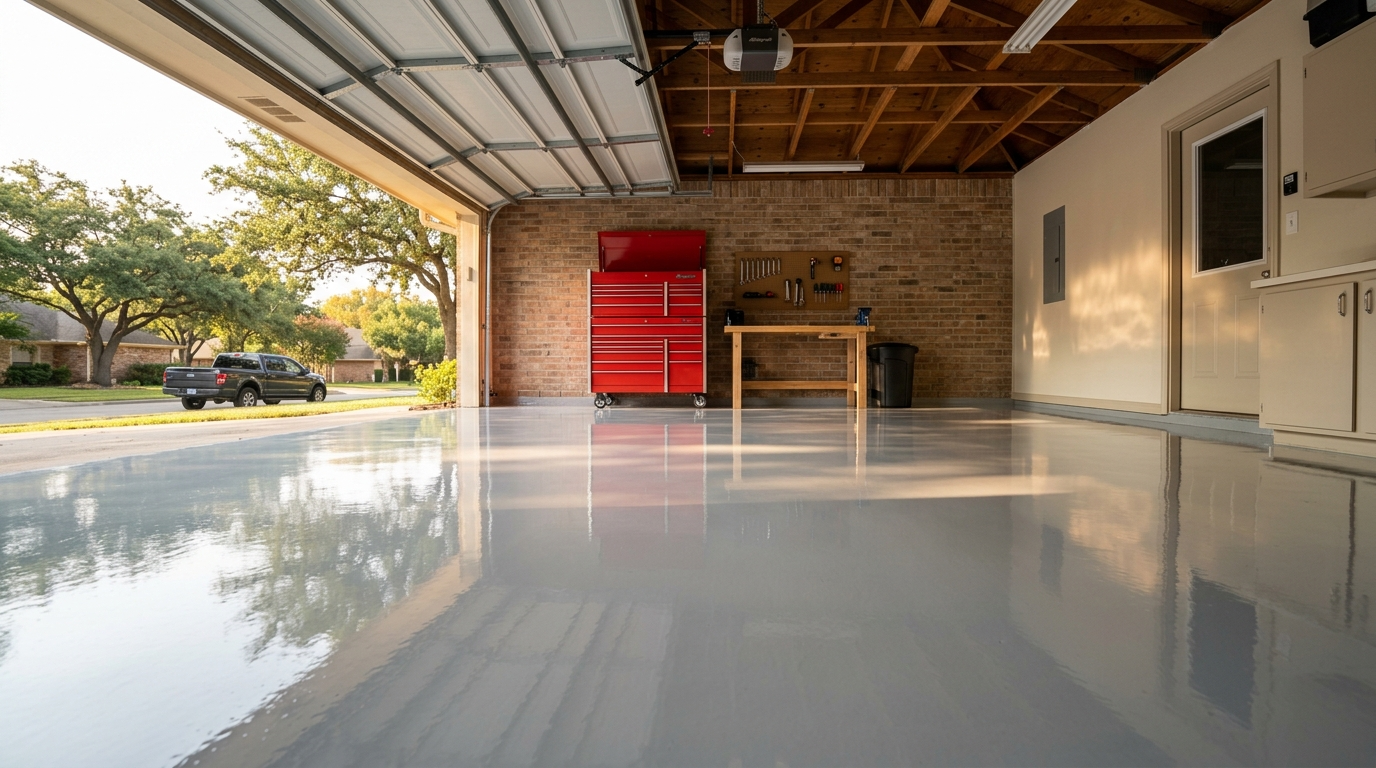
The short answer: A professional epoxy flooring system is engineered for durability, surface bonding, and long-term performance, while a budget install typically focuses on speed and low cost. The difference lies in surface preparation, materials used, installation technique, and the overall system design. When epoxy is installed properly, it becomes a resilient, seamless flooring system that can withstand years of use. When corners are cut, the coating often fails prematurely.
Why the quality of an epoxy flooring system matters
Epoxy floors are commonly chosen for garages, workshops, commercial spaces, and industrial environments because they provide durability, chemical resistance, and easy maintenance. However, the longevity of the floor depends heavily on how the system is installed.
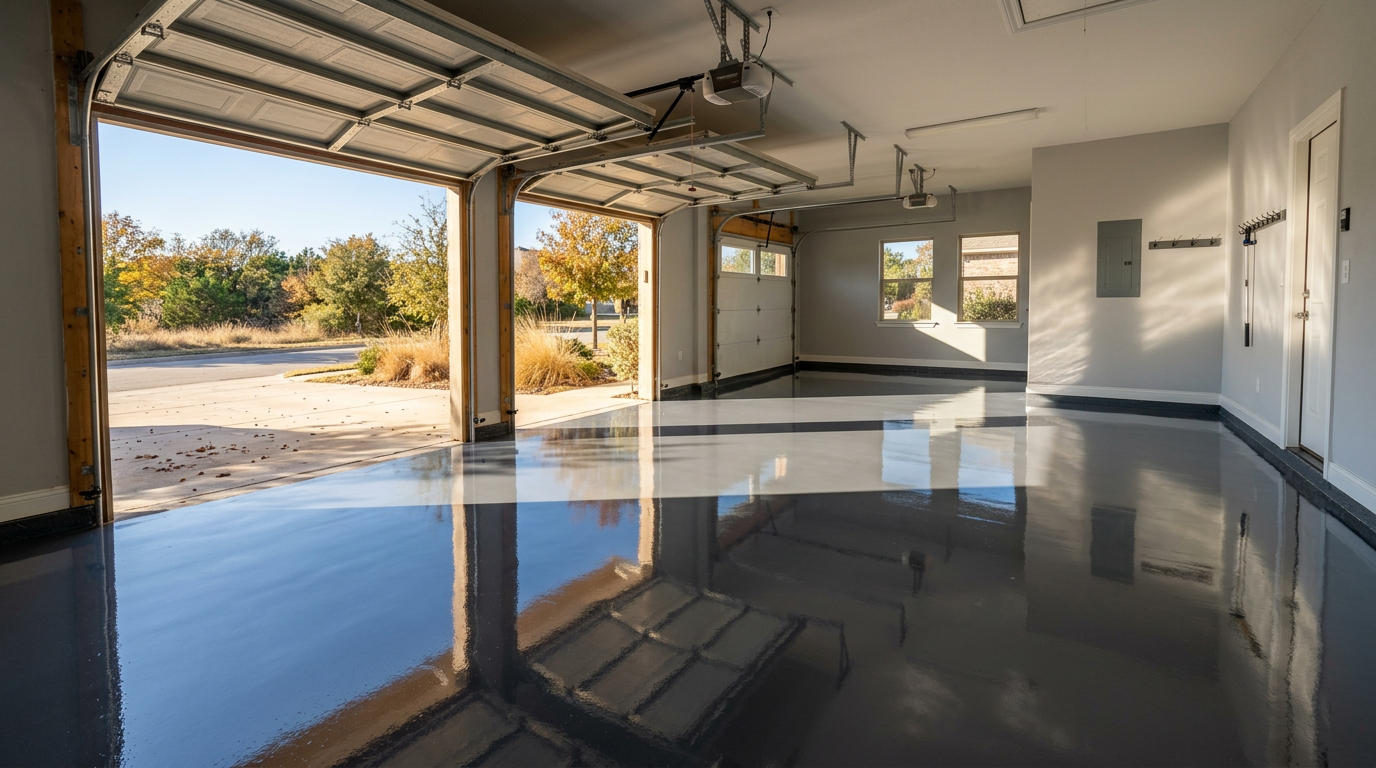
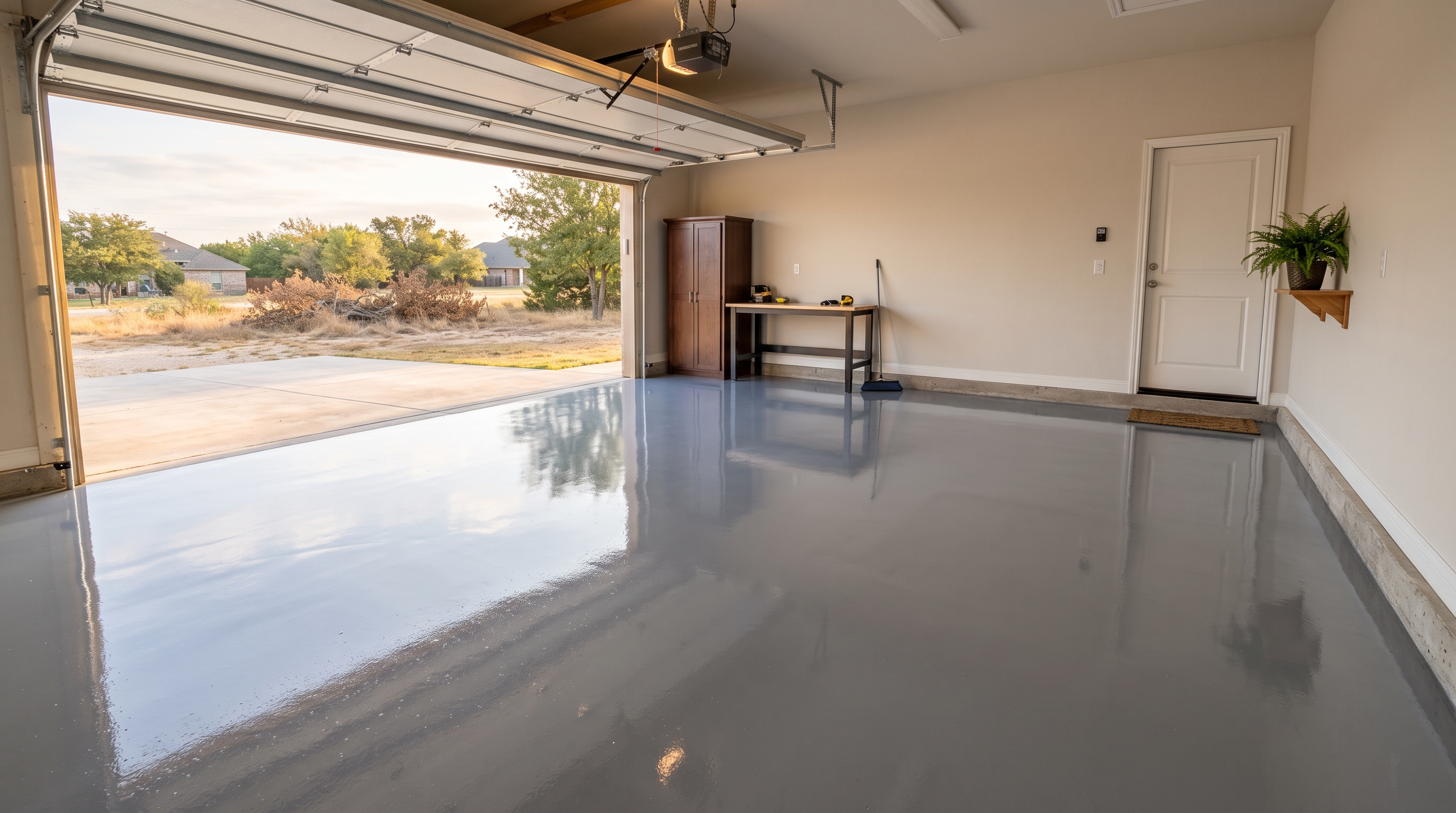
A professionally installed epoxy floor is not just a coating rolled onto concrete. It is a multi-layer flooring system designed to bond deeply with the substrate and protect it from wear, moisture, and impact.
Budget installations often skip essential steps that allow epoxy to perform properly. As a result, homeowners may experience peeling, bubbling, hot tire pickup, or uneven surfaces within a short period of time.
The difference between the two approaches becomes clear within the first few years of use.
The biggest differences between professional and budget epoxy installs
Many epoxy flooring failures occur not because epoxy itself is weak, but because the installation process was rushed or incomplete.
Proper installation requires both the right materials and the right preparation methods.
Key elements that typically separate a professional system from a low-cost install include:
- Mechanical concrete grinding to properly prepare the surface
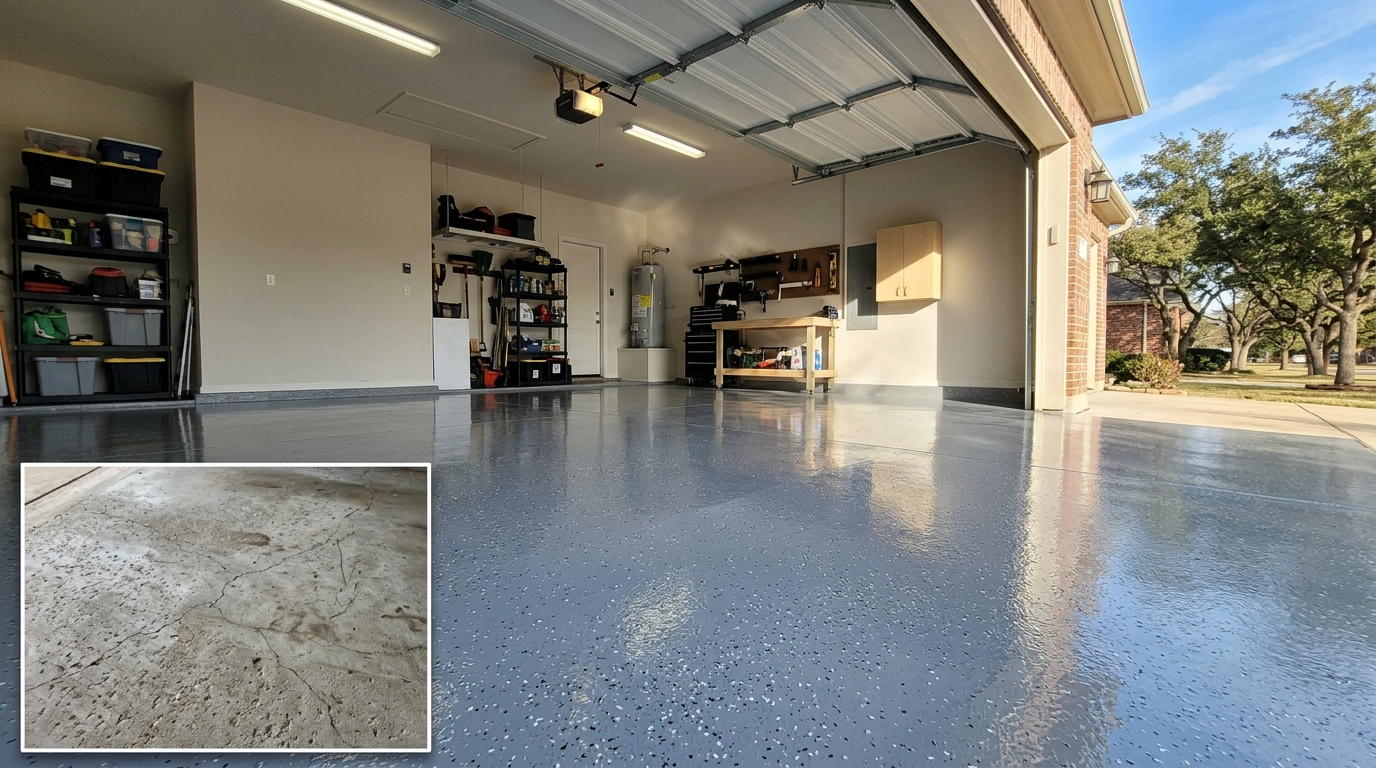
- Moisture testing and crack repair before coatings are applied
- Multi-layer epoxy and protective topcoat systems
- Controlled installation conditions and proper curing time
When these steps are performed correctly, the epoxy bonds directly with the concrete surface and forms a strong, long-lasting finish.
Budget installers often skip or simplify these steps to reduce labor time or material costs, which leads to weaker adhesion and shorter lifespan.
Common shortcuts seen in budget epoxy installations
Low-cost epoxy installations often rely on simplified processes that save time but reduce durability. These shortcuts are rarely visible immediately after installation, but they become apparent as the floor begins to wear.
Some of the most common shortcuts include:
- Acid etching instead of professional concrete grinding
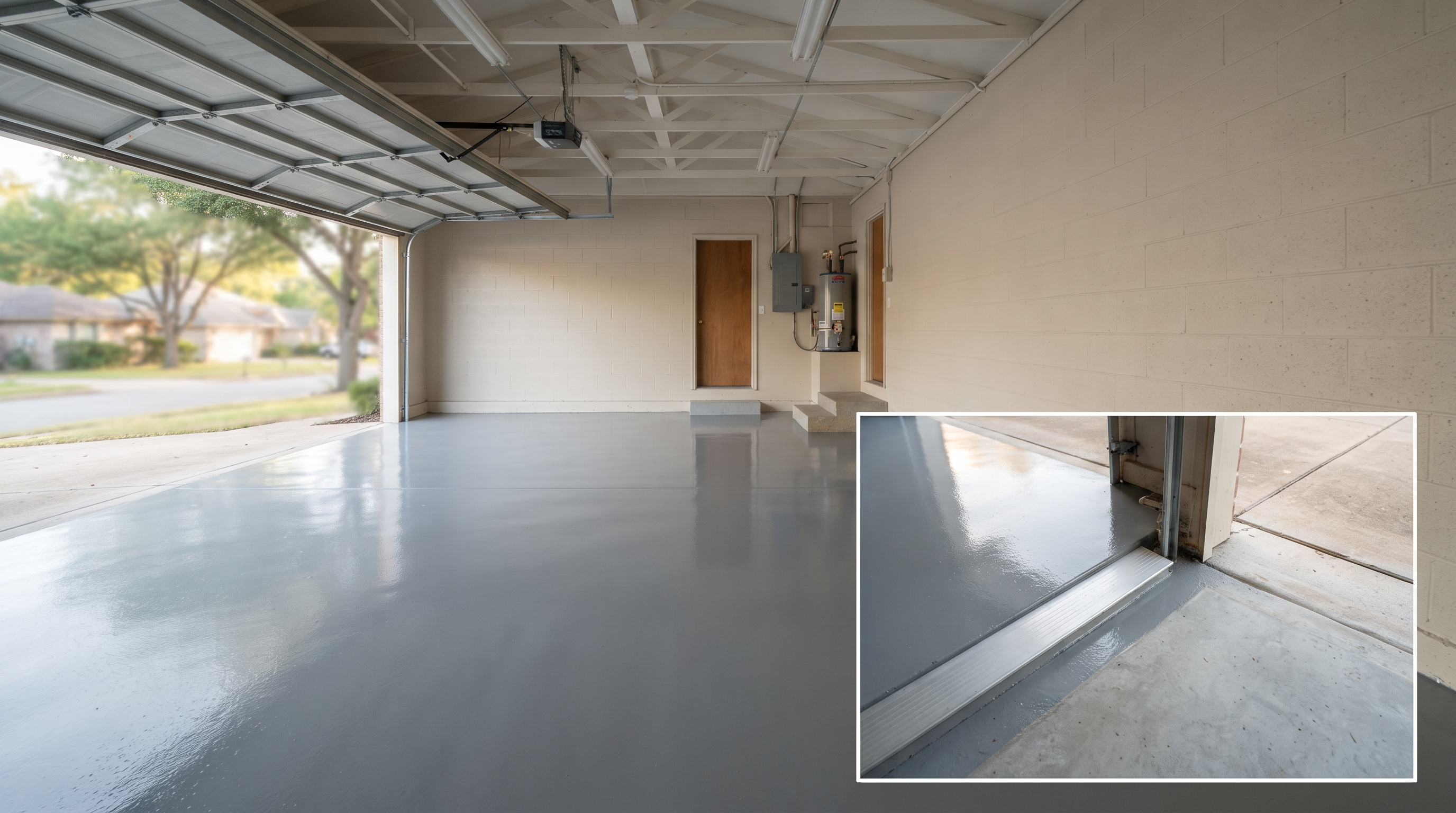
- Thin single-coat applications instead of full epoxy systems
- Low-grade water-based epoxy products
- Little or no protective topcoat layer
These shortcuts may allow a contractor to offer a lower price, but they significantly increase the risk of early coating failure.
Once epoxy begins peeling or separating from the concrete, the only real solution is often complete removal and reinstallation.
Who benefits most from a professionally installed epoxy system
Property owners who expect long-term performance from their floors benefit the most from professional epoxy installation. This includes homeowners with garages that see heavy vehicle use as well as businesses that rely on durable flooring.
Workshops, automotive garages, and commercial facilities often place significant stress on concrete floors. Tire friction, dropped tools, equipment weight, and chemical spills can quickly damage standard coatings.
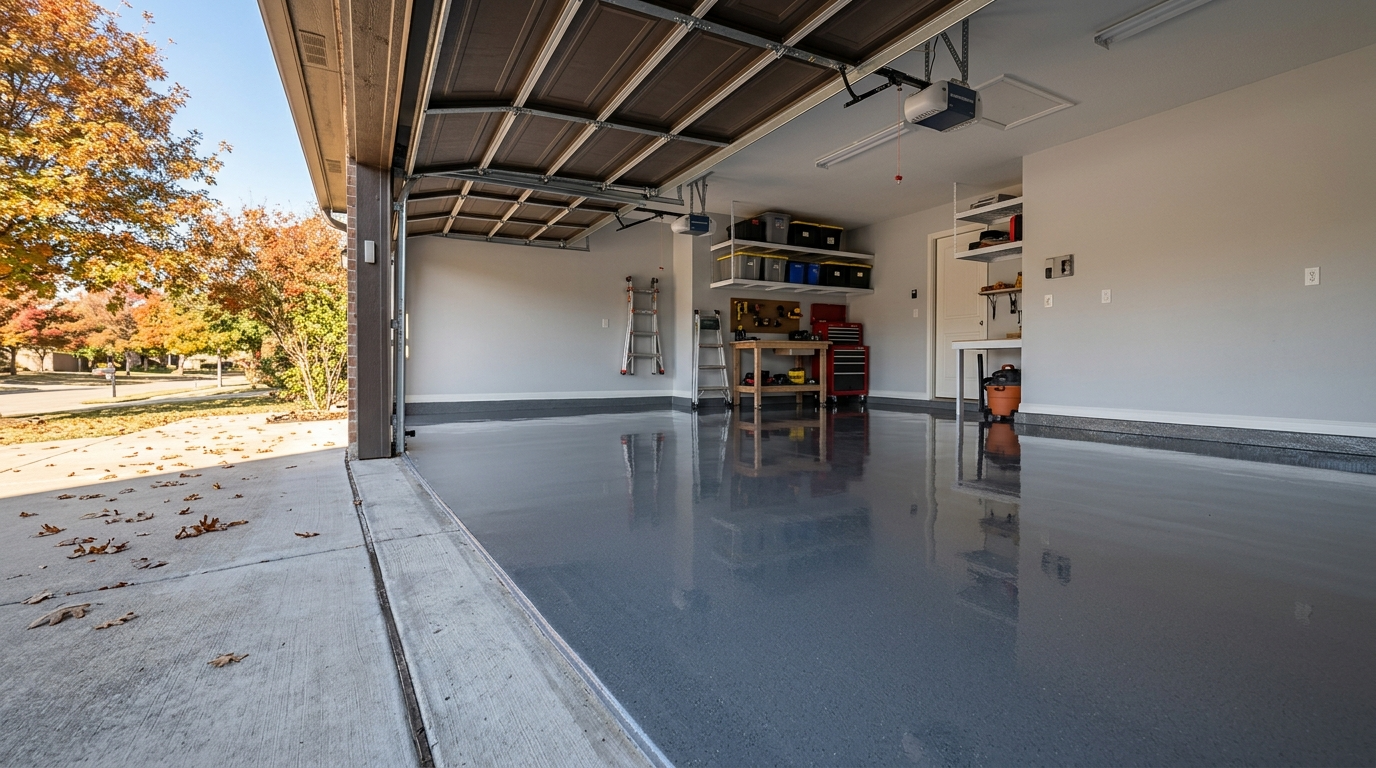
A properly installed epoxy system creates a protective layer that resists abrasion, oil penetration, and daily wear.
Professional systems are also easier to clean and maintain because the seamless surface prevents dirt, dust, and liquids from settling into the concrete.
Why surface preparation is the most important step
Among all factors that influence epoxy flooring performance, surface preparation is the most critical.
Concrete is naturally porous and often contains contaminants such as oils, sealers, or curing compounds. If these materials remain on the surface, epoxy cannot bond properly.
Professional installers use industrial grinding equipment to remove the top layer of concrete and create the correct surface profile for epoxy adhesion. This process ensures the coating penetrates and locks into the concrete surface.
Without this step, epoxy may simply sit on top of the slab rather than bonding to it, which greatly increases the chance of peeling.
How professional epoxy systems are built for long-term durability
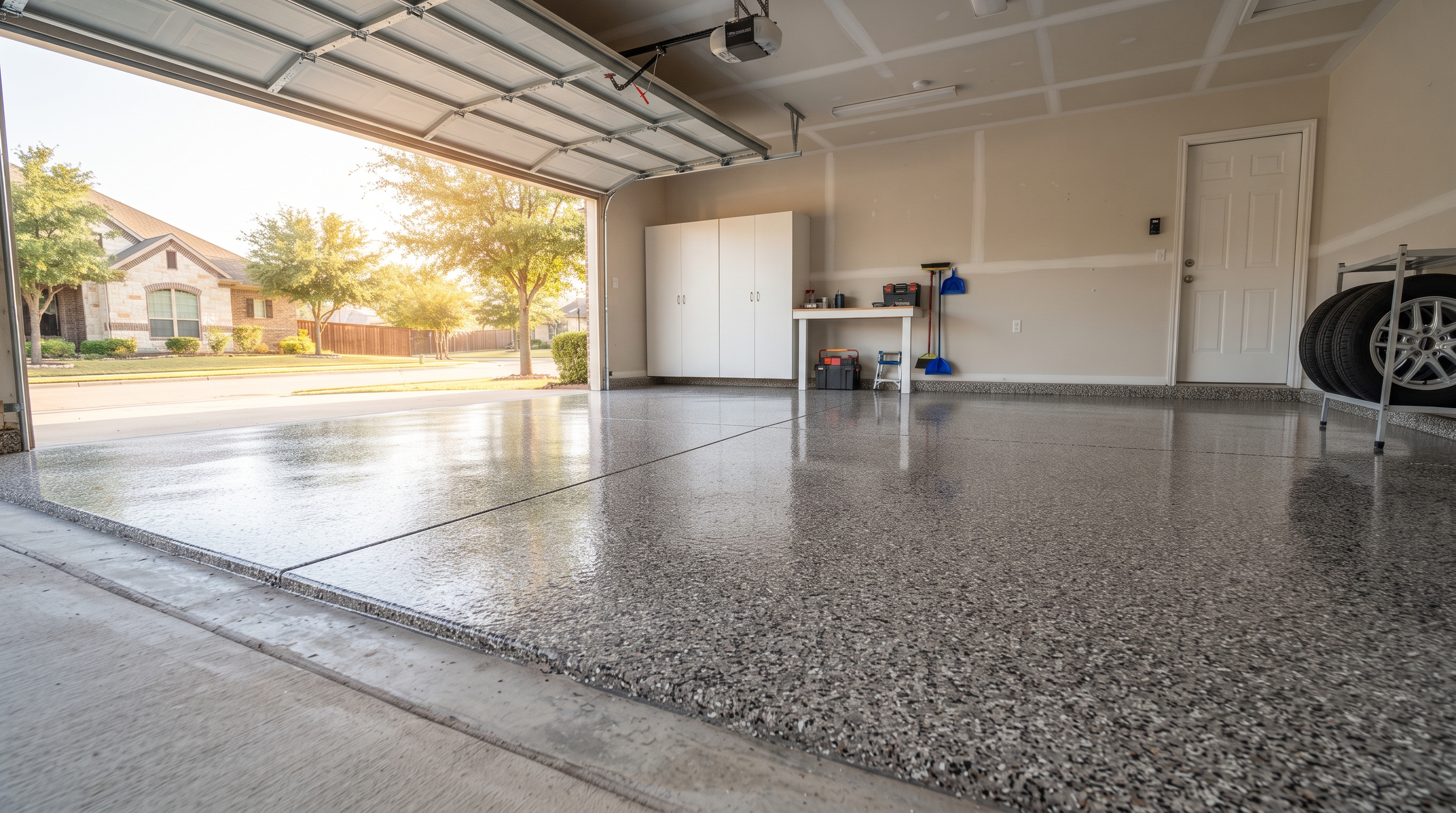
A professional epoxy installation typically involves multiple layers designed to work together as a complete flooring system. Each layer serves a specific purpose in protecting the concrete and enhancing the final appearance.
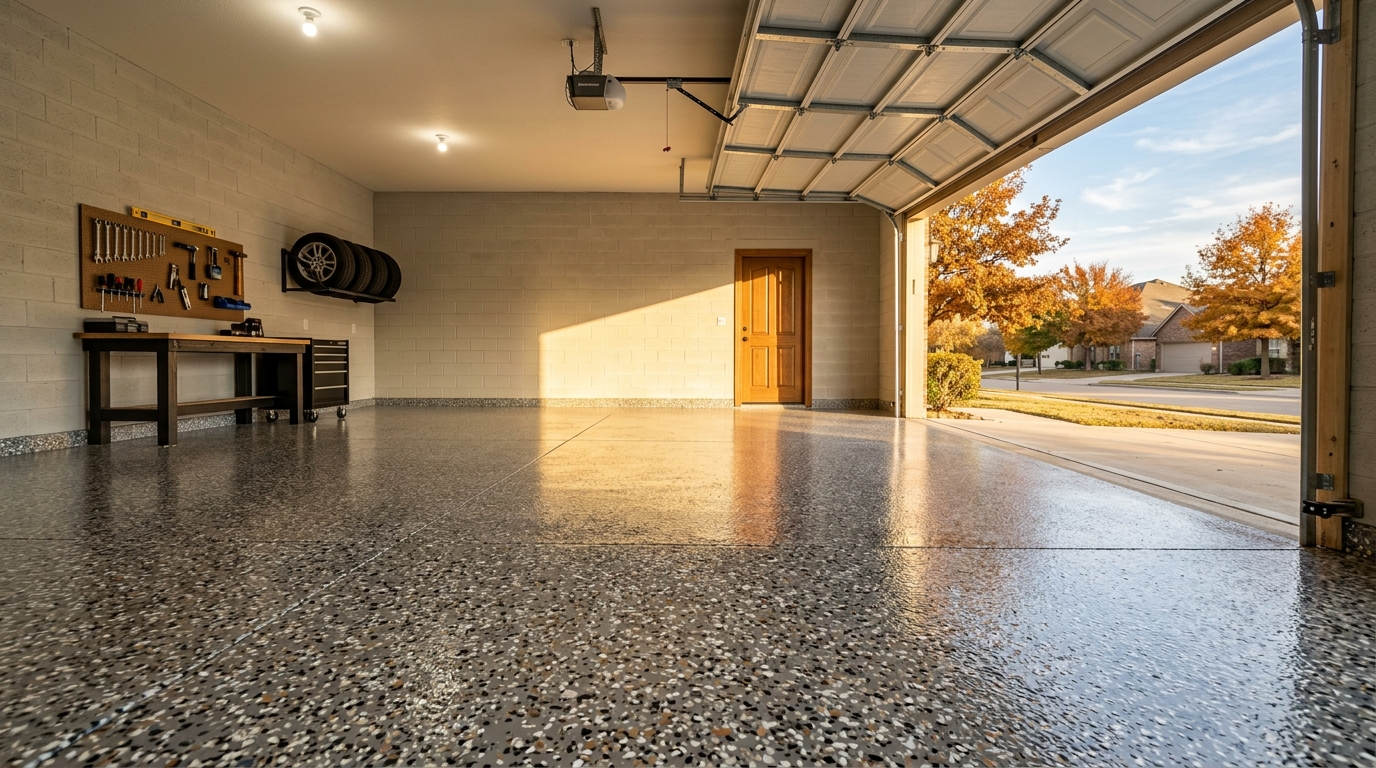
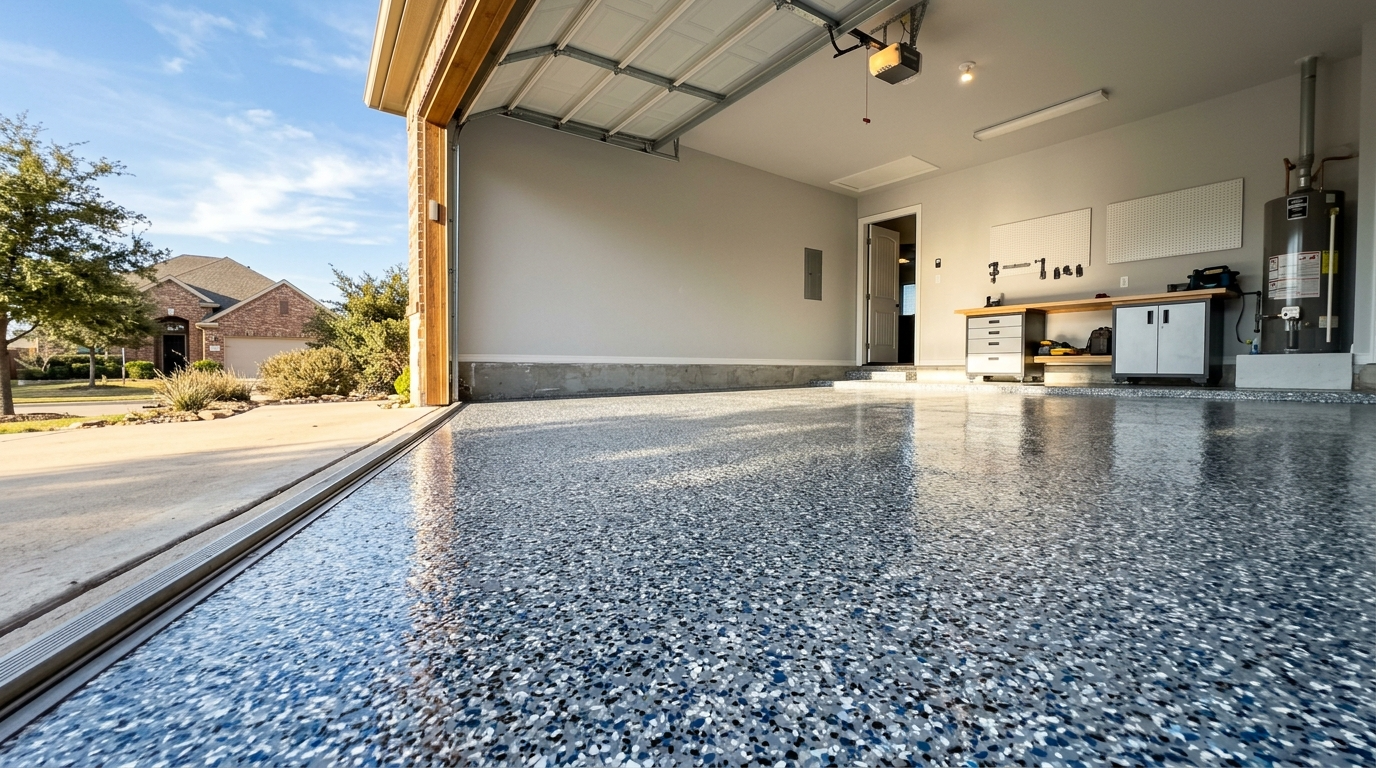
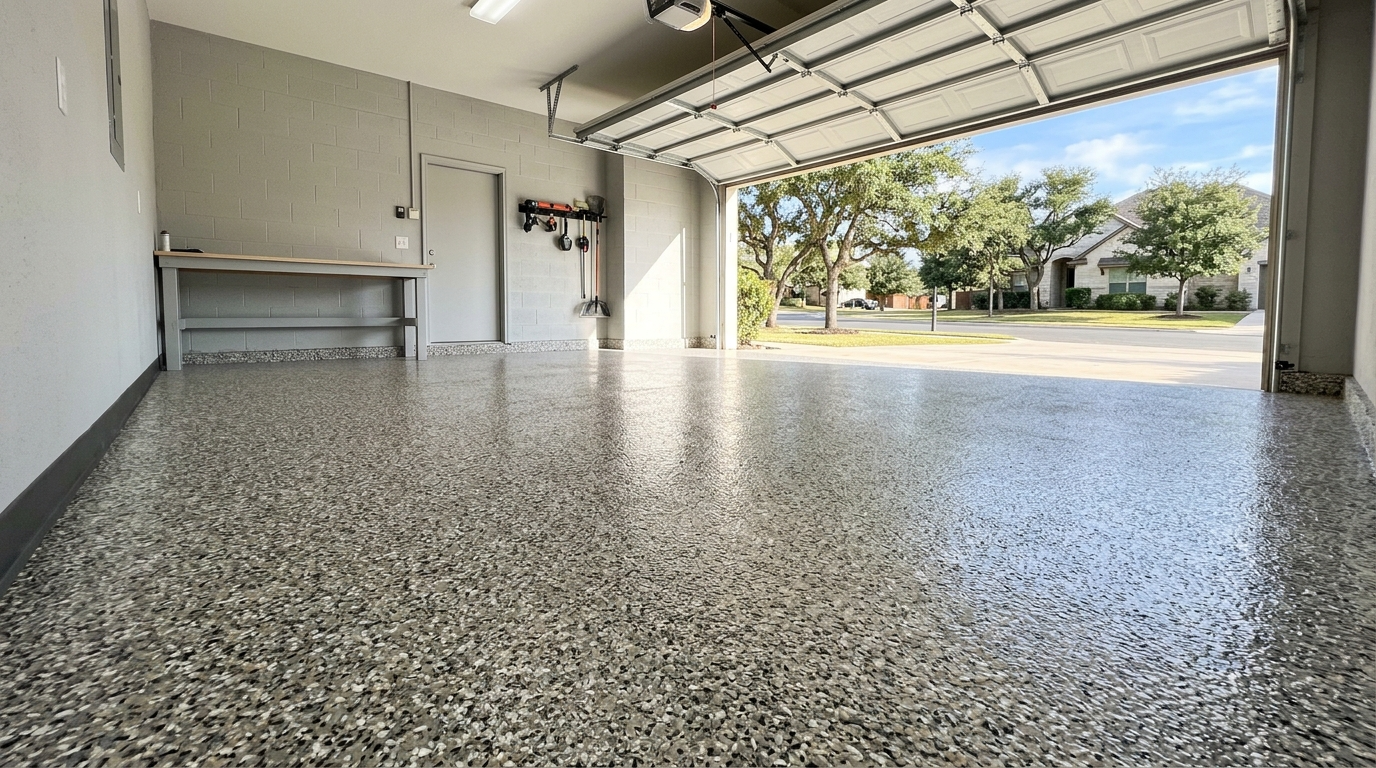
The base coat penetrates and bonds with the concrete surface, forming the structural foundation of the system. Decorative elements such as flakes may be added to improve texture and visual depth.
A durable topcoat is then applied to protect the floor from abrasion, chemical exposure, and UV damage.
This layered approach creates a floor that performs reliably under daily use rather than failing after a short period of time.
Practical steps when evaluating an epoxy flooring contractor
If you are comparing epoxy flooring companies, it helps to understand what questions to ask before making a decision.
Ask contractors about their surface preparation process and whether they grind the concrete rather than using acid etching. Grinding is the industry standard for creating proper adhesion.
You should also ask about the materials used in the system, including the type of epoxy and the protective topcoat. High-quality industrial coatings typically perform much better than inexpensive retail-grade products.
Reviewing previous project photos and discussing expected durability can also provide insight into the contractor’s level of experience.
Taking the time to evaluate installation methods often helps avoid problems later.
Why NES Flooring focuses on long-lasting epoxy systems
NES Flooring approaches epoxy installation with a focus on durability, reliability, and professional craftsmanship. Rather than offering quick budget coatings, the company installs epoxy systems designed to withstand real-world use.
Each project begins with thorough concrete preparation to ensure proper bonding. High-quality coating systems are then applied in multiple layers to create a seamless, resilient surface.
This approach allows NES Flooring to deliver epoxy floors that perform consistently in garages, commercial spaces, and industrial environments throughout Texas.
The result is a floor that looks clean, performs reliably, and holds up to everyday wear.
Invest in an epoxy floor built to last
An epoxy floor can transform a concrete surface into a durable, easy-to-maintain foundation for your space. But the longevity of that floor depends on how it is installed.
A professional epoxy system focuses on preparation, quality materials, and proper application techniques that allow the coating to perform for years.
If you are considering epoxy flooring for your garage or commercial space, NES Flooring can help you choose a system designed for long-term durability and performance. Contact NES Flooring today to learn more about installing an epoxy floor built to last.
Ready to work with NES Flooring?
Let's connect! We’re here to help.
Send us a message and we’ll be in touch.
Or give us a call today at 817-668-5051
More from NES Flooring: