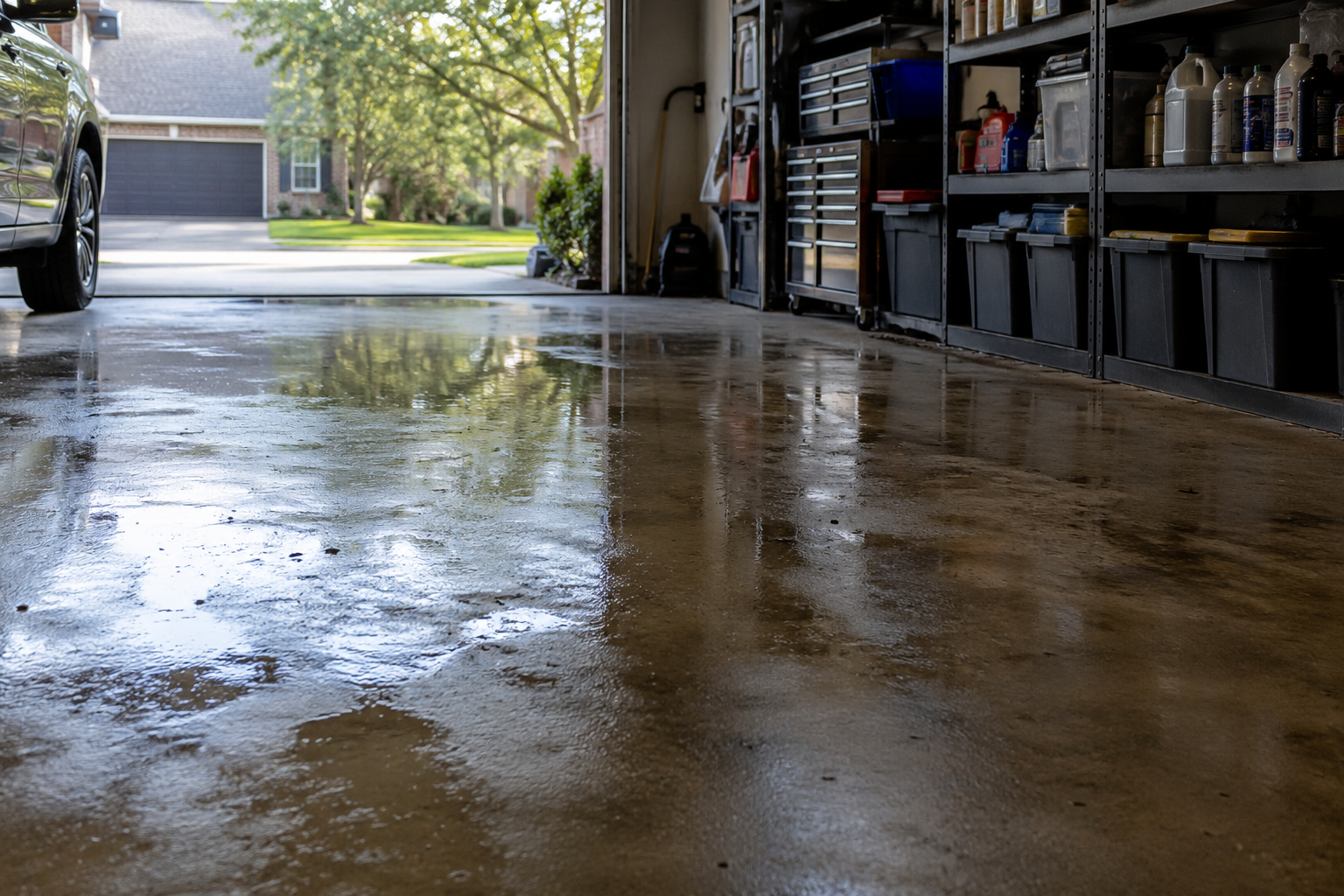
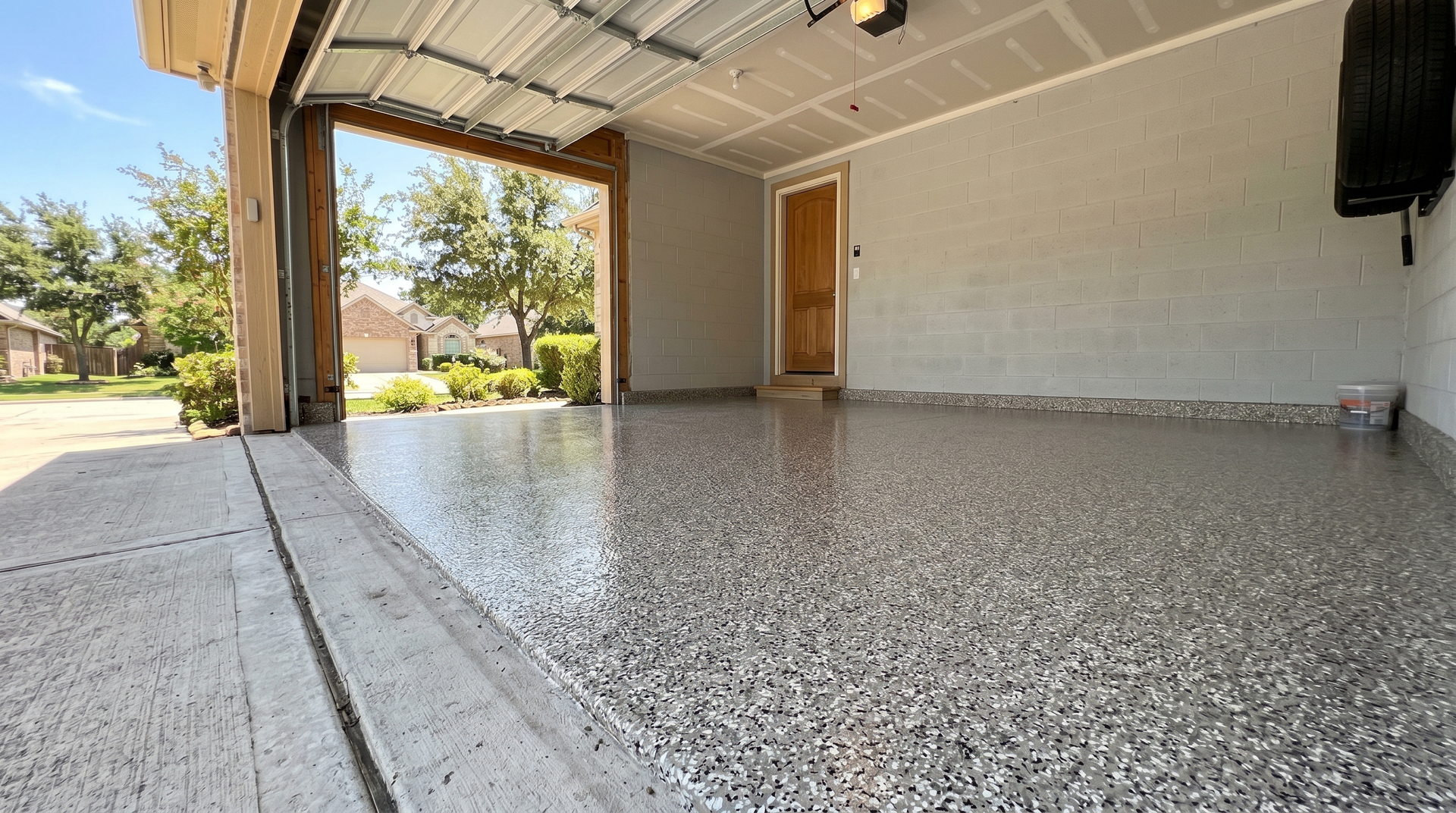
Why Hidden Moisture Problems Destroy Concrete Coatings Before Most Owners See It Coming
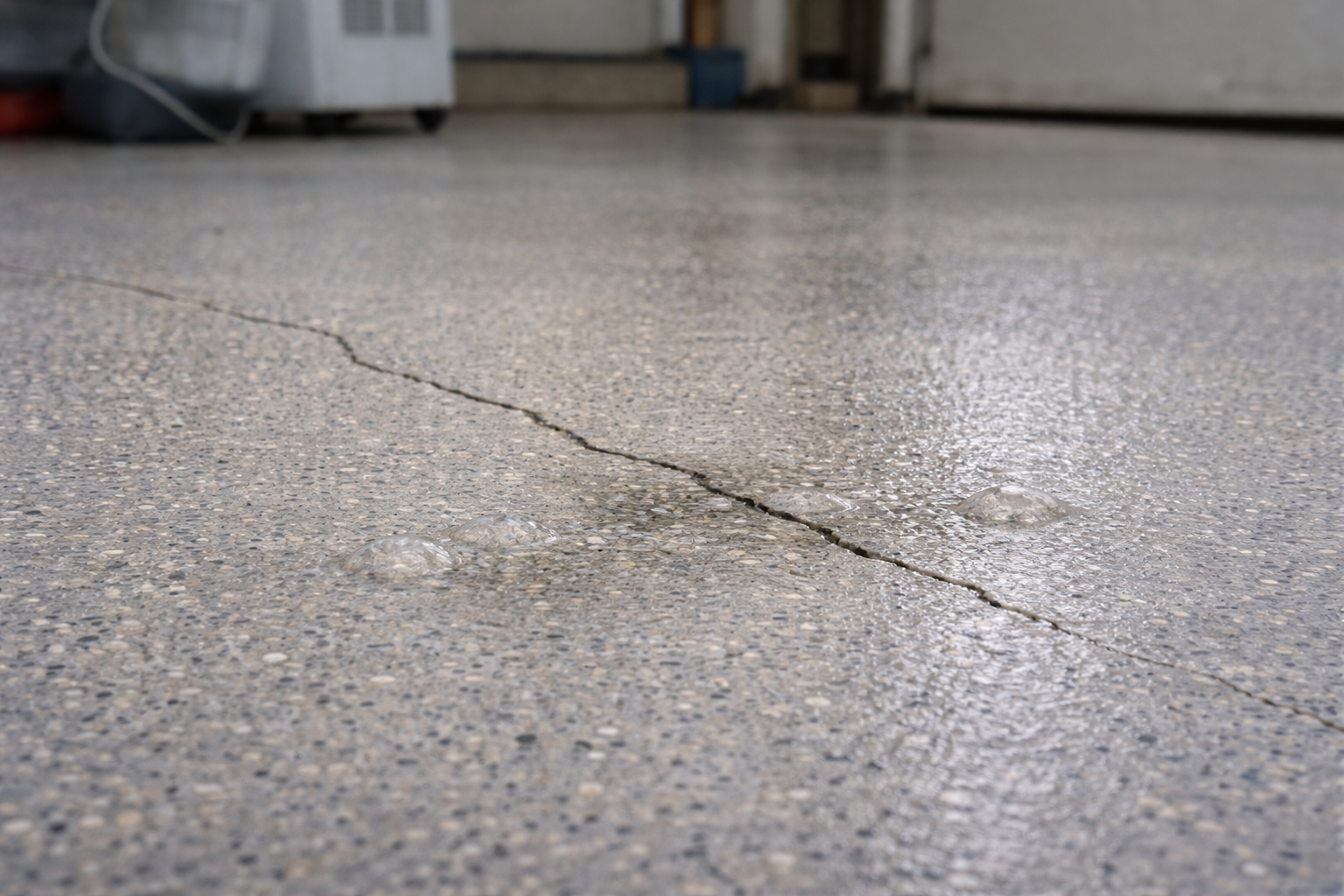
A concrete coating can look great on installation day and still fail far earlier than it should if moisture is trapped below the surface. That is one of the most frustrating problems property owners run into with coated concrete. The floor may start bubbling, peeling, discoloring, or losing adhesion even though the top surface seemed fine at first. In many cases, the real issue was never the coating itself. It was moisture moving through the slab from below or lingering inside the concrete long before the project began.
That is why moisture is one of the most important parts of any concrete coating job. It is also one of the easiest issues to underestimate. A slab can appear dry to the eye and still contain enough moisture to create serious bonding problems later. For homeowners and commercial property owners alike, understanding that risk is the difference between a floor system that lasts and one that starts failing for reasons that were preventable from the start.
Why Concrete Moisture Problems Are So Often Missed
Concrete is not a sealed, inactive material. It is porous, and it is constantly interacting with the environment around it. Moisture can move up through a slab from the ground, remain inside from the original pour, or enter from leaks, drainage issues, humidity, or nearby water sources. Because that moisture is not always visible on the surface, owners often assume the slab is ready for coating when it is not.
This is where problems begin. A floor may feel dry underfoot and still be holding moisture levels high enough to interfere with coating adhesion. Once a coating is installed over that slab, the trapped moisture pressure can begin working against the bond. The result may not show up immediately. Sometimes the floor looks fine at first, then starts showing blisters, peeling sections, soft spots, or surface breakdown weeks or months later.
That delay is what makes hidden moisture so damaging. By the time the failure becomes obvious, the coating is already compromised.
How Moisture Ruins Concrete Coatings From Below
When moisture moves through concrete, it creates pressure that can interfere with how well a coating bonds to the slab. Even a durable coating system has to rely on a properly prepared and properly conditioned concrete surface. If moisture is pushing upward through that slab, the bond can weaken over time no matter how good the finish looked when it was first applied.
This often shows up as bubbling, delamination, whitening, or peeling. In some cases, whole sections of coating can release from the concrete. In others, the failure starts small and gradually spreads. Owners may think the problem is poor wear resistance or surface damage, but the real cause is often below the coating, not on top of it.
That is why moisture problems are so destructive. They attack the floor system at the bond line. Once that bond is compromised, the coating is no longer performing the way it was designed to.
The Most Common Hidden Moisture Sources in Concrete Slabs
Moisture can enter the picture in several ways, and not all of them are obvious. Some slabs have vapor transmission coming up from the ground because of missing, failed, or inadequate vapor barriers. Others may be affected by drainage issues around the building, plumbing leaks, wash-down conditions, or long-term humidity exposure in enclosed spaces.
In Texas, slab conditions can also be influenced by seasonal weather patterns, storm runoff, and the way buildings manage moisture around the foundation. A property does not need to have standing water on the floor to have a moisture-related coating problem. Sometimes the issue is slow, consistent vapor movement that goes unnoticed until the coating starts reacting.
A few common sources include:
- Moisture vapor transmission from below the slab
- Poor site drainage or water movement around the foundation
- Plumbing leaks, cleaning water, or long-term humidity inside the space
The key point is that moisture does not have to be dramatic to be destructive. A steady hidden source is often enough to shorten the life of a coating system significantly.
Why Surface Preparation Alone Cannot Solve a Moisture Problem
Surface preparation matters. It is essential for coating performance. But even excellent mechanical prep cannot overcome an active moisture problem in the slab. This is where some coating jobs go wrong. The floor may be cleaned, profiled, and prepared properly, but if the underlying slab conditions are not evaluated, the project is still at risk.
Owners sometimes hear prep discussed as if it solves everything. It does not. Prep helps the coating bond to the surface that is there. It does not remove vapor pressure coming from below or correct internal slab moisture that exceeds what the system can tolerate.
That is why moisture evaluation is such a critical part of professional flooring work. A contractor should not just ask whether the slab looks ready. The contractor should be thinking about whether the slab actually is ready.
What Property Owners Usually Notice When Moisture Has Already Caused Damage
Once moisture-related coating failure starts, the warning signs can vary. In some spaces, the first clue is bubbling or blistering. In others, owners notice peeling around edges, cloudy spots, or areas where the coating seems to be releasing from the slab. Sometimes the surface begins wearing unevenly because certain sections have already lost proper adhesion.
These symptoms are easy to misread. An owner may assume the floor was scratched, cleaned incorrectly, or coated with the wrong finish. Those things can cause problems too, but moisture failure has a different pattern. It often appears in ways that seem to come from underneath the floor rather than from top-side abuse.
That is why professional evaluation matters. If the real problem is hidden slab moisture, replacing the coating without addressing the cause usually leads to the same failure again.
Why Moisture Testing and Slab Evaluation Matter Before Coating
The best way to deal with hidden moisture is before the coating goes down, not after it fails. A proper evaluation helps determine whether the slab is suitable for coating as-is, whether moisture conditions need to be addressed first, or whether the system choice needs to account for the slab’s actual condition.
This is one of the biggest differences between durable professional results and short-term coating jobs that do not hold up. Good flooring work is not just about what product goes on top. It is about whether the slab underneath can support that product for the long haul.
For NES Flooring, that practical approach matters. Property owners need straight answers about what the concrete can handle, what risks are present, and what needs to happen before coating work begins. That is how you avoid paying for a floor that looks good briefly but fails early.
Who Should Be Most Concerned About Hidden Moisture Under a Coating
Moisture concerns matter for both residential and commercial properties, but some owners should be especially careful. Garages, utility spaces, warehouses, work areas, and commercial interiors with slab-on-grade construction are all worth evaluating closely before coating. Older buildings may have less predictable moisture control below the slab. Spaces with prior leaks or drainage issues deserve even closer attention.
This is also important for owners replacing a failed coating. If a previous system peeled or bubbled without an obvious surface cause, hidden moisture should be part of the conversation right away. Otherwise, the next coating may run into the same problem.
Common Questions About Moisture and Concrete Coating Failure
Can a concrete slab look dry and still have a moisture problem?
Yes. That is one of the biggest reasons moisture problems are missed. A slab can appear dry on the surface and still contain enough moisture or vapor movement to damage a coating system.
What does moisture-related coating failure usually look like?
It often shows up as bubbling, peeling, whitening, delamination, or sections of the coating releasing from the slab.
Will better prep fix a slab with moisture problems?
No. Proper prep is essential, but it does not solve active moisture movement or vapor transmission coming through the concrete.
Is this only a problem in industrial spaces?
No. Garages, homes, commercial interiors, and other everyday concrete surfaces can all be affected if slab moisture is not handled correctly.
Why NES Flooring Takes Moisture Problems Seriously From the Start
A concrete coating should be built to last, not just built to impress on day one. That only happens when the slab is evaluated honestly and the work is approached with long-term performance in mind. NES Flooring focuses on durable results, which means looking at the real condition of the concrete before recommending a coating system.
That straightforward approach helps owners avoid wasted money, repeated failures, and the frustration of having to redo work that should have lasted longer the first time. A better floor starts with a better read on the slab.
Protect Your Concrete Coating Investment Before Moisture Turns Into Failure
Hidden moisture is one of the fastest ways to ruin a concrete coating, and one of the most expensive problems to ignore. If the slab is not ready, the coating is already at risk. That is why careful evaluation matters before the project starts, not after the floor begins peeling.
NES Flooring helps Texas property owners make smarter decisions about coated concrete by focusing on what delivers durable, real-world performance. If you are planning a coating project or dealing with a floor that has already started failing, now is the time to address the moisture issue before it causes even bigger problems.
Ready to work with NES Flooring?
Let's connect! We’re here to help.
Send us a message and we’ll be in touch.
Or give us a call today at 817-668-5051
More from NES Flooring: