What Your Garage Floor Is Telling You in July (And Why It Matters Before You Coat It)
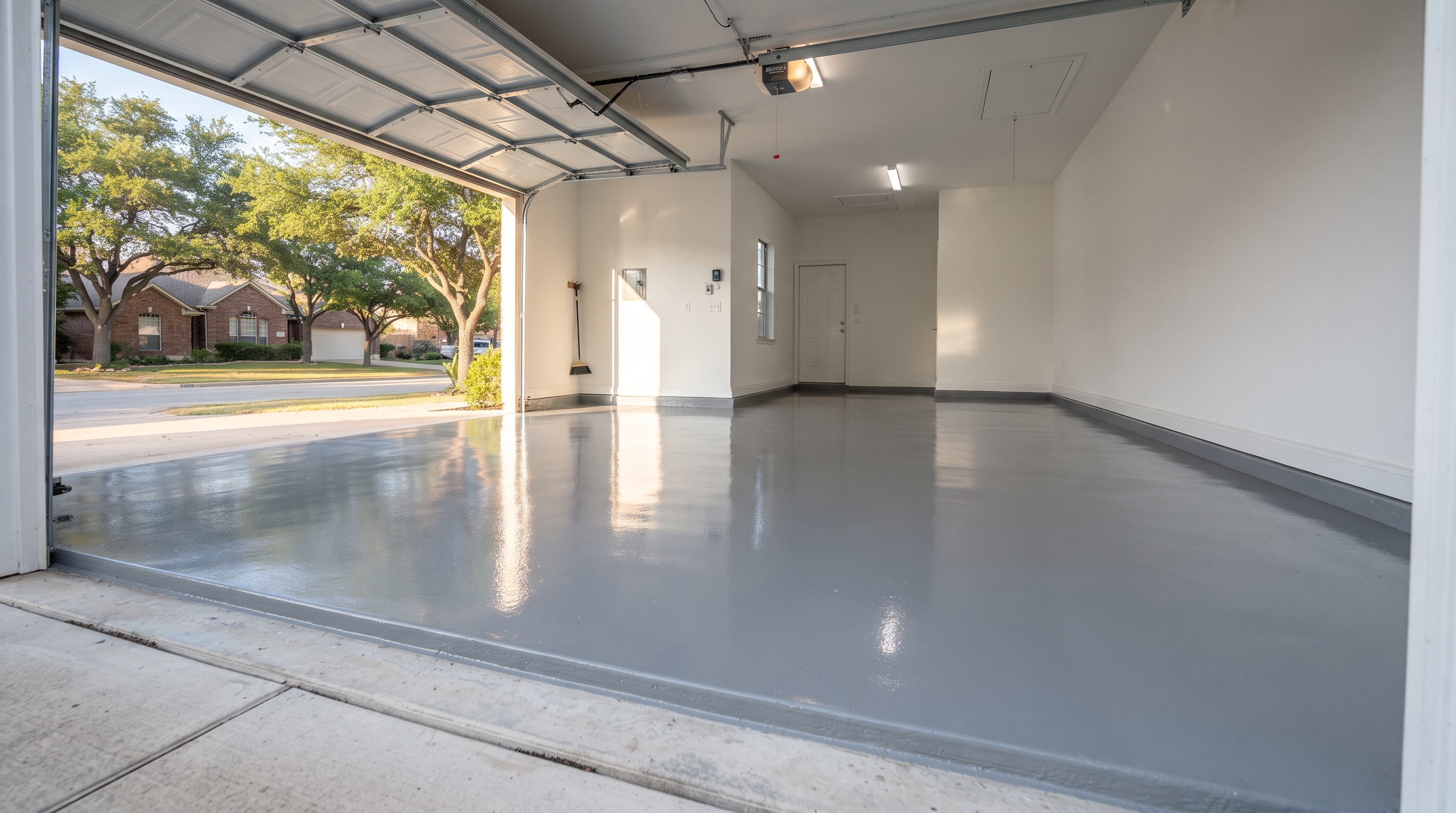
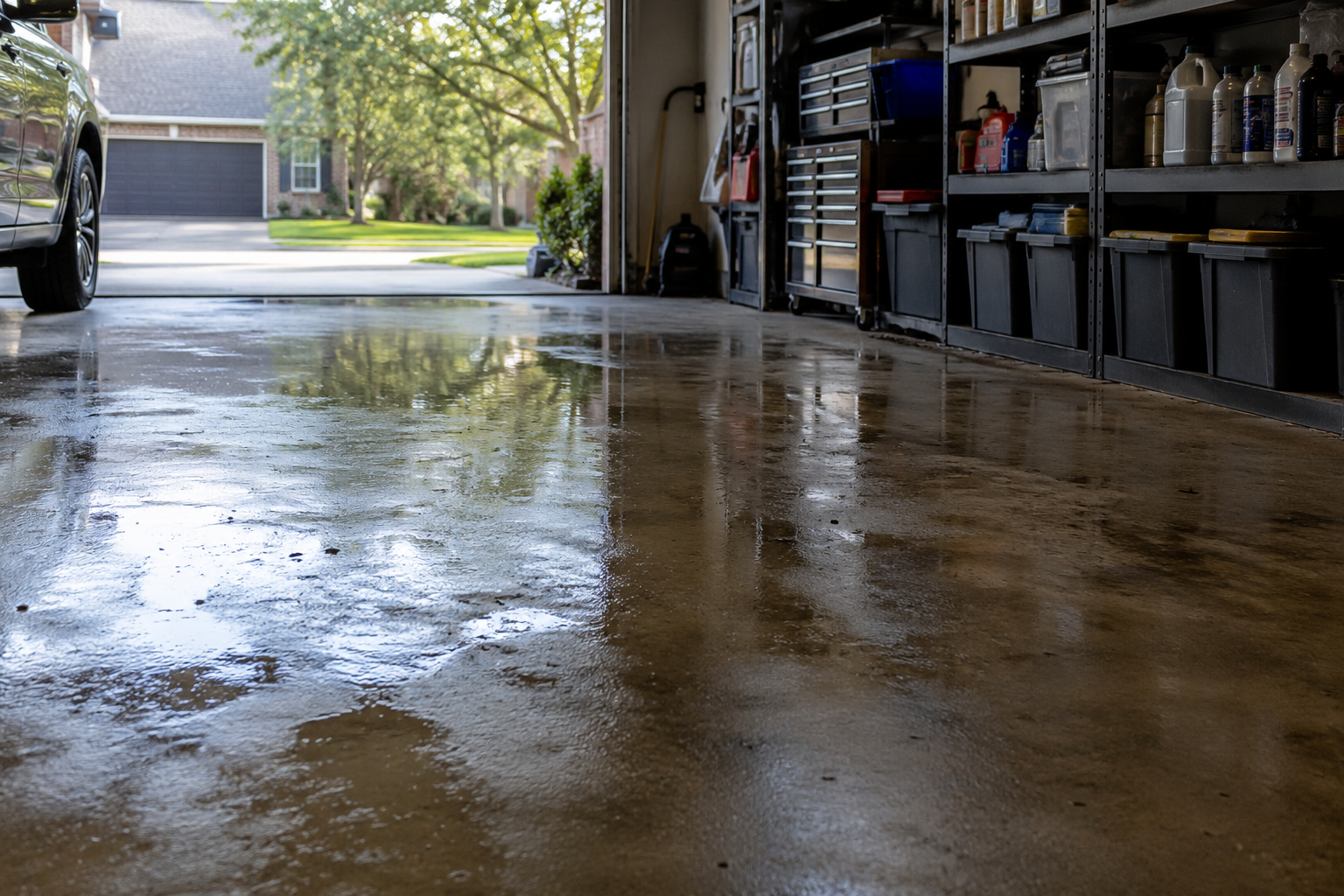
Here is the part nobody tells you before you schedule a coating installation: a garage floor that sweats in July is not automatically disqualified from being coated. But coating it without testing moisture first is one of the fastest ways to produce a floor that peels by spring. The sweating itself is not the problem. Coating over active, uncontrolled moisture is.
If you have been watching your Springtown garage floor bead up on hot summer mornings and wondering whether a concrete coating makes sense right now, that question is the right one to ask. Homeowners searching for a concrete coating Springtown TX installation often contact us after a bad experience somewhere else, a floor that looked great for six months and then started lifting in sheets. In most of those cases, moisture was never measured before the coating went down.
Sweating Concrete Is Not a Defect. It Is a Signal Worth Reading.
What you are seeing on your garage floor in July has a name: concrete sweating slab syndrome, or CSS. It happens when warm, humid air hits the cooler surface of a concrete slab and condenses. Your garage floor absorbs heat more slowly than the air around it, so on a 95-degree Texas afternoon, that slab can still be cool enough to pull moisture right out of the atmosphere.
This is not a sign that your concrete is damaged or that water is rising through the slab from below. Those are separate issues. CSS is an atmospheric phenomenon. It is temporary, and it responds to temperature and airflow. Understanding which type of moisture you are dealing with changes everything about your installation timeline and whether a coating will bond correctly.
Two Different Moisture Problems, Two Very Different Outcomes
Atmospheric condensation, the sweating you see in summer, is one thing. Hydrostatic pressure is another. Hydrostatic pressure occurs when water in the ground below your slab pushes upward through the concrete. It is more common in low-lying areas or properties with drainage problems, and it does not stop when the temperature drops.
We regularly see floors where both issues are present at the same time. The homeowner notices summer sweating, assumes it is just the weather, and schedules a coating. The atmospheric moisture clears up. But the slab's moisture vapor emission rate, which measures how much moisture the concrete itself is releasing, stays elevated. The coating goes down, looks perfect, and then three months later the bond starts to fail from the inside out.
That failure is invisible until it is not. A proper moisture vapor emission test, done before any coating work starts, is what separates a floor that lasts ten years from one that needs to be redone in eighteen months.
July Is Actually the Right Time to Make the Call
Timing your consultation during peak sweating season works in your favor. When we assess a floor, we want to see it under stress. A floor that sweats visibly in July is showing us exactly what we need to know. We measure the moisture content of the slab, evaluate the source, and determine the right approach before a dollar of coating material goes down.
Properties that skip this step follow a consistent pattern. The prep looked fine, the coating went down, and the failure showed up within the first year. The concrete told the whole story before installation started. Nobody read it.
If your floor tests within acceptable moisture levels, the installation timeline moves forward. If it does not, we identify why, and whether a moisture-tolerant primer system addresses it or whether an underlying drainage issue needs attention first. Either way, you know before you commit.
What Proper Prep Does That No Coating Can Do on Its Own
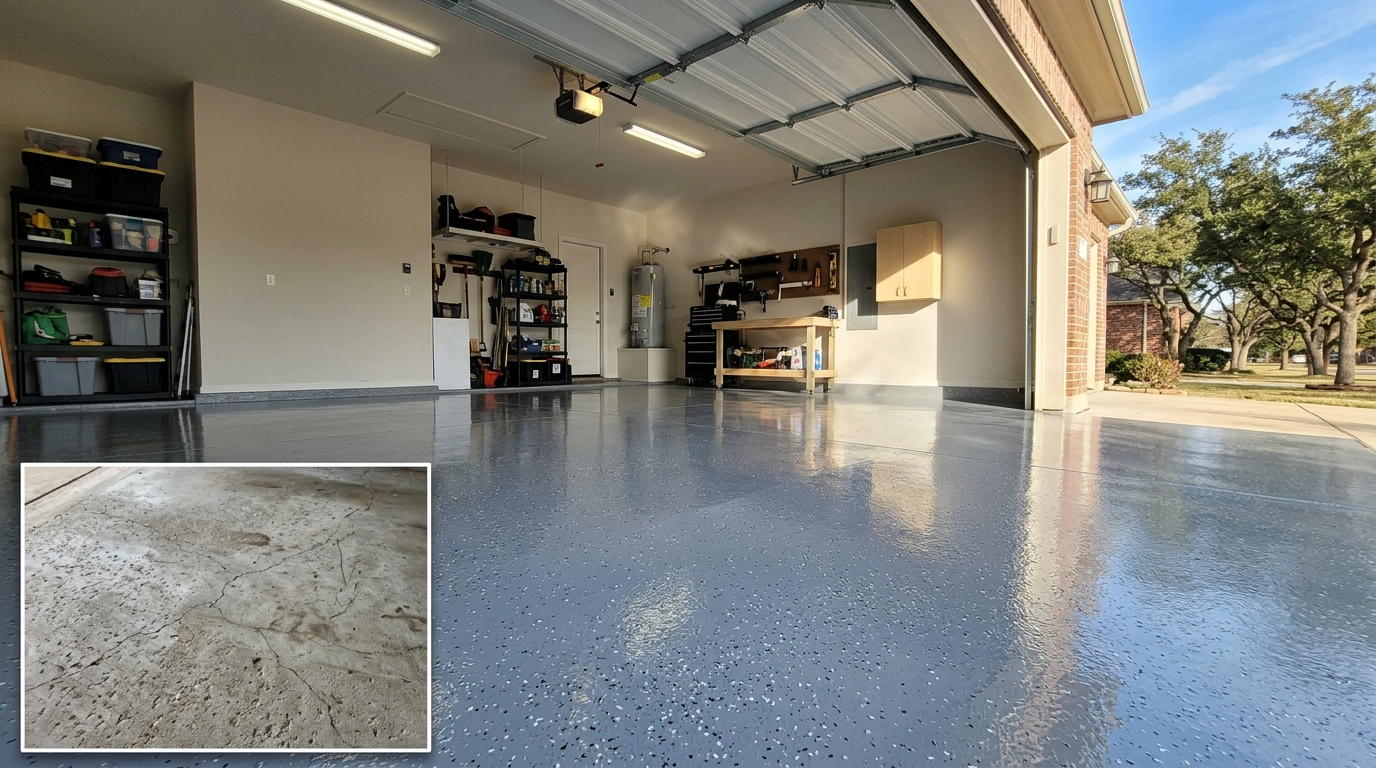
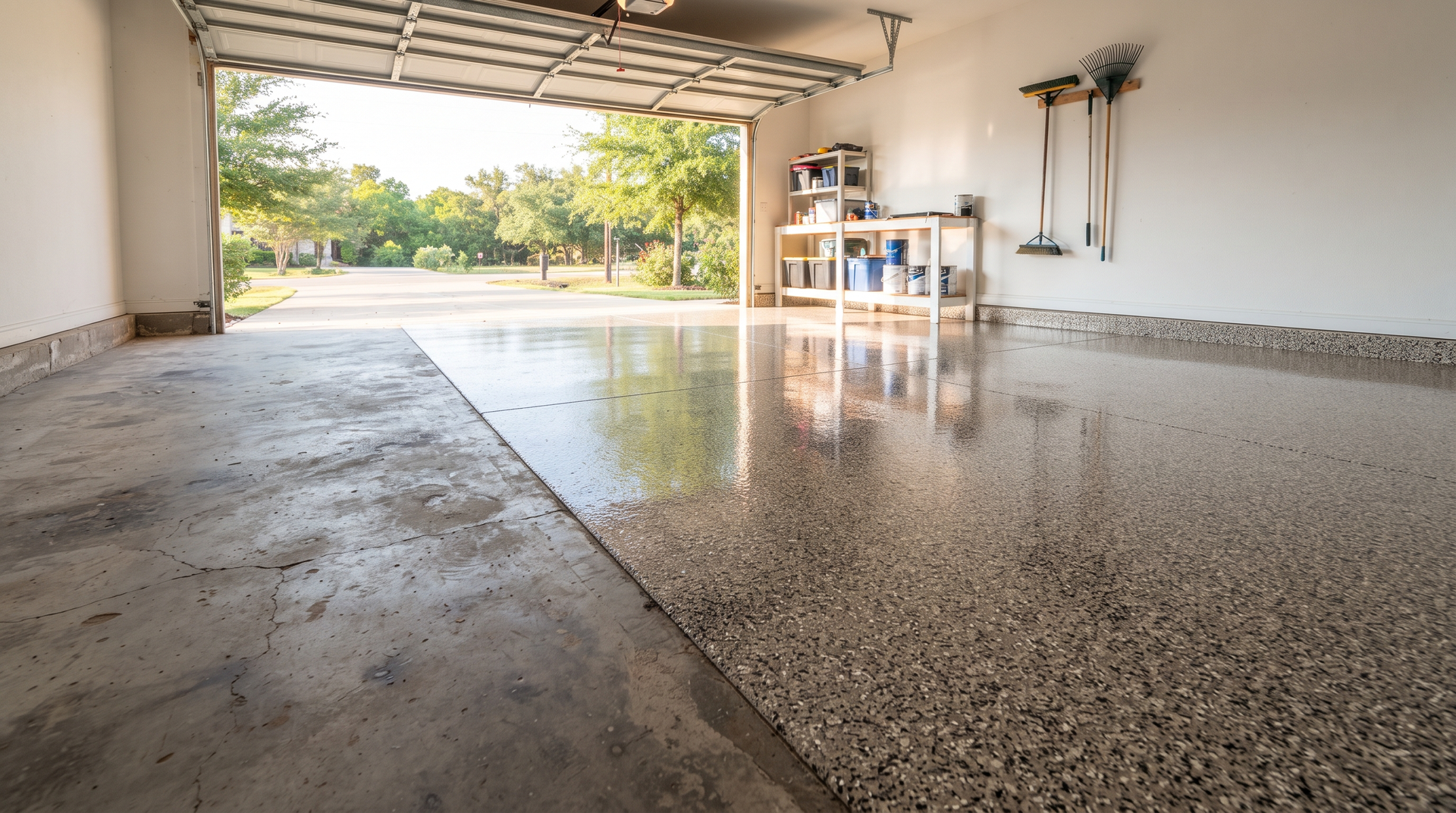
[Mechanical diamond grinding](internal link) is the step that makes the bond possible. Grinding removes surface contaminants, laitance (the weak top layer of concrete that forms as it cures), and anything else sitting between the coating and the solid material below. It also opens the concrete's pores so the epoxy has something to grip.
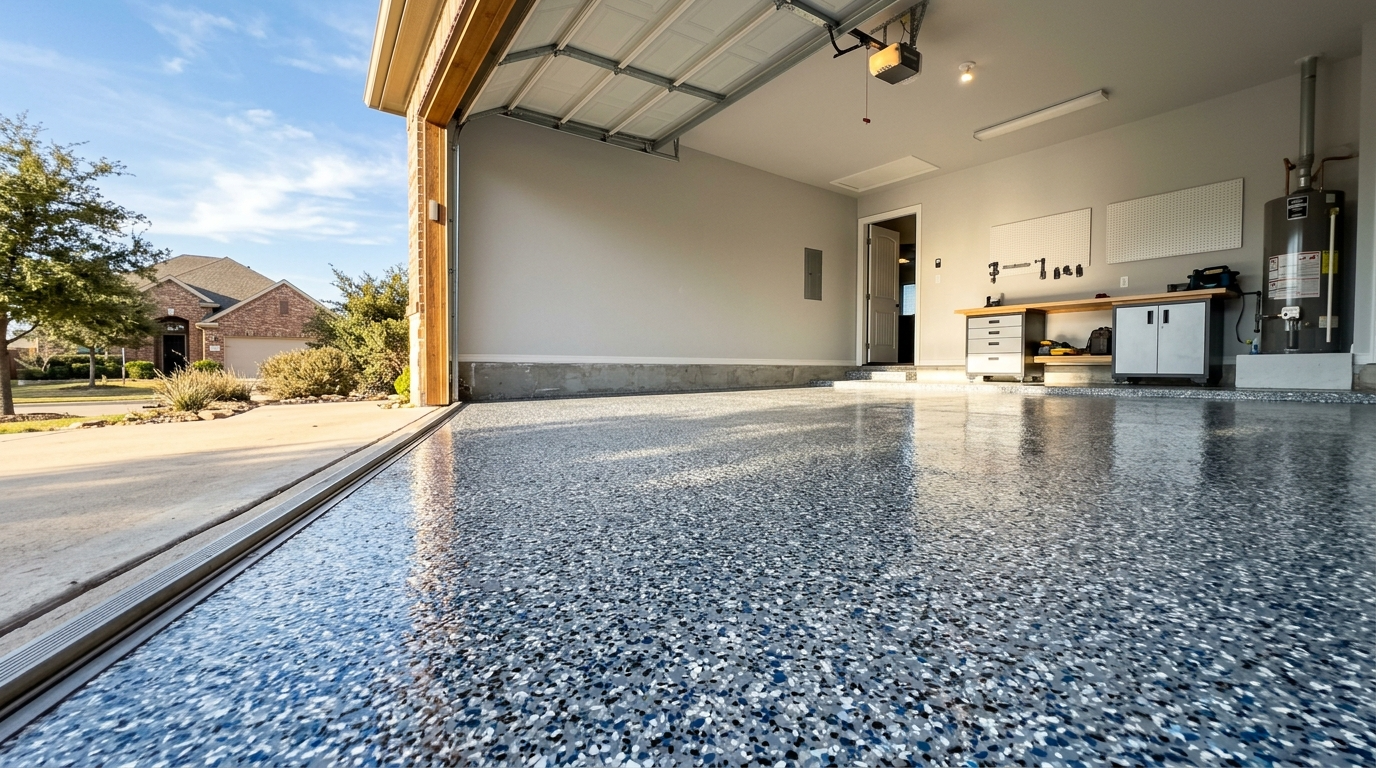
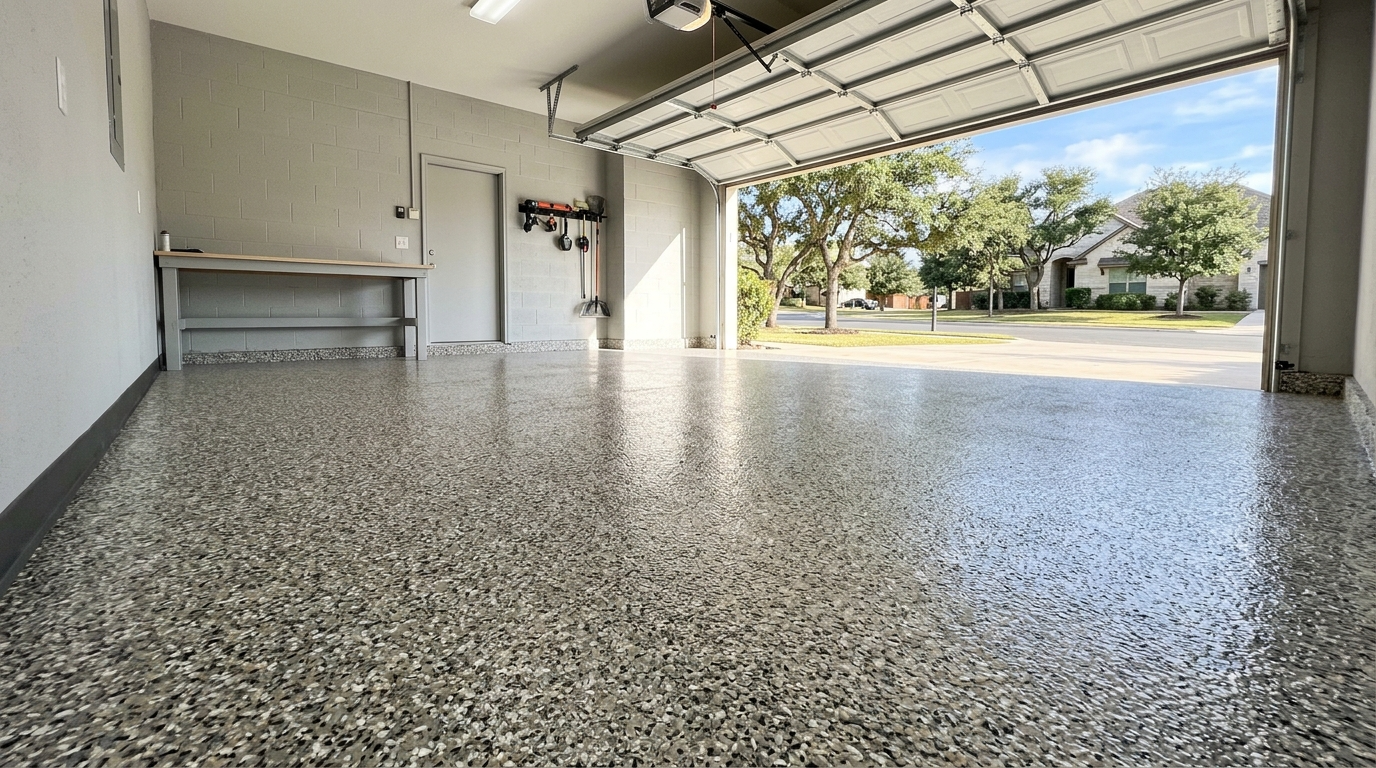
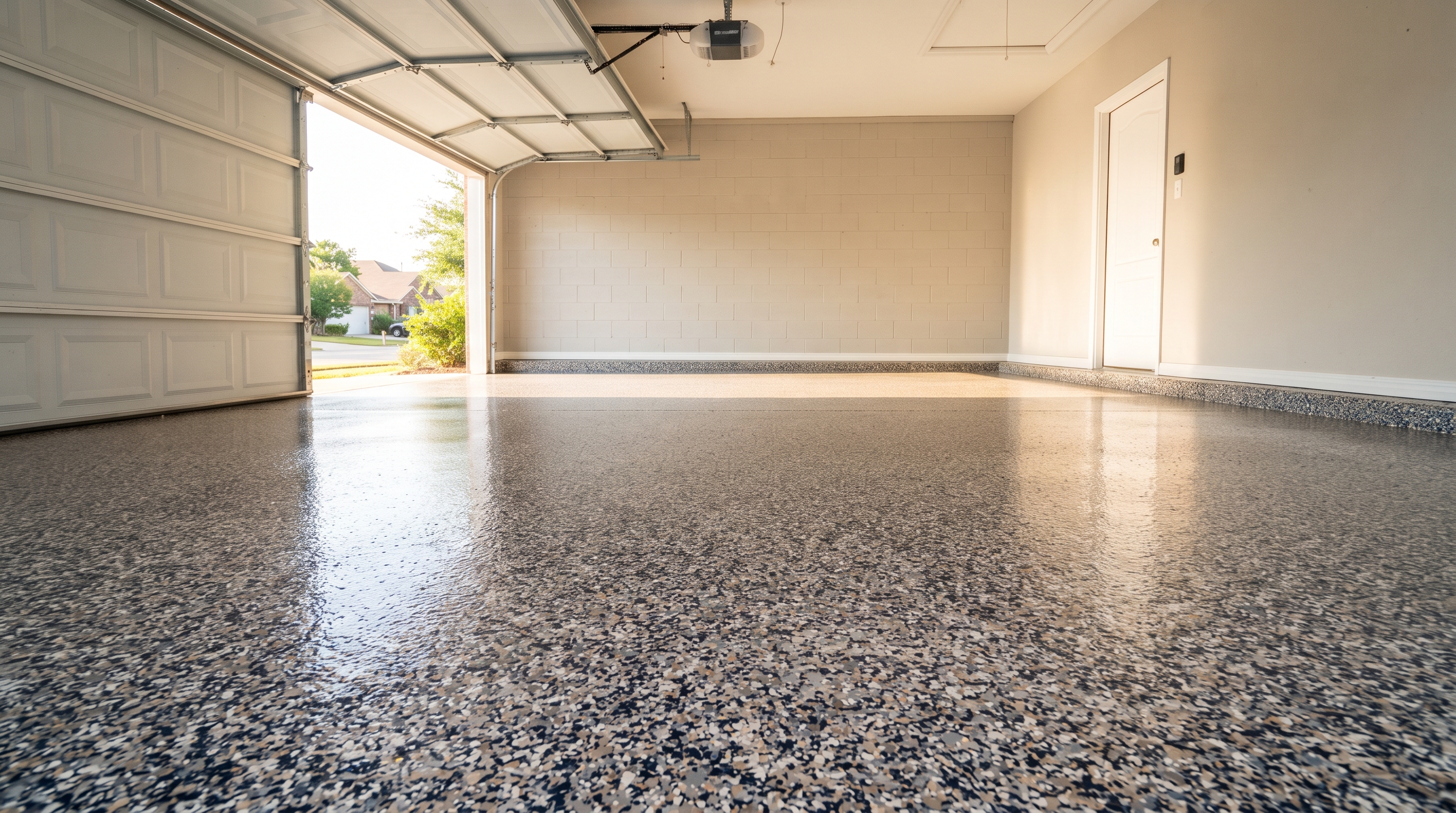
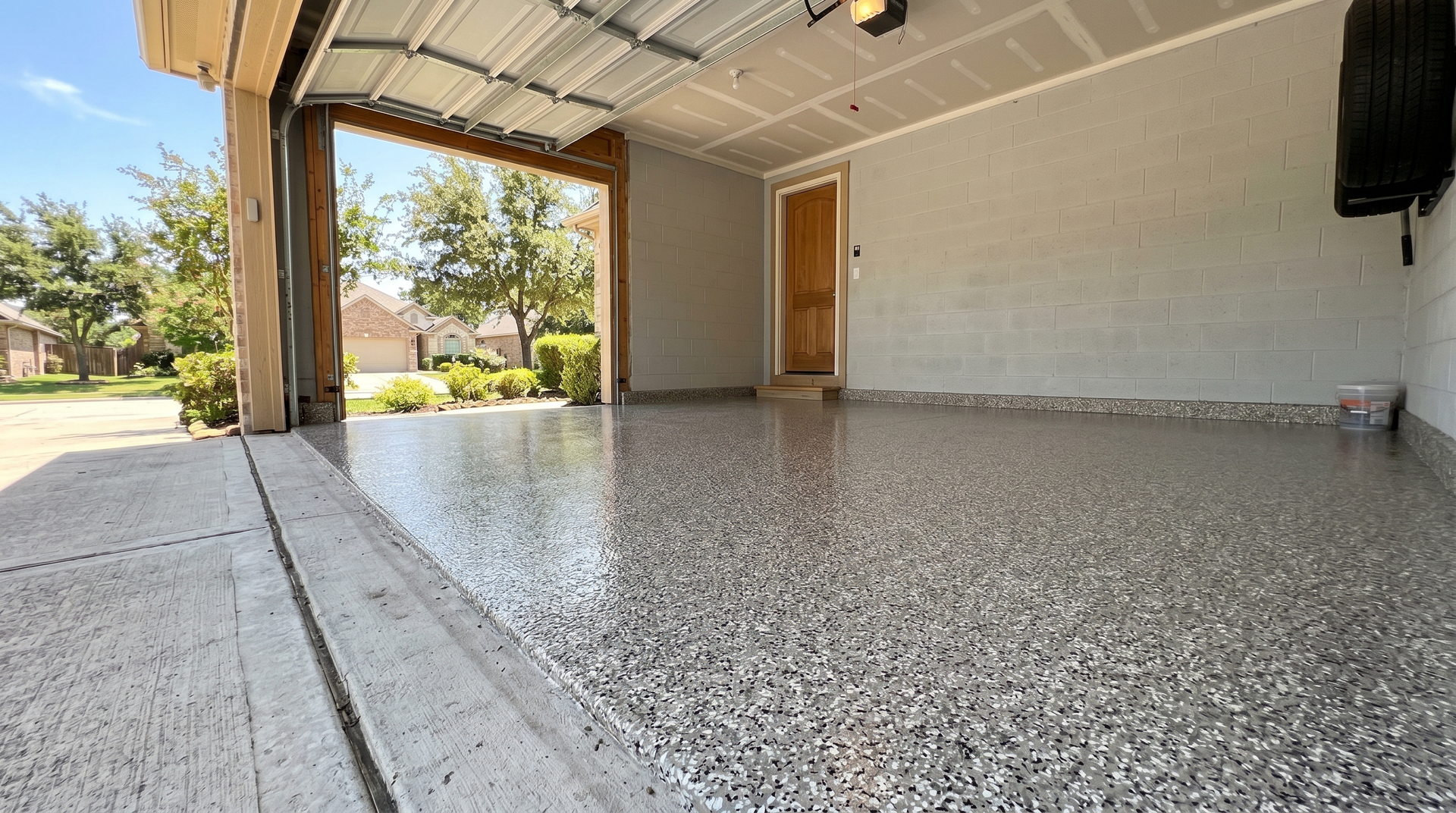
No coating material, regardless of quality, bonds to a dirty, sealed, or moisture-compromised surface the way it bonds to properly ground concrete. Diamond grinding does not replace moisture testing. It works alongside it. A floor that passes moisture testing and gets properly ground gives the coating everything it needs to hold for the long term. That is the foundation behind every installation we back with a 10-year workmanship warranty, whether it is a [vinyl flake epoxy system](internal link) in a Springtown garage or a [solid color epoxy coating](internal link) in a Parker County warehouse.
What Springtown Homeowners Ask Before Scheduling
My floor sweats every summer. Does that mean I missed my window?
Almost never. Seasonal atmospheric sweating, the kind caused by Texas humidity hitting a cooler slab, does not rule out a coating. What matters is the slab's actual moisture vapor emission rate at the time of installation. We test it. If it falls within acceptable range, we move forward. If it does not, we tell you before any work begins. You are not disqualified. You are just not informed yet.
How long does moisture testing take?
A calcium chloride test or a relative humidity probe test takes 24 to 72 hours to produce a reliable reading. We factor that into the project timeline from the start. It is not a delay. It is the step that makes the rest of the work worth doing.
If I wait until October when it cools down, will that fix the problem?
Cooler air reduces atmospheric condensation, so you will see less sweating on the surface. But if your slab has elevated moisture vapor emission from subsurface conditions, a temperature change does not fix that. Testing in summer gives you a worst-case reading, which is more useful than a fall test that looks clean and hides the real issue.
My neighbor had epoxy done and it peeled. Is that going to happen to me?
It depends entirely on how the floor was prepped. Peeling almost always traces back to one of two things: moisture that was never tested or surface prep that was skipped or rushed. If the contractor did not grind the slab mechanically and did not test moisture vapor emission before coating, the failure was built into the job from day one. The coating is not the problem. The process is.
See What Your Slab Is Telling You Before Someone Guesses at It
If your Springtown garage floor is sweating this July, the smart move is not to wait and not to rush. Have someone come out and read what the concrete is actually telling you. NES Flooring serves Parker County, Springtown, Weatherford, Aledo, Fort Worth, and Granbury with the same crew from consultation to final coat. No subcontractors. No hand-offs. No one passing your project to someone who was not at the consultation.
We will assess your slab, test moisture where the floor indicates it, and give you a transparent quote that explains exactly what you are paying for. Every installation we complete is backed by our 10-year workmanship warranty because we prep every floor to earn it.
Call 817-668-5051 or request your free consultation online. Your floor is already telling you something. Let us tell you what it means.
Ready to work with NES Flooring?
Let's connect! We’re here to help.
Send us a message and we’ll be in touch.
Or give us a call today at 817-668-5051
More from NES Flooring: