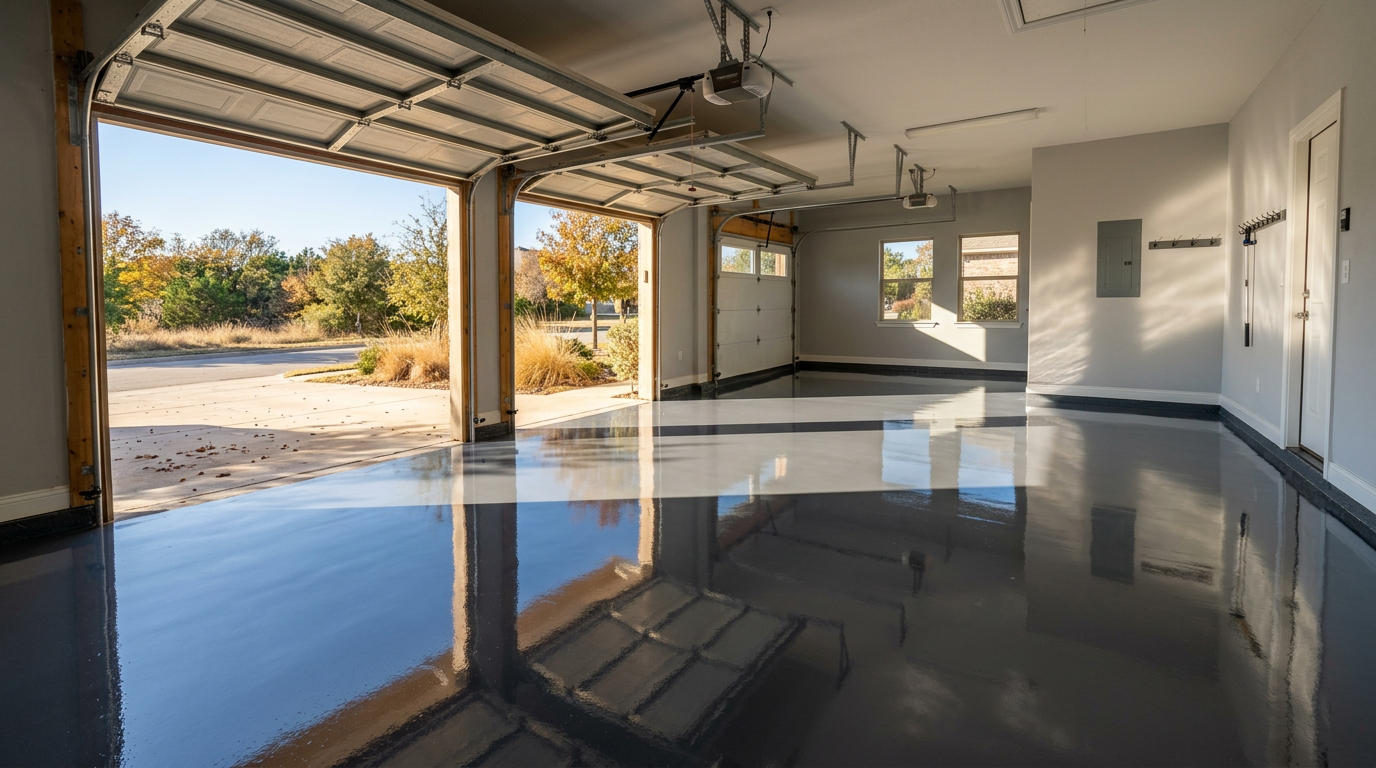
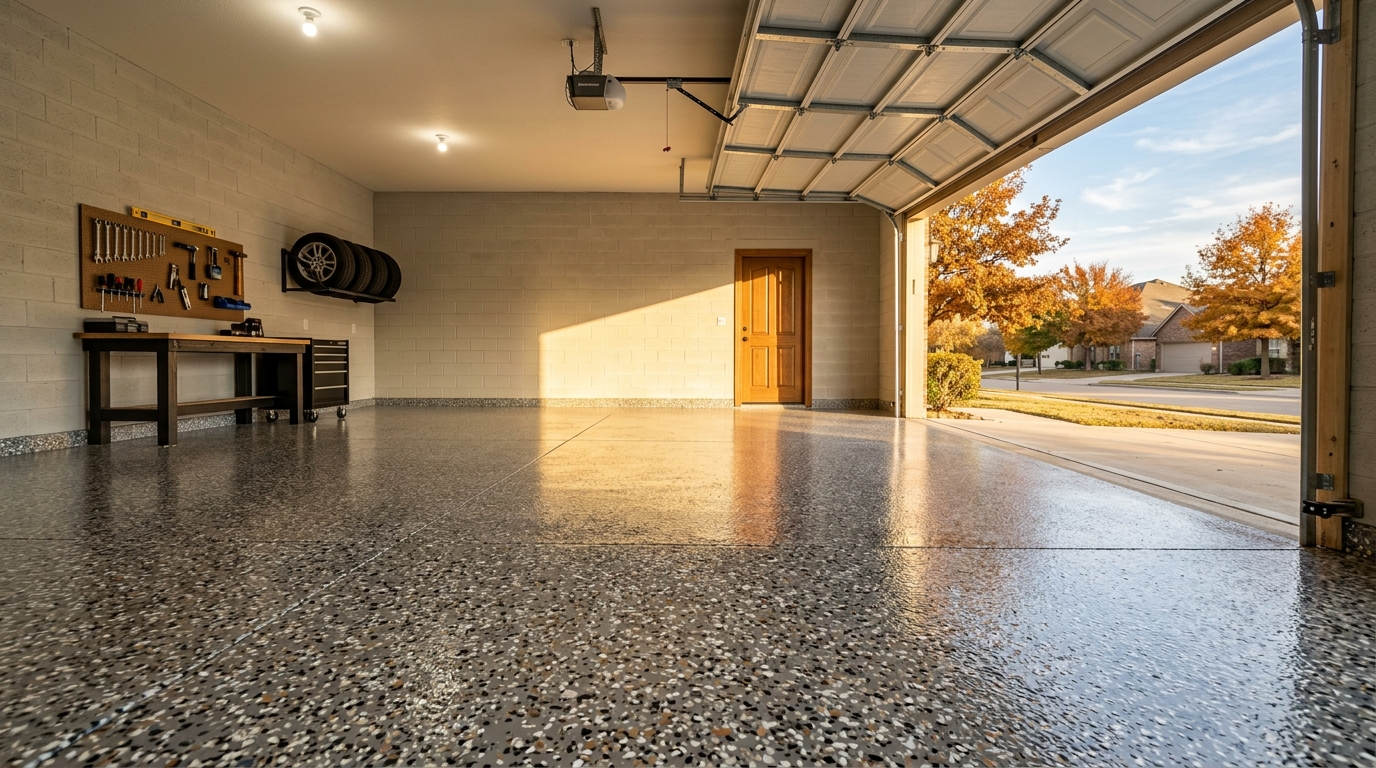
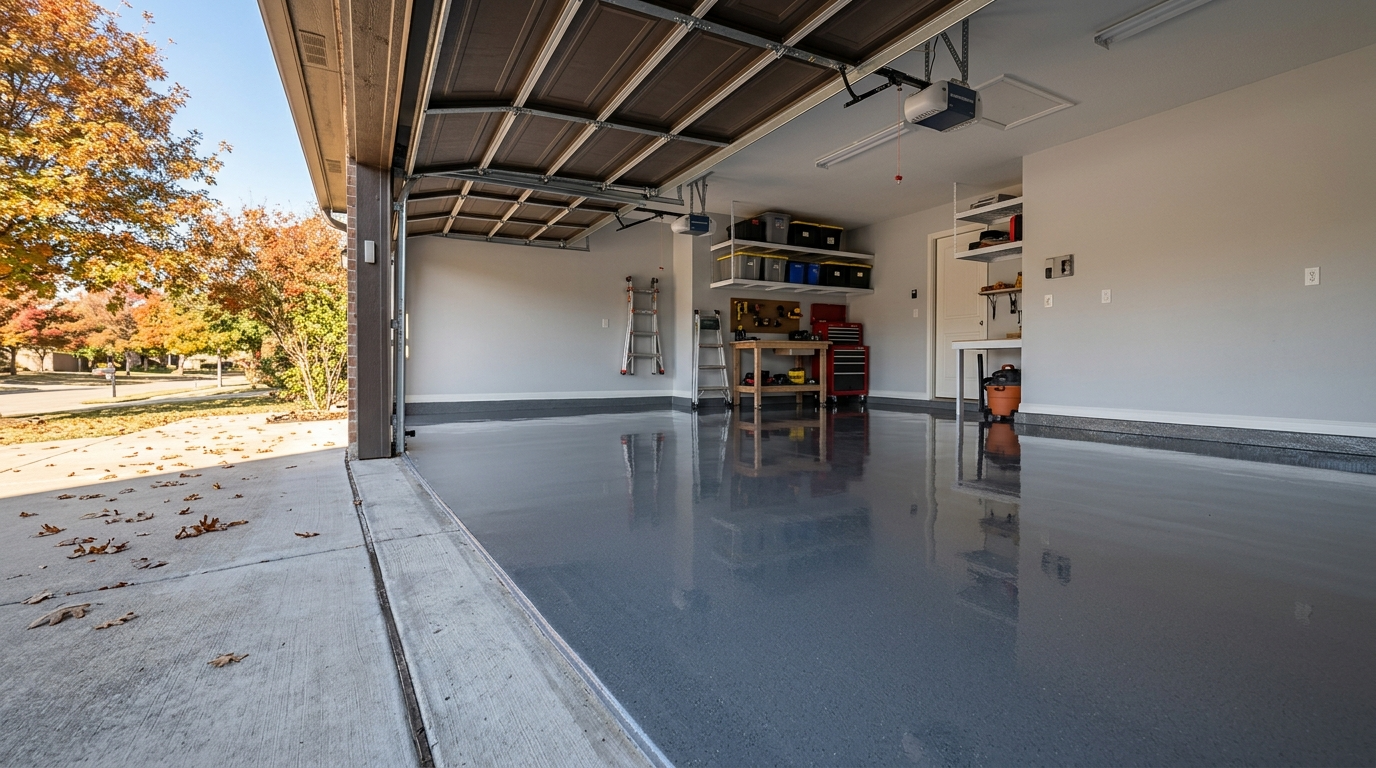
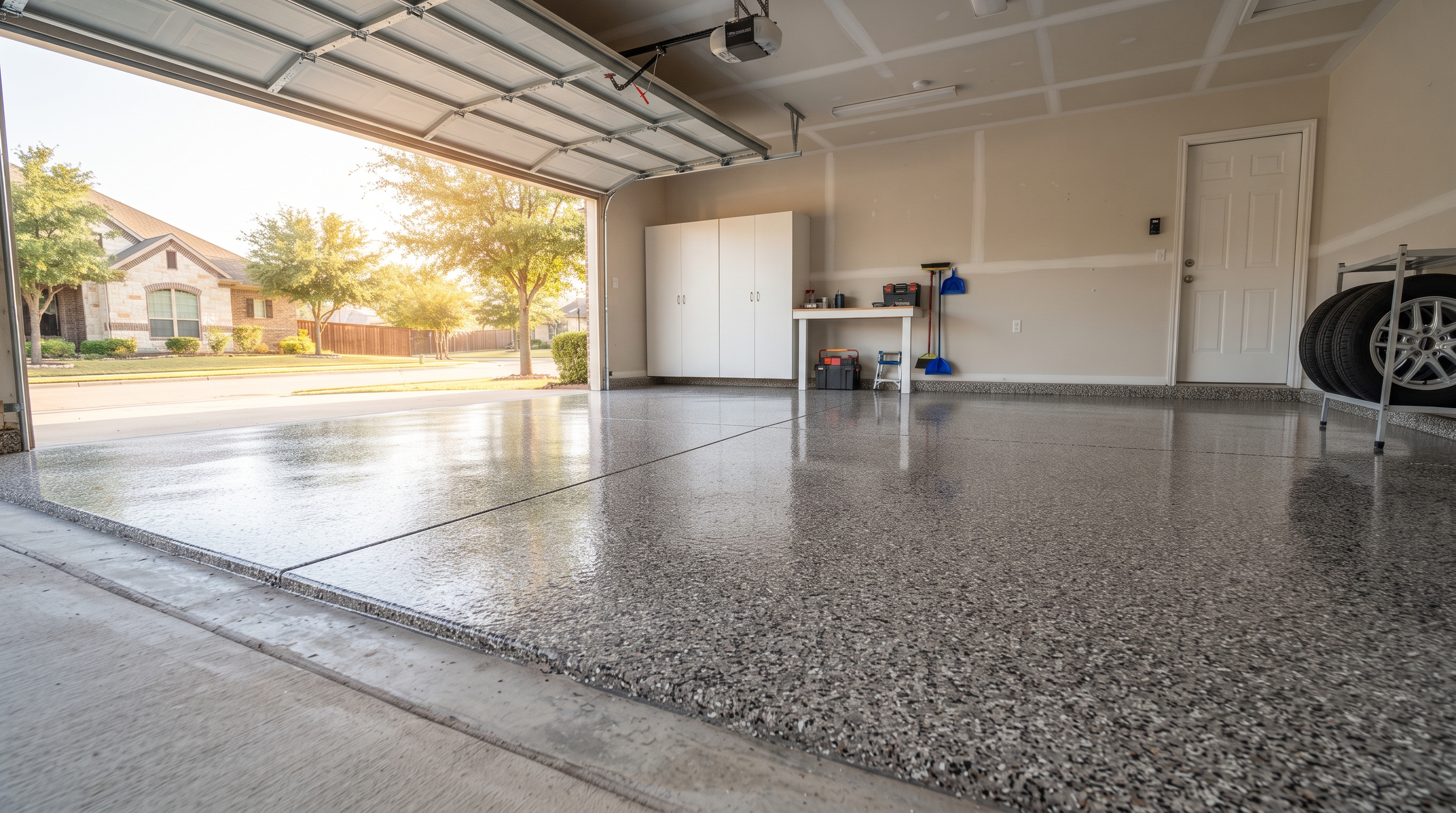
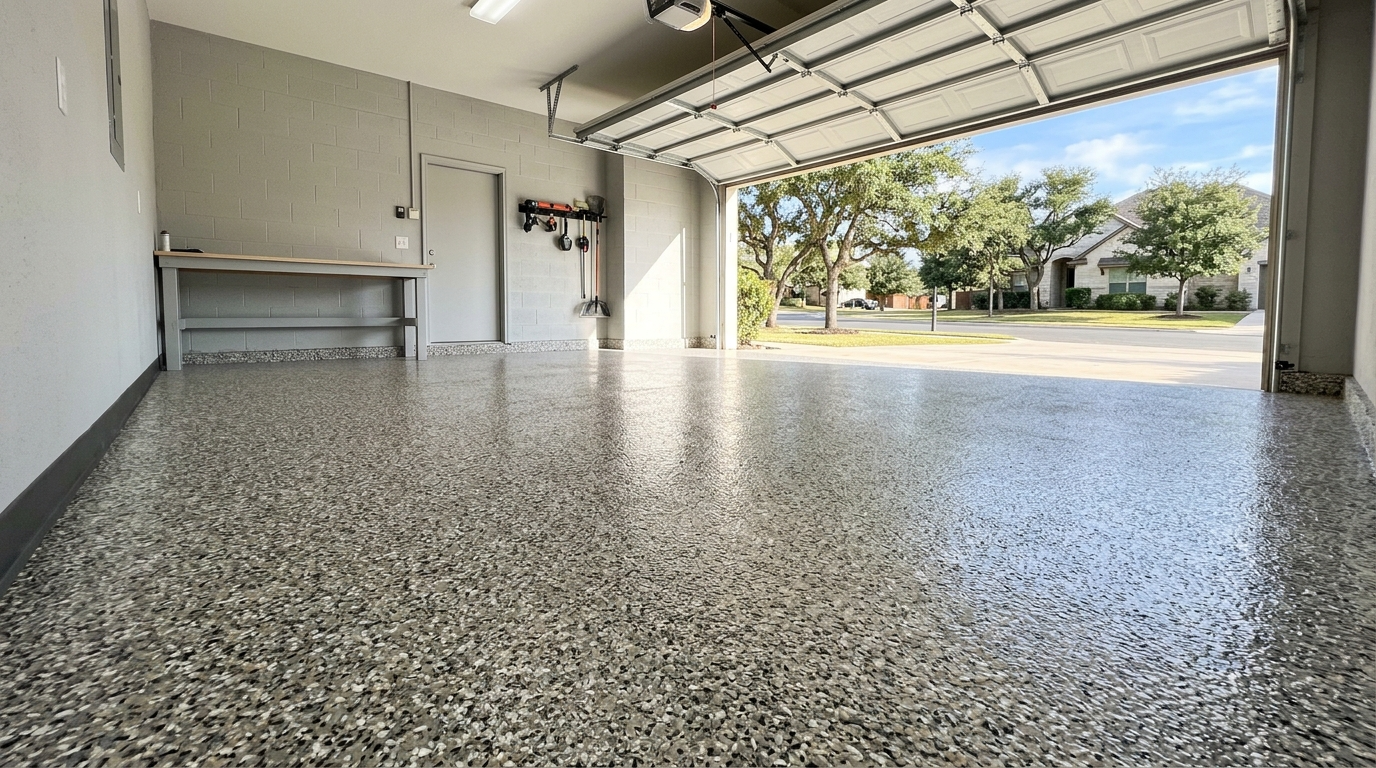
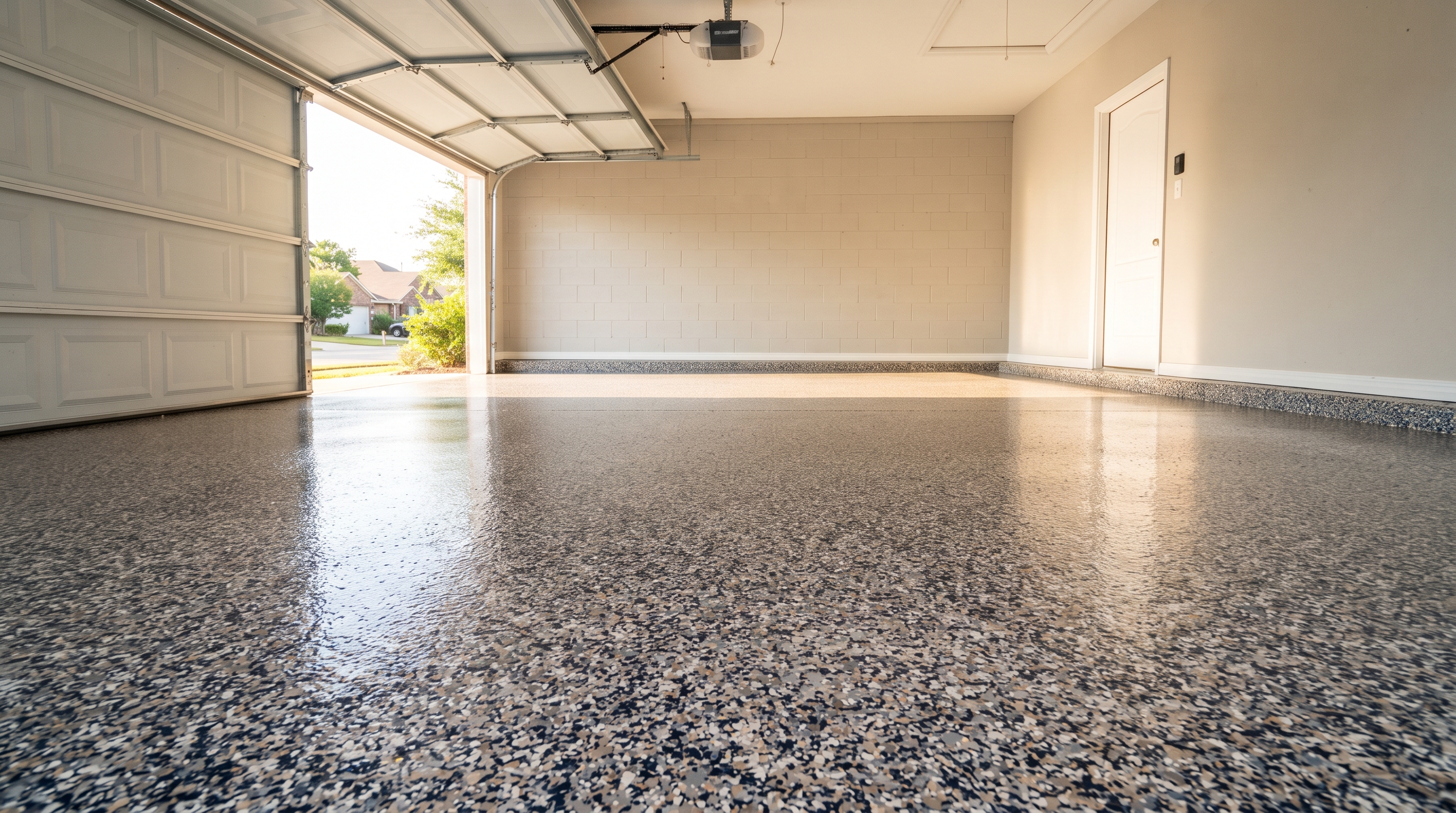
The Worst Time to Coat a Texas Garage Floor Is Behind You
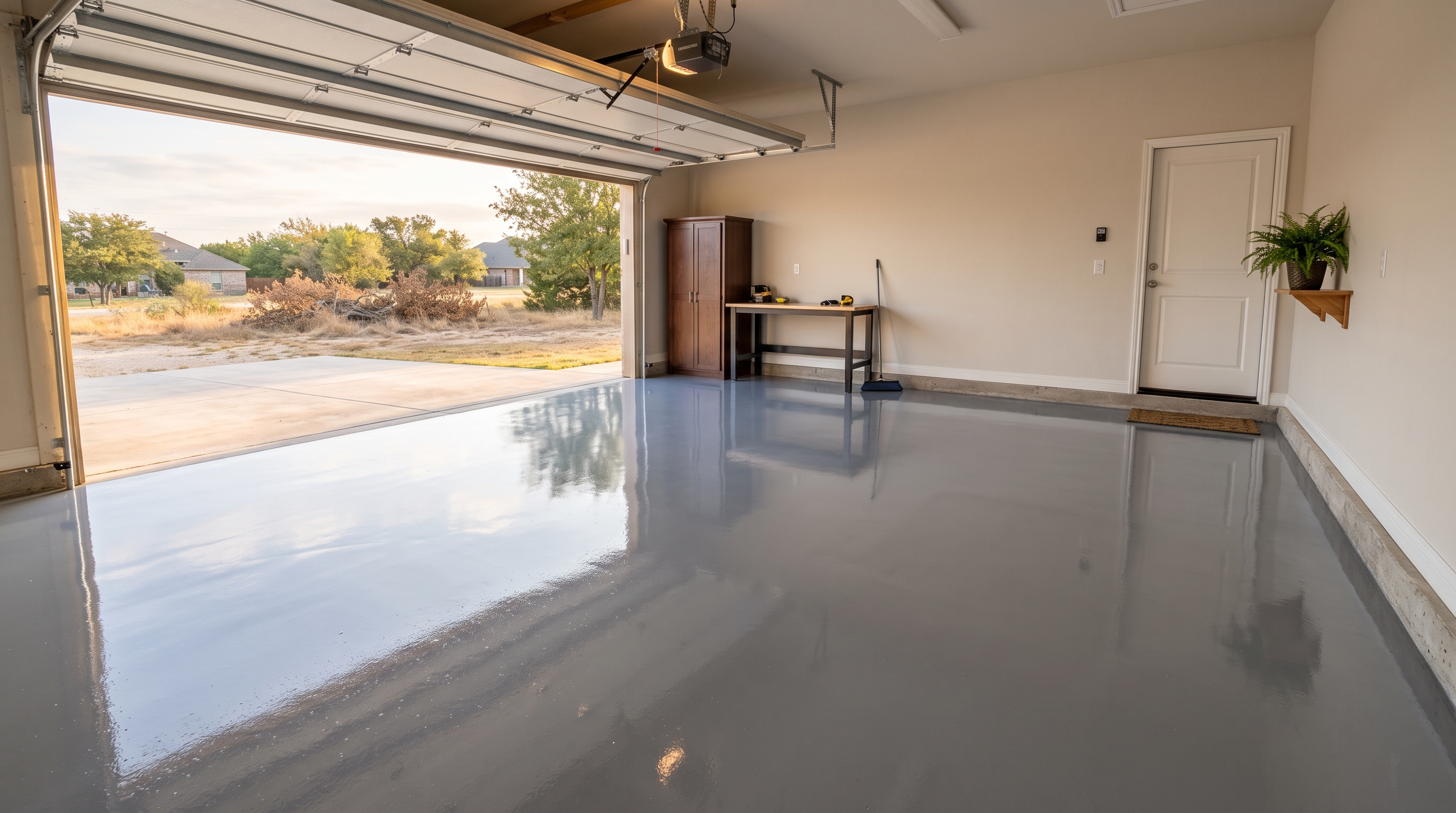
If you spent all summer telling yourself you'd get the garage floor done after it cooled off, you made a smarter call than you probably realize. Most homeowners assume they missed the window. They didn't. They avoided the worst installation conditions of the year and landed in the best ones.
Texas September is not a compromise. For epoxy flooring in Springtown, TX and the surrounding Parker County area, it is the most favorable installation window we work in all year. The reason comes down to chemistry, and it is worth understanding before you book anyone.
What Heat Actually Does to an Epoxy Cure
Epoxy is a two-part chemical system. When the resin and hardener combine, they produce an exothermic reaction: the mixture generates its own heat as it cures. In a Texas August garage where the slab surface temperature is already 90 to 100 degrees, you are adding external heat to an already heat-generating reaction. The cure accelerates beyond what the chemistry is designed to handle.
Fast curing sounds like a benefit. It is not. When epoxy cures too quickly, it does not have adequate time to fully cross-link at the molecular level. The coating develops surface hardness before the deeper layers have finished reacting. That mismatch creates internal stress. It shows up later as brittleness, microcracking, or premature delamination. The floor looks fine for six months. Then it starts failing at the bond line.
September's Temperature Swing Produces a Superior Cure
Here is what makes September different from both summer and deep winter. Daytime temperatures in Parker County through late September typically run in the mid-80s to low 90s. Warm enough to keep the epoxy workable, mobile, and self-leveling during application. Nighttime temperatures drop into the 60s. The slab cools. The cure slows.
That cooling cycle is not a problem. It is an advantage. The slower overnight cure gives the chemistry time to complete its cross-linking fully before the next day's heat adds any acceleration. The result is a denser, more uniform coating throughout its full thickness, not just at the surface.
Think of it this way: a slow-cooked result and a flash-cooked result can look identical on the outside. The difference is in the interior. Epoxy is no different.
The Slab Runs Hotter Than the Air Tells You
Surface temperature and air temperature are not the same number. Concrete absorbs and holds heat. In August, a slab that has sat in a Texas summer can read 95 to 105 degrees at the surface even after the air cools. That creates two problems, not one.
The first is the accelerated cure described above. The second is outgassing. Concrete releases trapped moisture and air as it heats and expands. Coat a hot slab and you trap that outgassing beneath the epoxy layer, producing pinhole bubbling that undermines the bond from day one.
By mid-September, slabs in Springtown garages and shops have had several cooler nights to equalize. Surface temperatures are manageable and the outgassing risk drops significantly. This is one of the most common failure mechanisms we see after summer installs. Most homeowners never hear about it until after the floor starts failing.
Prep Still Decides Everything, Regardless of Season
September conditions give you a better chemistry window. They do not replace the work that has to happen before any epoxy touches the floor.
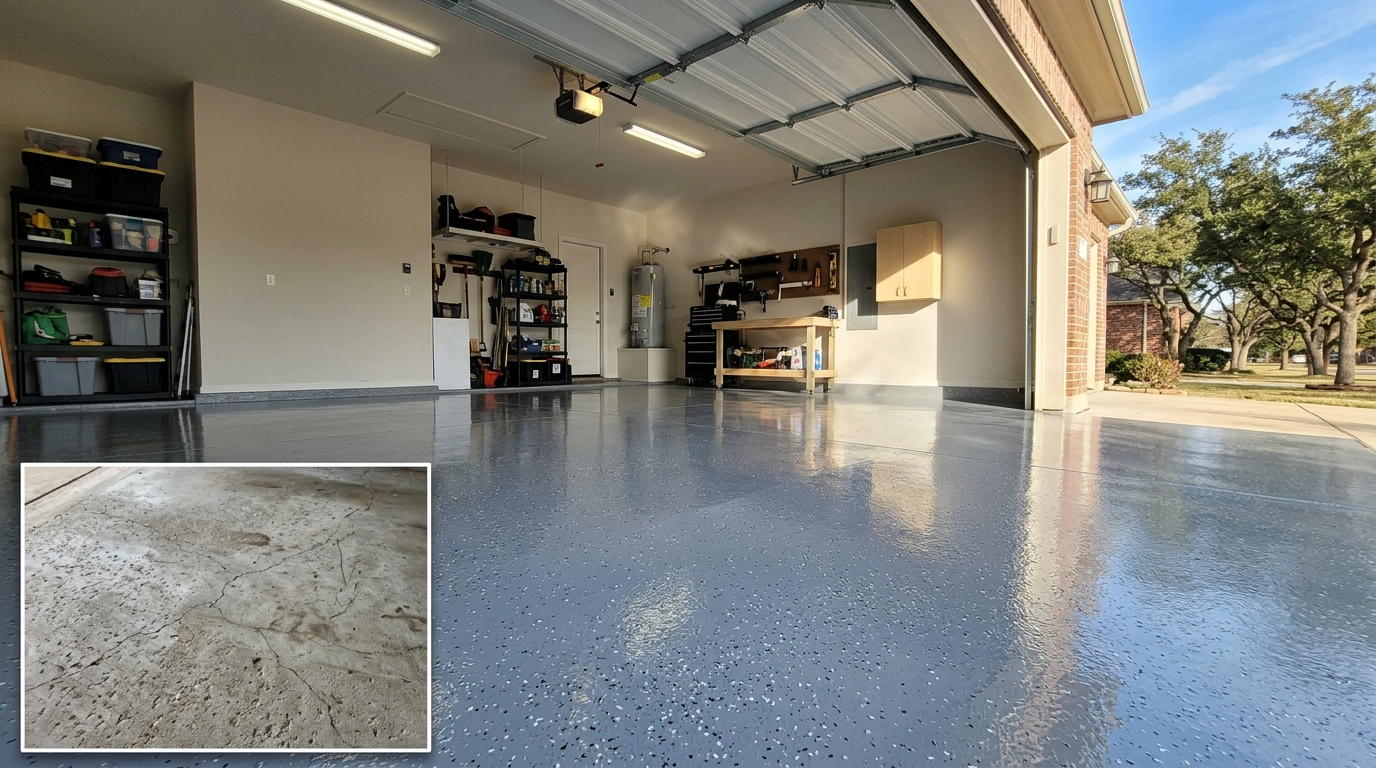
At NES Flooring, every installation starts with mechanical diamond grinding. No acid wash, no shortcuts. Grinding opens the concrete pores at a mechanical level, creates the profile the coating needs to bond into, and surfaces any cracks or contamination that need addressing before the system goes down. That step is what separates a floor that lasts from one that looks good at inspection and peels by spring.
The pattern we encounter most often: a homeowner who had a previous epoxy installation fail and assumed the product was the problem. In almost every case, the prep was the problem. The product never had a real bond to begin with. September's favorable temperature window only produces better results when the foundation is right.
What Springtown Homeowners Ask Before Scheduling a Fall Install
Is it actually too late in the year to get epoxy installed? Not even close. September and October are two of the best installation months in North Texas. Temperatures are favorable, contractors have more scheduling availability than they do in spring, and the floors cure cleanly. If you are asking this question in September, you are asking at exactly the right time.
Will the concrete be in worse shape after a full Texas summer? This is a fair concern most installers gloss over. Extreme summer heat can widen hairline cracks and surface-stress older slabs. We assess that during the consultation. In most cases it is a non-issue, and cracks that need addressing get repaired before coating goes down. The concrete condition determines our prep approach, not whether we can coat it.
I had epoxy installed before and it peeled. Why would this time be different? Because the failure almost certainly had nothing to do with the product. Peeling floors trace back to one of two things: inadequate surface preparation or installation during conditions that forced the cure. If the installer skipped mechanical grinding or rolled product onto a slab that was too hot, the coating never bonded. It was only a matter of time. At NES Flooring, every installation starts with diamond grinding and every job carries a 10-year workmanship warranty. That warranty exists because we are confident in the prep, not just the product.
How long before I can use the garage after installation? You can walk on the floor within 12 hours of installation. Vehicles can return within 72 hours. September's cooler overnight temperatures support that timeline well. The floor reaches handling strength without the forced-cure problems that come with summer heat.
The September Window Closes by Mid-October
NES Flooring is a family-owned operation serving Springtown, Weatherford, Aledo, Fort Worth, Granbury, and all of Parker County. We do not use subcontractors. The crew that shows up for your consultation is the crew that installs your floor, backed by our 10-year workmanship warranty on every job.
Once nighttime temperatures fall too far for optimal workability, you are looking at spring. If your garage floor has been on the list all summer, now is the time to act.
Call NES Flooring at 817-668-5051 or request your free consultation online. We will assess your slab, walk you through the right system for your space, and deliver a detailed quote with no surprises and no commitment required.
Ready to work with NES Flooring?
Let's connect! We’re here to help.
Send us a message and we’ll be in touch.
Or give us a call today at 817-668-5051
More from NES Flooring: