Your Garage Slab Has to Qualify for Epoxy. Here's How to Know If Yours Does.
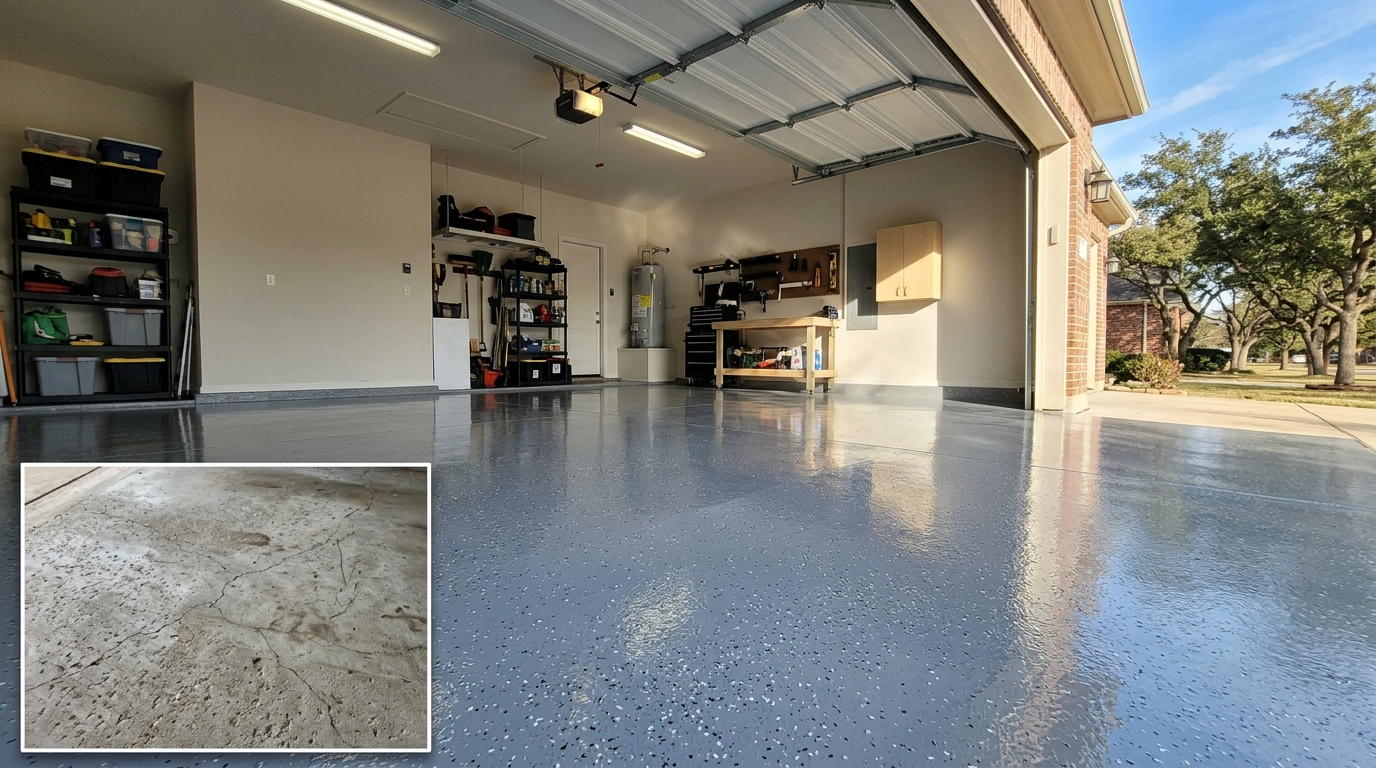
Most homeowners pick a color, get a quote, and assume the contractor will handle the rest. Nobody tells them the slab itself has to pass evaluation before a coating goes down. Finding that out on installation day is the kind of surprise that turns a simple project into an expensive one.
If you're searching for an epoxy floor contractor in Aledo TX, you're already past the "should I do this?" stage. You've made the call. What you need now is a clear picture of what a contractor actually evaluates before work begins, so you walk into the consultation knowing your floor's situation rather than guessing at it.
Visual Inspection Tells You Almost Nothing
Judging readiness by appearance is the most common mistake homeowners make. A floor that looks smooth and clean can still fail to hold a coating. A floor with surface stains, minor pitting, or old tire marks can be prepped into a perfectly bondable substrate. Looks are nearly useless as a diagnostic tool.
What actually matters is what's happening at and below the surface. Concrete is porous. It absorbs oil, water, and contaminants over years of use. Even a floor pressure-washed the week before often carries embedded oils or old sealer residue that coating materials cannot bond through. That's why mechanical diamond grinding is the non-negotiable first step in every NES Flooring installation. Grinding removes the top layer of the concrete and opens the pores so the coating has a clean surface to penetrate and lock into.
We regularly find old sealer sitting just below the surface on floors homeowners thought were in great shape. That sealer acts like a barrier. Without grinding it off, a new coating sits on top of the sealer rather than bonding to the concrete, and peeling follows quickly. If you want to understand exactly what goes wrong when prep gets skipped, how to prevent peeling, bubbling, and early wear walks through the failure chain in detail.
Moisture Is the Problem You Cannot See from the Doorway
Moisture is the single most common reason a concrete coating fails before its time. Texas garages are especially vulnerable. Slabs poured on grade pull moisture up from the soil below, and that moisture content varies seasonally, rises after rain, and shifts with humidity. In Parker County and across the Fort Worth area, late summer heat drives vapor movement through slabs even when the surface looks and feels completely dry.
The field test is simple. Tape a plastic sheet flat to the floor, seal all four edges, and leave it for 24 hours. Moisture on the underside means the slab is transmitting vapor at a level that warrants closer evaluation. A professional contractor will run more precise tests, but this gives you a baseline before anyone shows up.
Moisture doesn't automatically disqualify a floor. It changes the product selection and sometimes the process. That distinction matters when you're comparing quotes, so it's worth understanding before the consultation.
Cracks Fall into Two Very Different Categories
Not all cracks are equal, and confusing them is costly.
Hairline shrinkage cracks, the thin shallow lines that form as concrete cures, are normal. They repair cleanly before coating goes down and do not disqualify a floor. Structural cracks are a different matter entirely. These are wider, deeper, run in patterns, or show vertical displacement where one side sits higher than the other. That kind of cracking points to an underlying issue with the slab or the substrate beneath it. Coating over them without addressing the cause produces a floor that continues to crack through the finish.
Surface spalling also needs attention before coating. When the top layer of concrete is flaking or popping, those areas require repair so the coating has a consistent, solid substrate to bond to across the whole floor.
A qualified contractor assesses crack width, pattern, and whether there's ongoing movement before recommending a path forward. The evaluation itself is what the free consultation is for.
Previous Coatings and Sealers Change What Prep Looks Like
If your floor has ever been coated or sealed, that history changes the preparation process. Many garages in Aledo and Weatherford come to us with a prior coat of big-box store epoxy or a penetrating sealer already on them. These products leave residue that affects adhesion. Some are thin enough that grinding removes them cleanly. Others require additional steps.
The fastest way to check for an existing sealer: pour a small amount of water on the floor. If it beads rather than absorbing within a few seconds, a sealer is present. Tell your contractor before the consultation. It helps them bring the right equipment and set accurate expectations from the start.
Questions Homeowners Ask Before They Book
My floor has oil stains from years of parking. Does that rule it out?
It does not. Oil contamination is one of the most common conditions we work with. Diamond grinding removes the top surface of the concrete along with the staining, and any residual contamination in deeper pores gets addressed during prep. Oil stains are a prep problem with a clear solution, not a dealbreaker.
I had an epoxy kit applied five years ago and it mostly peeled off. Can the floor still be coated?
Yes, and we see this regularly. Failed DIY coating remnants get ground off during surface prep. What's left is raw concrete, which is exactly the surface a professional installation bonds to. The prior failure demonstrates why prep matters. Doing it right this time changes the outcome entirely.
The floor has a couple of cracks. Will that affect the final price?
Hairline cracks get repaired as part of standard prep and typically don't move the quote much. Wider structural cracks require more material and time, and that gets assessed and line-itemed clearly before any work begins. No surprises after the consultation.
What if I'm not sure whether to coat the whole garage or just part of it?
That's worth talking through before you commit to anything. Partial coatings can work, but seams and transitions need to be planned for, and the cost difference often isn't what people expect. Bring the question to the consultation. We'll measure the space, look at the concrete, and tell you straight what makes sense for your situation.
Get a Free Consultation and an Honest Assessment of Your Slab
NES Flooring serves Aledo, Fort Worth, Weatherford, Springtown, Granbury, and the surrounding Parker County area. We're a family-owned crew. The same team that assesses your floor does the installation, with no subcontractors, no handoffs, and no communication gaps between the person who sold you the job and the person doing the work.
Every consultation is free. We evaluate your slab, walk you through what prep requires, and give you a detailed quote before any commitment. Our work carries a 10-year workmanship warranty because we do the prep right the first time, and we're confident enough in that to put it in writing.
Call 817-668-5051 or reach out through our website to schedule your free consultation. You'll leave the conversation knowing exactly what your floor needs, what the work costs, and what to expect on installation day.
Ready to work with NES Flooring?
Let's connect! We’re here to help.
Send us a message and we’ll be in touch.
Or give us a call today at 817-668-5051
More from NES Flooring: