The One Thing That Ruins a Garage Floor Before It Even Starts
Most homeowners blame the coating when an epoxy floor fails. They blame the brand, the weather, the application technique. The actual problem started before the bucket was ever cracked open, in the concrete itself, and no amount of scrubbing or degreasing changes that.
If you have been searching for epoxy flooring Fort Worth TX and wondering why your last attempt peeled within a season, this is the answer. The coating did not fail. The surface it was applied to was never ready to accept it.
Concrete Looks Clean Until You Try to Bond Something to It
A garage floor that has absorbed ten years of motor oil, tire dust, and concrete sealer does not look contaminated. It looks like a floor. That is the problem.
Concrete is porous. Over time, those pores fill with contaminants from above and below. Oil and grease penetrate deep into the surface profile. Curing compounds applied at the original pour create a chemical barrier across the top. Old sealers sit in the surface and block adhesion. Moisture vapor migrating up from the subgrade loads the concrete with enough humidity to prevent a proper bond.
A mop, a degreaser, or an acid etch cannot fully remove what years of use have pushed into that surface. They clean the visible layer. They cannot clean the profile.
When a coating goes down on concrete that still carries those contaminants, it bonds to the surface layer instead of the concrete itself. That surface layer eventually separates. The coating comes with it.
Why Acid Etching Sets You Up to Fail Again
The DIY kits and most budget installs rely on acid etching to prepare the surface. Acid etching opens the concrete slightly and removes some surface contaminants. It is a step. It is not preparation.
Acid etching leaves residue that has to be fully neutralized and rinsed. It does not remove embedded oil. It does not grind down a sealed or power-troweled surface to a consistent profile. And it does nothing for concrete that has been previously coated, repaired with patch compounds, or poured at varying densities across the slab.
The result is a surface that looks ready but is not uniform. Some areas will bond. Others will fail within months, sometimes weeks. That is why so many homeowners in Fort Worth, Aledo, and Weatherford end up with a floor that peeled in patches rather than everywhere at once. The patches that held were the patches where the concrete happened to be cleaner or more porous. The rest was never going to work.
Professional epoxy installation versus DIY kits covers this difference in more detail if you want to understand exactly where budget processes cut corners and what that costs you over time.
What Diamond Grinding Does That Nothing Else Can
Diamond grinding is not a surface cleaning step. It is a material removal step.
A walk-behind diamond grinder cuts across the top of the concrete, removing the contaminated layer entirely and exposing fresh, open, consistent concrete underneath. It levels high spots. It opens the pores uniformly across the entire slab. It reveals cracks, voids, and soft spots that need repair before any coating goes down.
That last part matters more than most homeowners realize: you cannot repair what you have not yet uncovered.
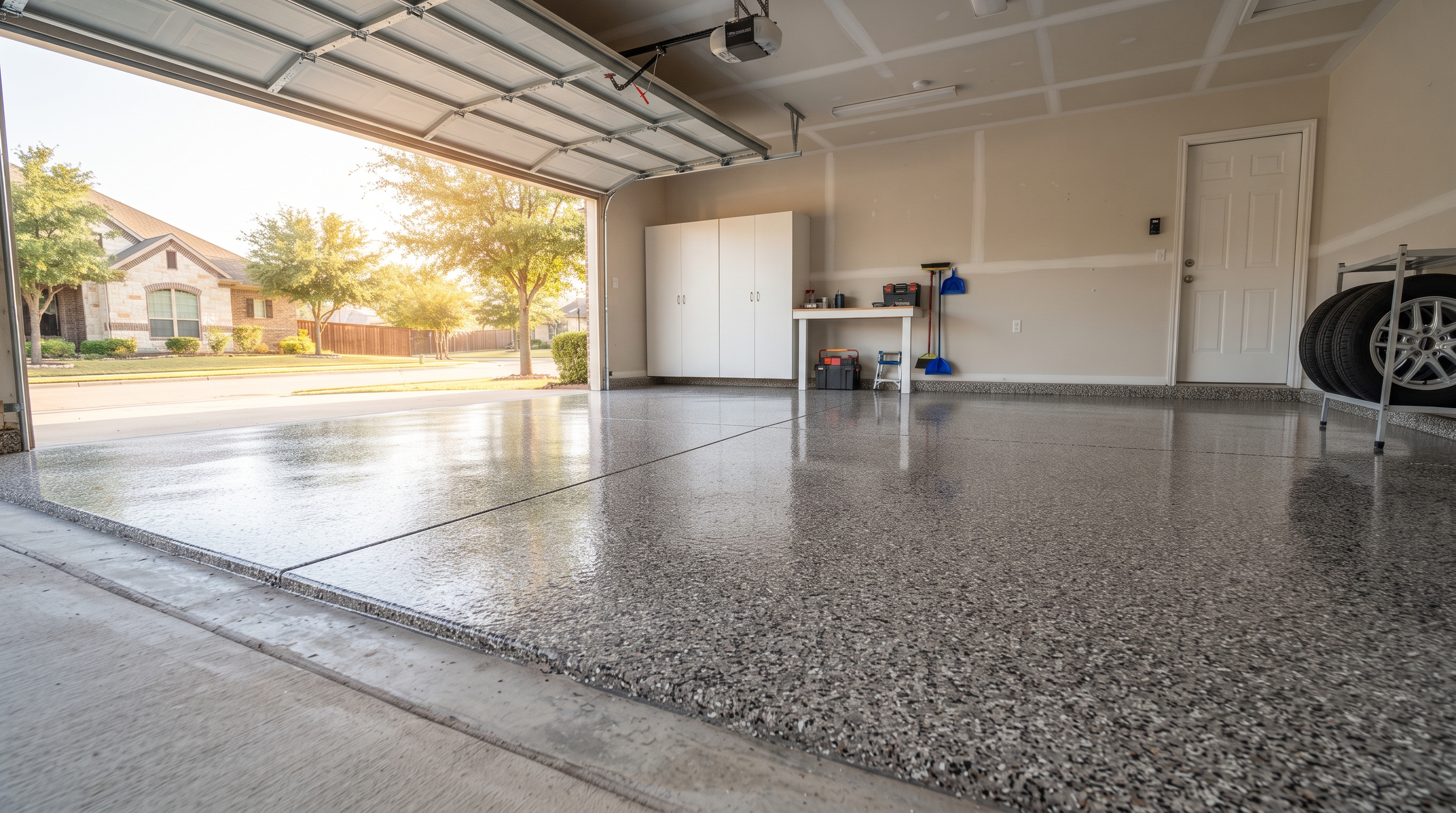
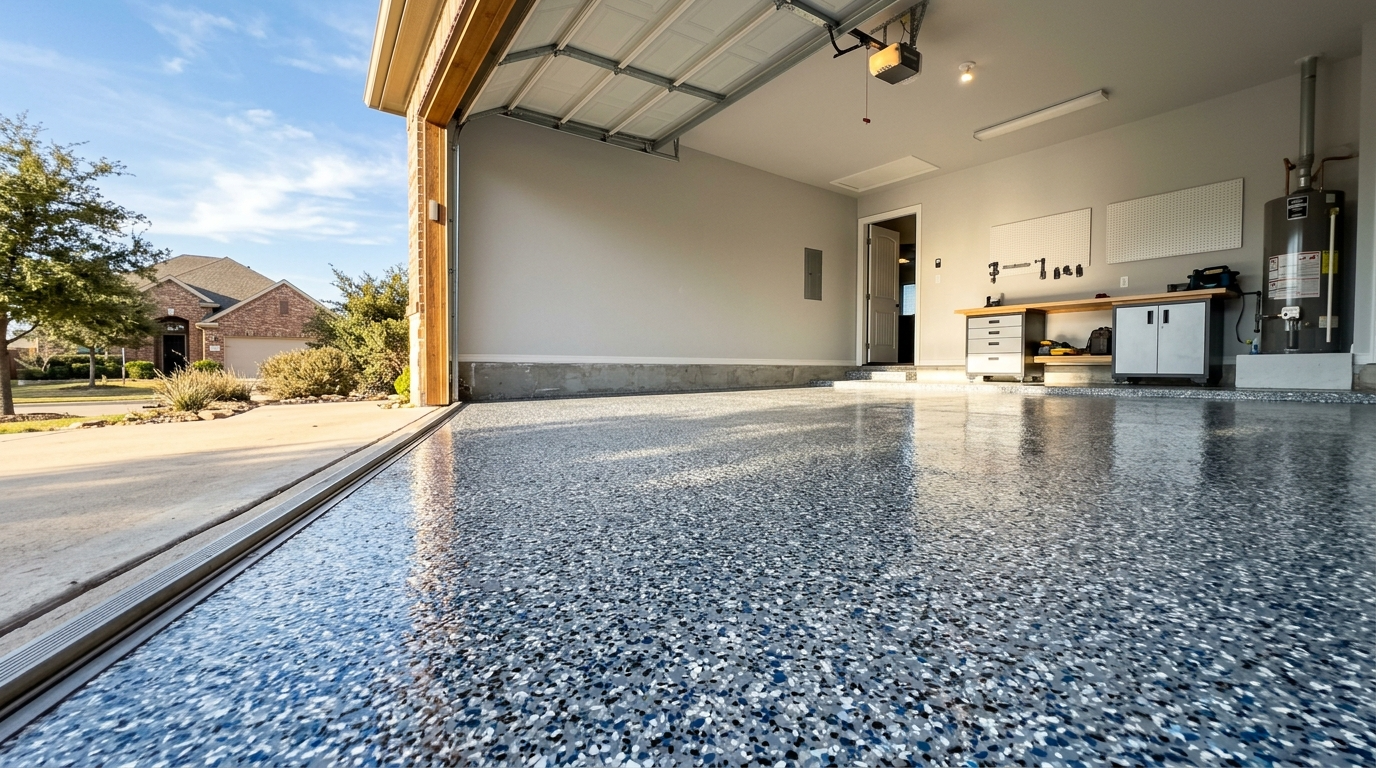
The profile grinding creates gives the epoxy mechanical grip, not just chemical adhesion. The coating locks into the ground surface at a physical level. That is the difference between a floor that lasts a decade and one that starts lifting at the edges before summer ends.
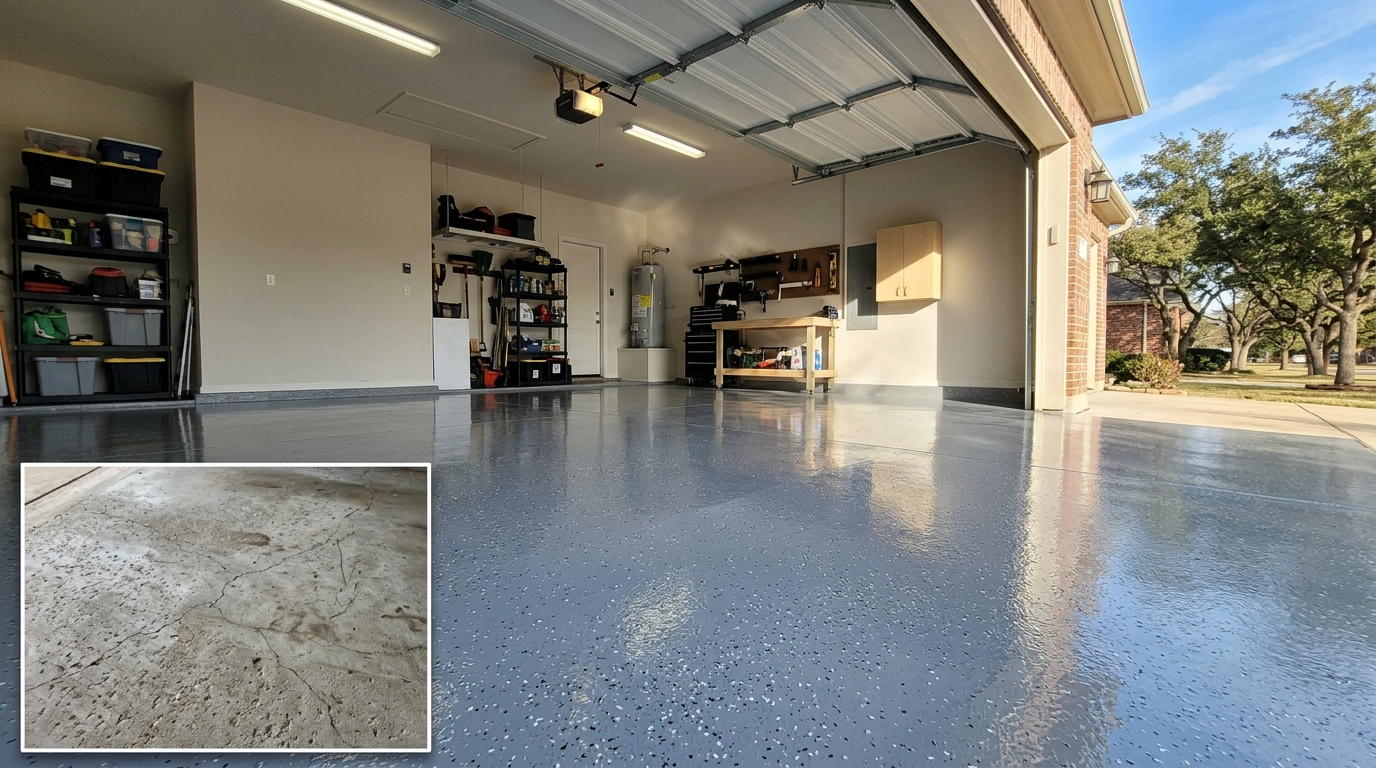
We regularly see floors that were coated two or three times before a homeowner calls us. Each previous coat was applied over the last failed one, or over concrete that was wiped down and acid etched but never properly profiled. By the time we grind those slabs, the concrete underneath has often never been opened in its life. The previous installers simply painted over a surface that was never going to hold.
For a full look at how this process runs from start to finish, what actually happens during an epoxy floor installation walks through every phase in plain terms.
Texas Heat Exposes Every Shortcut
Texas summers are brutal on floors. Concrete in a Fort Worth or Parker County garage can reach surface temperatures well above ambient air temperature by mid-afternoon. A coating applied over a compromised surface will not survive that thermal cycling.
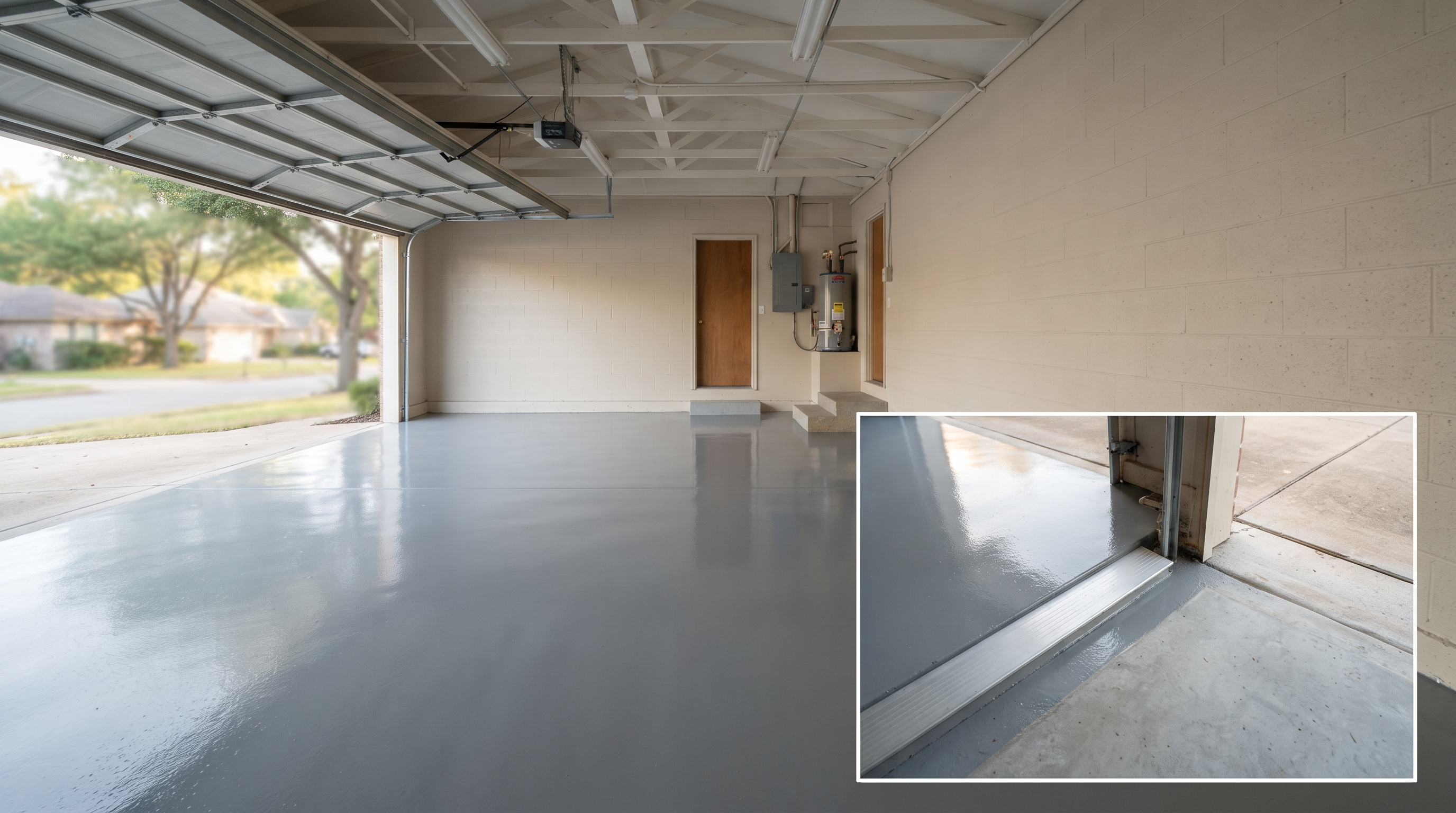
Hot tire pickup is the most common complaint we hear from homeowners who went with a box store kit or a low-bid installer. A vehicle sits in a shaded garage all day, then comes in with tires that have been baking on asphalt. That heat transfers directly to the floor. If the coating is not bonded deeply and sealed with a urethane topcoat built for that stress, the tire heat softens the bond line and the coating peels away stuck to the tire.
Proper prep and the right material stack eliminate this. Epoxy flooring performance in Texas heat goes deeper on why material selection and prep together determine how a floor handles these conditions.
What Homeowners Ask Us Before They Schedule
My floor looks smooth and clean. Do you really need to grind it?
Yes. What you see on the surface does not reflect what is in the surface. A floor that looks clean still carries years of tire dust, ambient oil, and possibly a curing compound or sealer packed into the pores. Grinding removes the contaminated layer and exposes concrete that can actually bond to a coating. Without it, the best materials in the industry will still fail.
I had epoxy put down two years ago and it is already peeling. Did the last installer ruin my concrete?
Almost certainly not. The concrete itself is usually fine. The problem is that the previous coating went down over unprepared concrete. When we grind a previously coated slab, we remove the failed layer along with the top of the concrete and start fresh. What we find underneath is typically solid. You are not starting over because your slab is damaged. You are starting over because the prep was skipped.
Your quote is higher than the last installer's. What am I actually paying for?
Grinding equipment, skilled labor, and industrial-grade materials are not cheap. A quote that leaves out proper surface prep is not a bargain. It is a down payment on a second install. Comparing epoxy flooring quotes explains what to look for line by line so you understand what you are actually buying.
Can you coat a floor that has old paint or a previous sealer on it?
Yes, but it requires grinding through those layers to bare concrete. We assess the slab condition at the consultation and tell you exactly what we find before any work starts.
The Floor That Lasts Starts With a Phone Call
Every NES Flooring installation begins with a free on-site consultation. We look at the slab, assess the surface condition, identify any cracks or moisture concerns, and give you a detailed quote before work begins. No surprises. No subcontractors. The same crew that evaluates your floor installs it.
Every installation we complete is backed by a 10-year workmanship warranty. That warranty exists because we do not cut the prep step.
If you are in Fort Worth, Aledo, Weatherford, Springtown, Granbury, or anywhere in Parker County, call NES Flooring at 817-668-5051 or request your free consultation today. You will know exactly what is wrong with your current surface, what it takes to fix it, and what a floor that holds for a decade actually costs. The floor you have been trying to get right does not need another coat. It needs the prep that was skipped every time before.
Ready to work with NES Flooring?
Let's connect! We’re here to help.
Send us a message and we’ll be in touch.
Or give us a call today at 817-668-5051
More from NES Flooring: