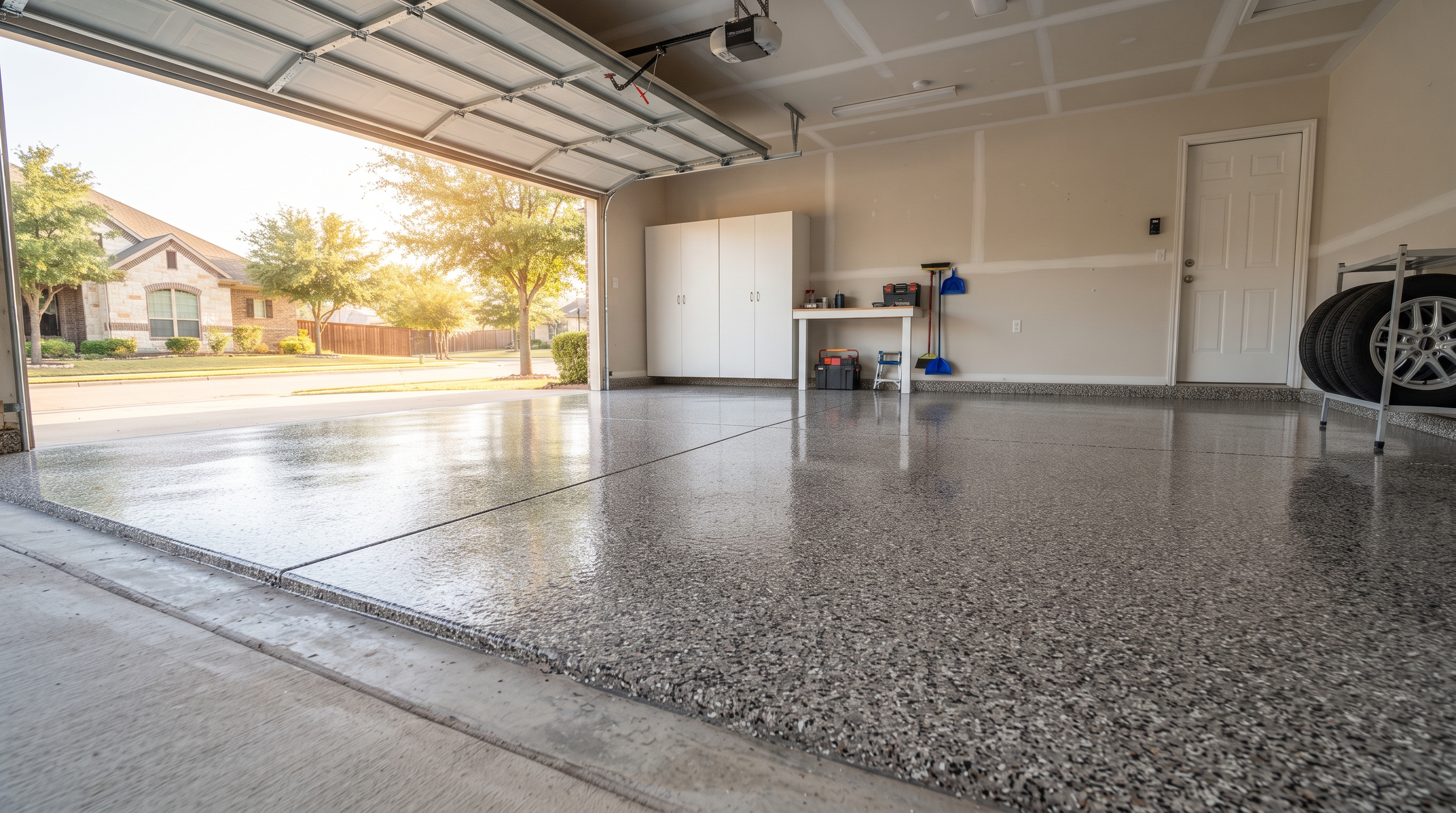
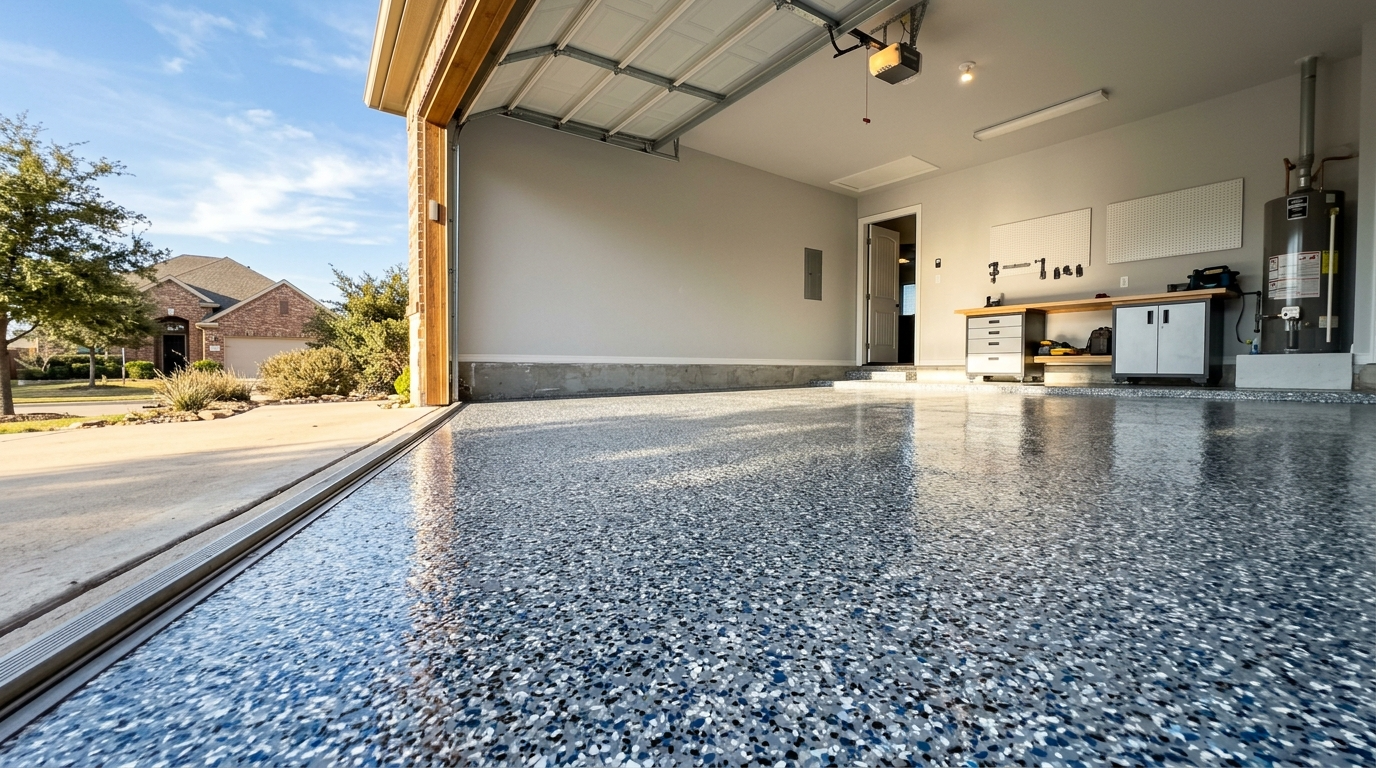
How Texas Heat Actually Changes Your Garage Floor Timeline
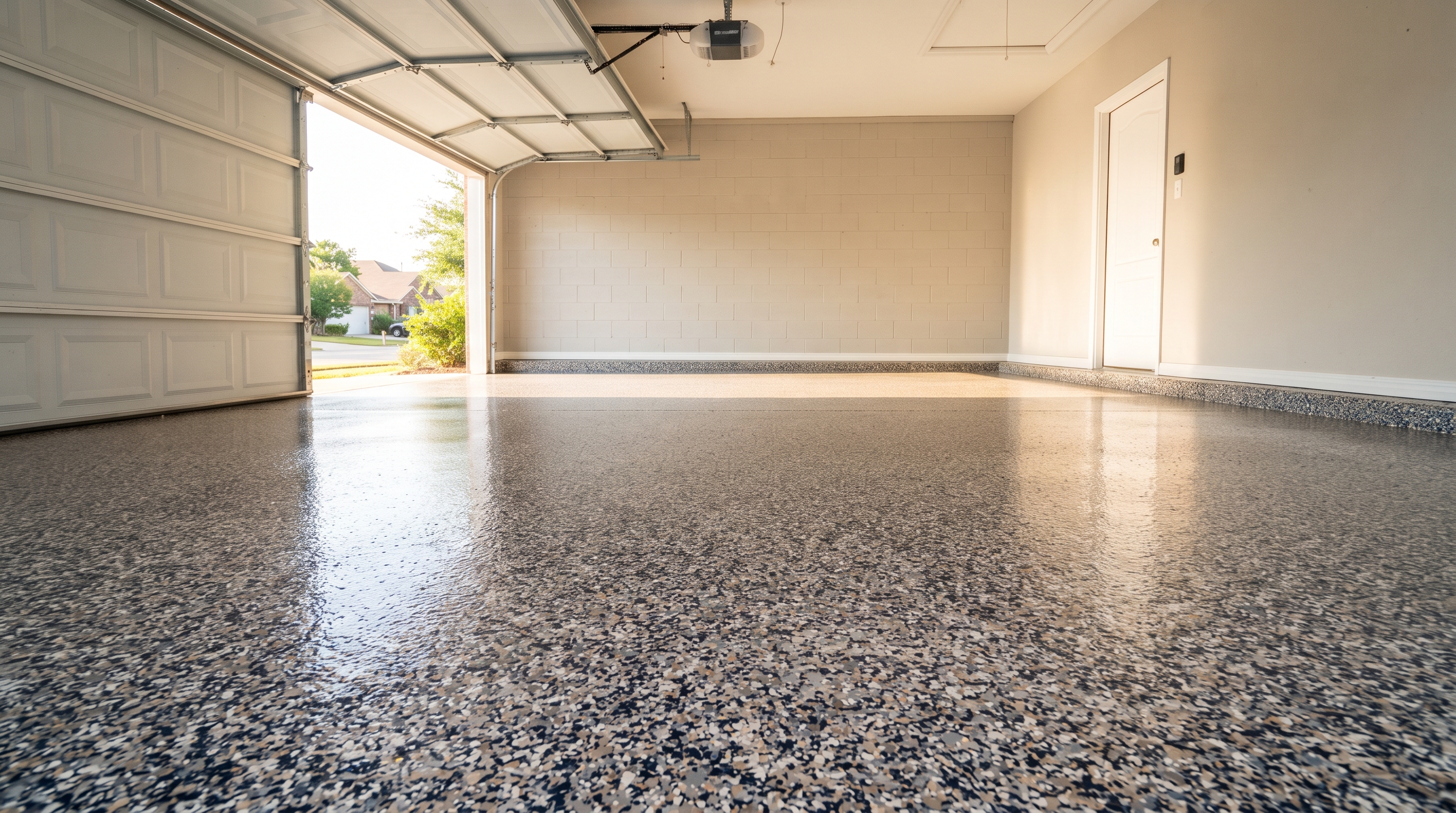
Most cure time guides for epoxy flooring were written for installers working in climate-controlled environments where the slab sits at 70°F and the humidity stays predictable. In Parker County in July, that baseline is fiction. When you book flake epoxy floors in Parker County TX in the middle of a Texas summer, you are not dealing with the same chemistry the manufacturer tested in a lab in Ohio. Understanding that difference is what separates a floor that lasts a decade from one that peels before your first oil change.
If you are researching flake epoxy floors Parker County TX because you have a project scheduled or you are trying to decide whether summer is even a reasonable time to move forward, here is the honest answer: summer installations work, and the timeline looks different than what you read online. This post covers how heat changes the process, what actually determines when you can use your garage again, and the one mistake that sends homeowners back to square one.
Heat Does Not Just Speed Things Up, It Changes the Chemistry
The common assumption is that a hotter slab means faster curing, which means you get your garage back sooner. That is only half true, and the half that gets left out is the part that causes failures.
Epoxy is a two-part system. When the resin and hardener meet, they trigger an exothermic reaction: the material generates its own heat as it cures. On a 100°F slab in a Parker County garage with the door open and direct afternoon sun hitting the concrete, that reaction accelerates faster than the product was formulated to handle at standard application. The result is flash curing. The surface skins over quickly, but the deeper layers have not had time to cross-link properly. You get a floor that looks set but has not developed its full bond strength.
The practical consequence: a floor that passes the fingernail test at hour six can still delaminate under hot tire pickup at day two if the substrate cure was rushed. This is not a materials problem. It is a timing and application problem, and it is entirely preventable when the installer accounts for ambient conditions before the first drop of product hits the floor.
Concrete Surface Temperature Is Not the Same Number as Air Temperature
This is where most homeowners get surprised, and it changes how we schedule every job.
Check the weather app and see a high of 98°F, and you think you know what you are working with. You do not. Concrete surface temperature on an unshaded slab can run 20 to 30 degrees hotter than the air above it. A west-facing garage floor that has been absorbing sun through an open door since noon can register 125°F when an installer shows up at 2 PM.
NES uses an infrared thermometer on every slab before work begins. If the surface temperature is outside the product's application range, we wait. Summer jobs start early, before direct sun reaches the floor and before ambient heat peaks. This is not flexibility in the process. It is a requirement for the coating to bond correctly.
The surface preparation for epoxy floors phase actually helps here. Diamond grinding opens the concrete's surface pores for adhesion, and the dust removal and cleaning that follow give the slab a chance to equalize in temperature before product goes down. That sequence matters more in July than it does in October.
The 12-Hour and 72-Hour Rules Still Apply, With One Condition
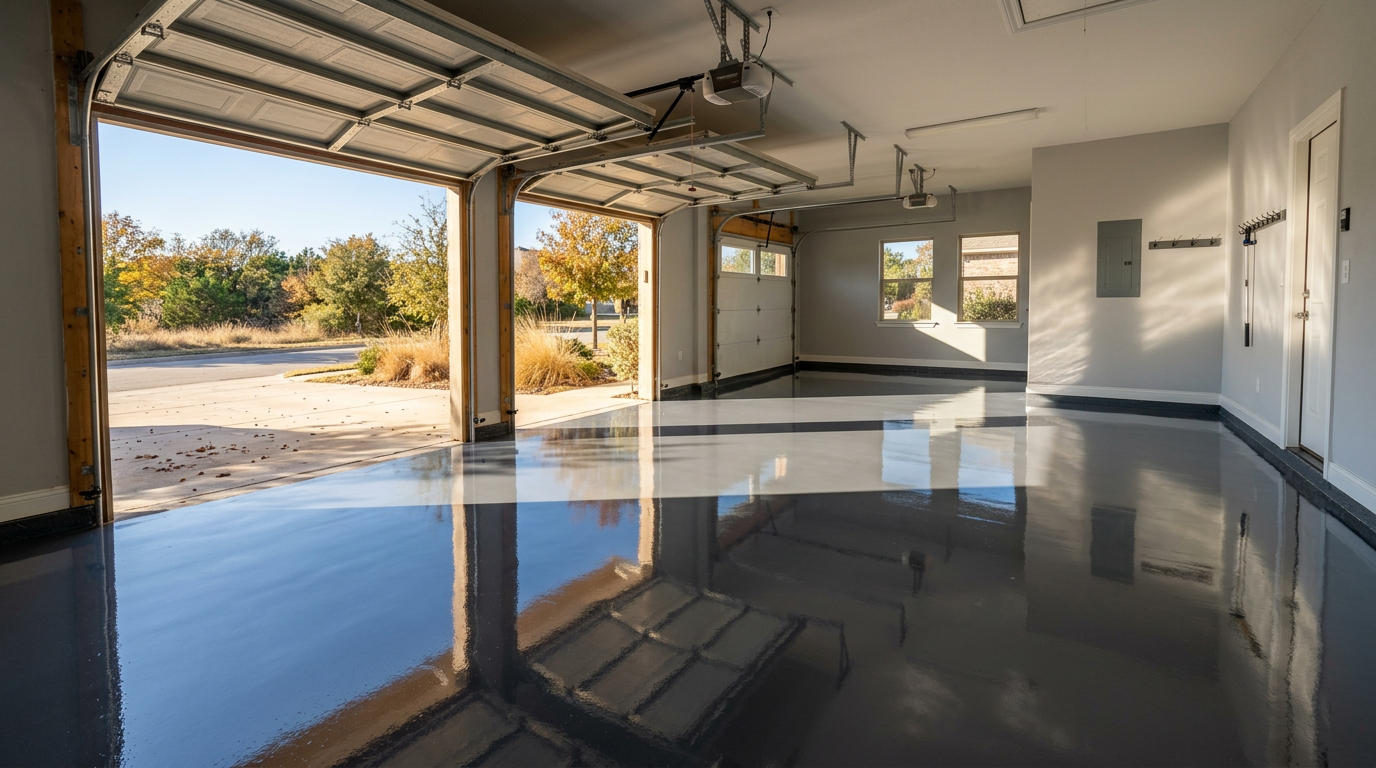
NES customers walk on their floors within 12 hours and drive on them within 72 hours. That holds in summer, with one non-negotiable condition: the garage stays closed and shaded during the cure window.
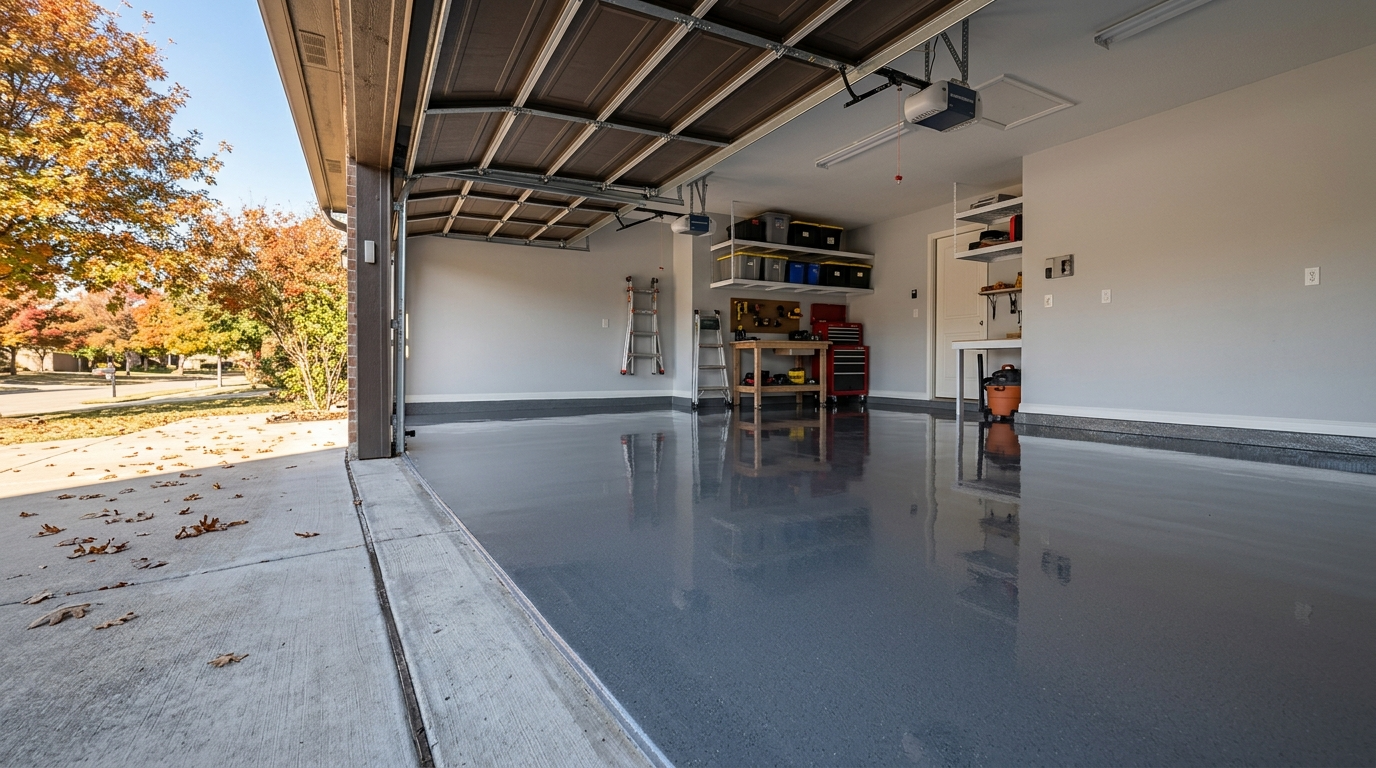
A floor installed Tuesday morning needs to sit in a closed, shaded garage through the heat of Tuesday afternoon and Wednesday. If the garage door is left open and direct sun hits the fresh topcoat during cure, the surface temperature can spike enough to cause a tacky, uneven finish that never fully resolves. Most homeowners prop the door open thinking ventilation will help. Ventilation during application matters. During cure, what the floor needs is shade and a stable temperature. Those are different things.
The pattern we encounter most in summer callbacks is a floor where everything was done correctly through application, and then the cure environment was compromised in the first 24 hours. The fix is almost always a topcoat recoat, which adds time and cost the original installation did not require.
What Homeowners Ask Before Scheduling a Summer Installation
Is July actually a bad time to get this done, or is that just what installers say to manage their schedule?
July is not a bad time for a flake epoxy installation in Parker County. Plenty of excellent floors go down in peak summer. What causes failures is not the heat itself. It is ignoring the application window and leaving the cure environment to chance. An installer who schedules the job for early morning, monitors slab temperature before application, and walks you through managing the garage during cure can produce a floor in July that looks identical to one done in April.
Do I need to run the AC in my garage during cure?
You do not need air conditioning, but you do need shade. If your garage has a window AC unit, running it during cure keeps the surface temperature more stable and is never a bad idea. Without one, the priority is keeping the garage door closed during peak heat hours on days one and two. Shade matters more than cool air.
What if there is a crack in my slab, does summer heat make that worse before you coat?
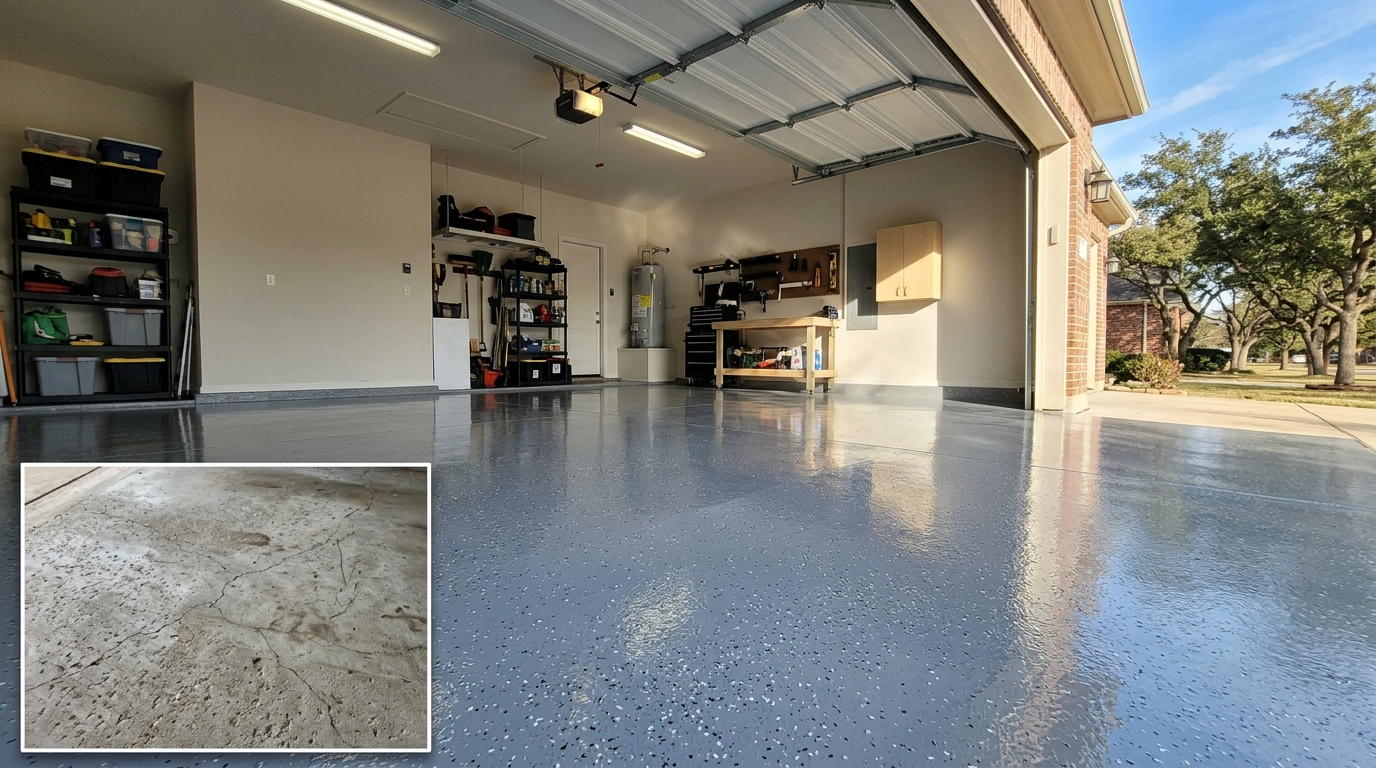
Concrete expands and contracts with temperature. Existing cracks are widest in winter and narrowest on a hot summer day when the concrete has expanded. NES fills and repairs cracks after grinding and accounts for seasonal movement during that repair. A crack repaired in July on an expanded slab can behave differently in January when the concrete contracts. We address this during the consultation so there are no surprises six months after installation.
I have heard that epoxy peels in the Texas heat. If I spend this kind of money, how do I know that will not happen to me?
Peeling almost always traces back to two causes: inadequate surface preparation or product applied outside its temperature range. Not heat in general. Skipped steps. NES grinds every slab with mechanical diamond tooling before any product goes down. That is the step budget installs and DIY kits skip, and it is the reason coatings fail. We also back every installation with a 10-year workmanship warranty. That warranty exists because we are confident enough in the prep and the process to put it in writing.
How long is my two-car garage out of commission?
Plan for the installation day plus two full days before you park on it. Light foot traffic on day one after cure is typically fine. For practical purposes, schedule it so you have a long weekend before you need full use of the space again.
Get a Straight Answer Before the Next Heat Wave Hits
Summer installations in Parker County work when the process accounts for the conditions. NES Flooring handles every step with the same crew that showed up for the consultation: no subcontractors, no hand-offs, no one who did not see your slab on day one. Every installation carries a 10-year workmanship warranty because we do the prep right and do not move to the next job hoping the last one holds.
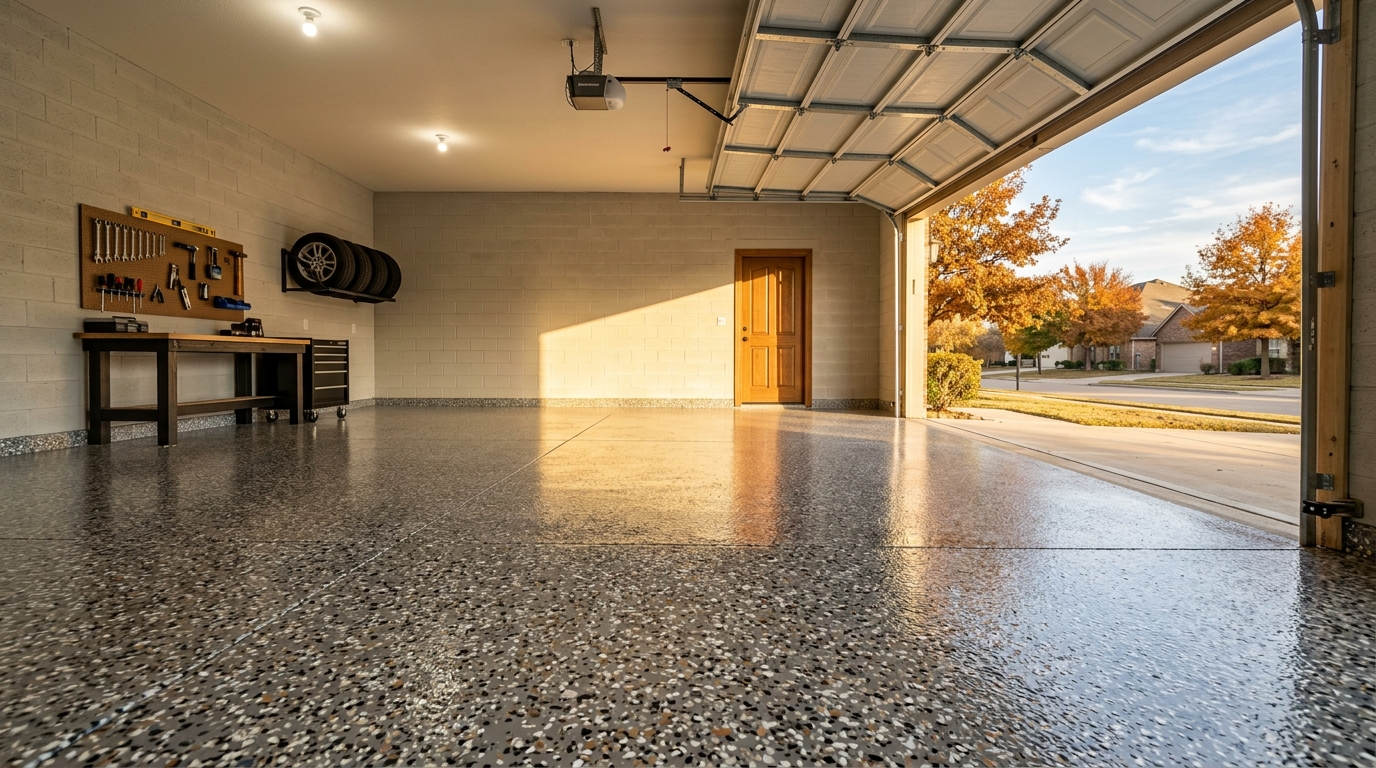
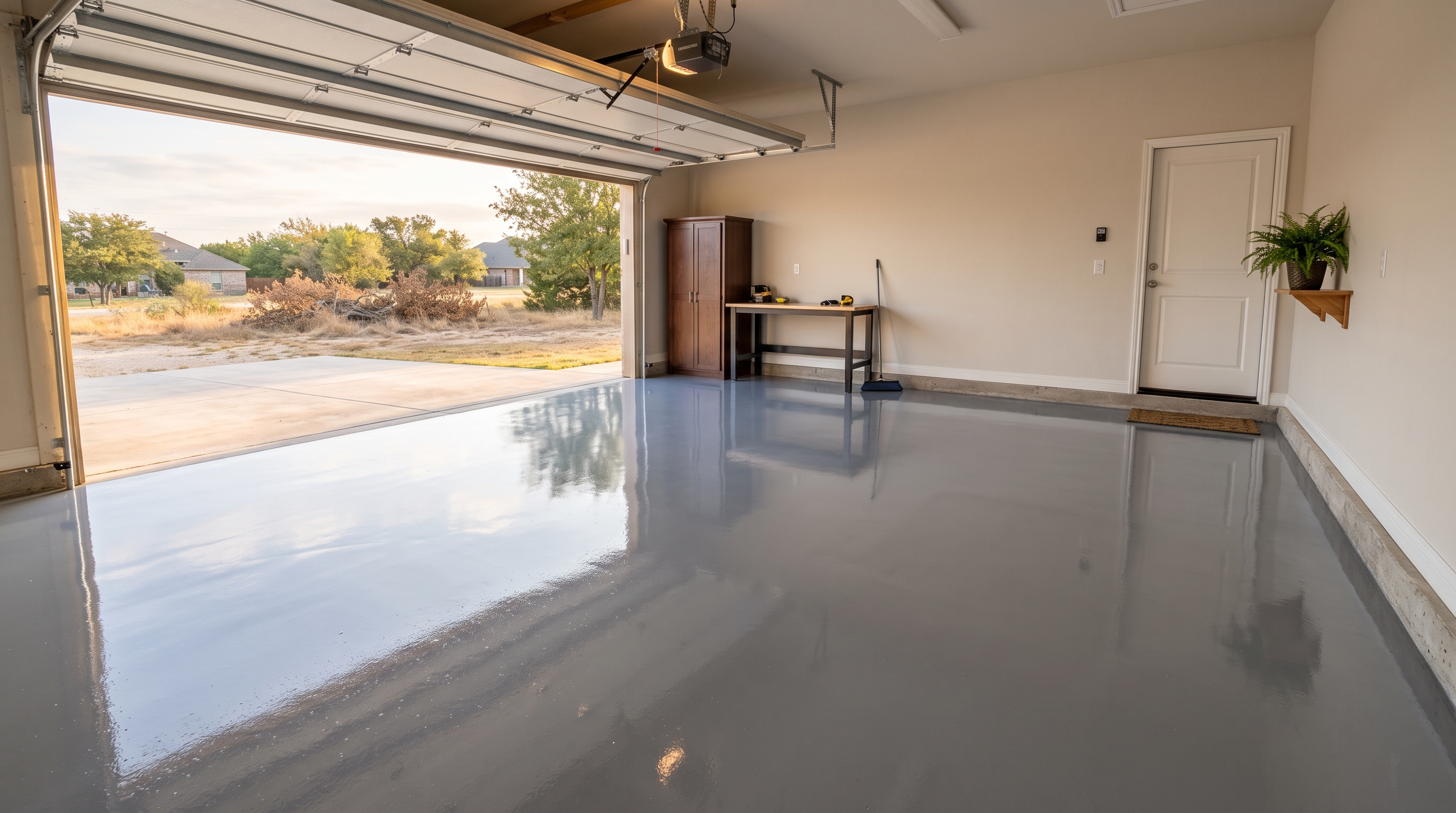
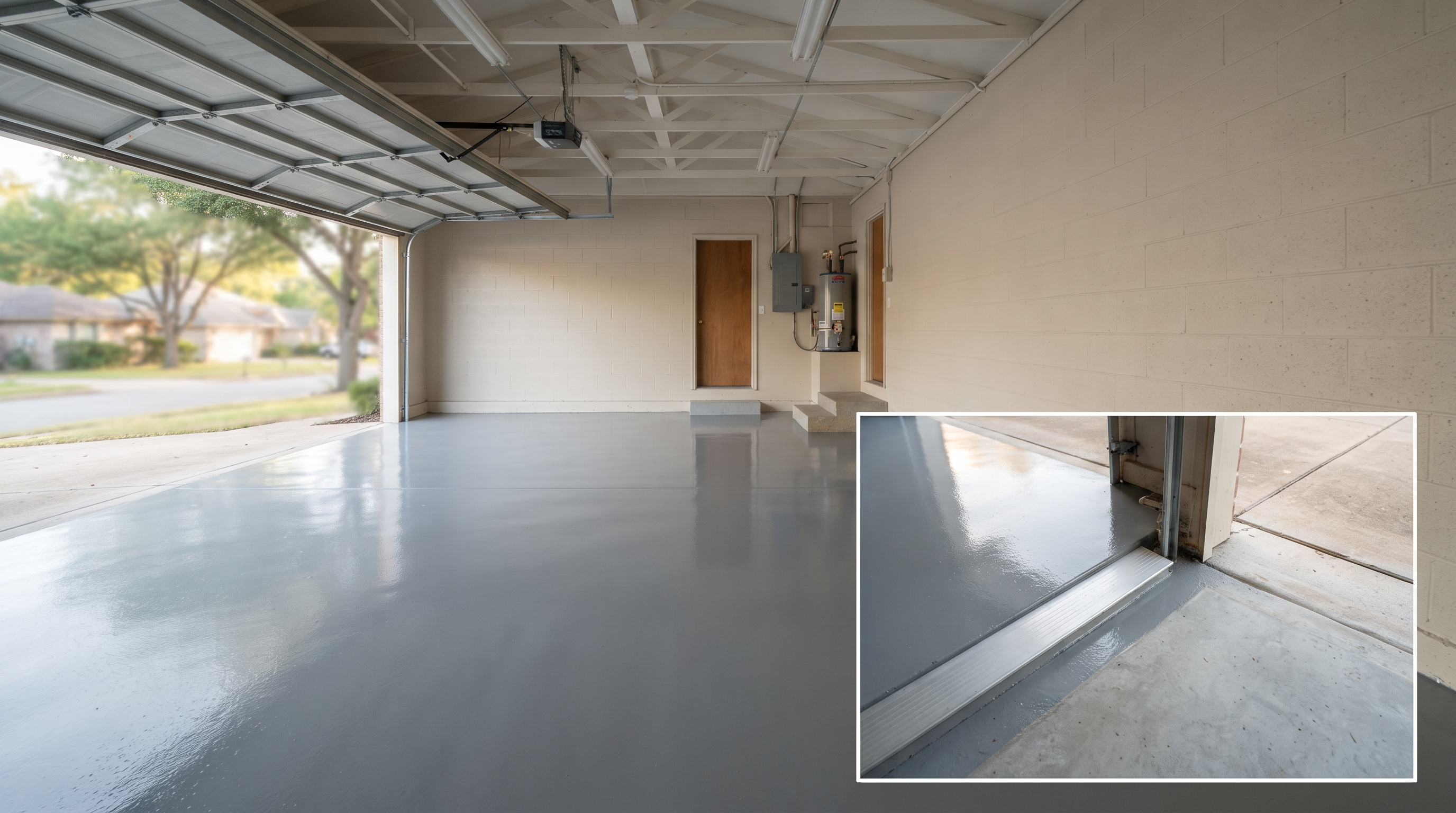
If you are in Fort Worth, Aledo, Weatherford, Springtown, Granbury, or anywhere in Parker County and you have a garage or shop floor that needs a coating, call 817-668-5051 or request a free consultation. We will assess your slab, walk you through a solid color epoxy garage floor coating or a vinyl flake epoxy system depending on your goals, give you a transparent quote, and tell you exactly what to expect on installation day and through the cure window, including what July actually does to the timeline.
Ready to work with NES Flooring?
Let's connect! We’re here to help.
Send us a message and we’ll be in touch.
Or give us a call today at 817-668-5051
More from NES Flooring: