What a Texas Summer Does to an Uncoated Garage Floor (And Why Fall Is the Worst Time to Wait)
By August, most Fort Worth homeowners have already noticed the floor. The oil stain from a spring oil change that spread wider than it should have. The fine white dust coating everything on the bottom shelf. The crack near the door that wasn't there last fall. The floor didn't fail all at once. It wore down slowly, through three months of punishment that bare concrete was never designed to absorb.
If you've been thinking about epoxy flooring in Fort Worth, TX, fall isn't a better time to wait. It's the point where every problem your floor accumulated over summer becomes more expensive to fix.
Bare Concrete Doesn't Just Look Worse in Summer. It Gets Chemically Weaker.
Texas summers don't just bleach concrete. They break it down at the surface level through a process most homeowners don't recognize until it's too late.
When concrete heats past 90 degrees inside a closed garage in June, July, and August throughout Parker County and the Fort Worth metro, the carbonation layer at the surface begins to degrade. That thin hardened shell is what gives your slab its resistance to surface abrasion. Once it deteriorates, the concrete below becomes porous and soft by comparison. Tires track in grit. Boots grind it deeper. Every footstep and wheel load accelerates the process, and the damage compounds quietly until fall, when it's all sitting there waiting to be dealt with.
This is why surface preparation is never optional. By the time a floor reaches us in September or October after a rough summer, we're often grinding through a surface that's more damaged than it looks from the driveway. Diamond grinding removes compromised material and opens the concrete pores so a coating bonds correctly. A floor that spent summer unprotected consistently requires more prep work than one coated before June.
UV Bleaching Is the Visible Sign of a Deeper Problem
The faded, gray-white surface on your garage floor isn't cosmetic. UV exposure drives moisture out of the top layer of concrete during peak heat hours and pulls it back in during cooler nights. That cycling is slow but relentless. Over a Texas summer, it creates micro-fractures in the surface that you can't see but can feel as roughness underfoot.
Those micro-fractures are where oil, coolant, and road chemicals find a home. Once petrochemicals penetrate concrete, they don't just sit there. They continue breaking down the binder between aggregate particles. A spill that wipes clean off an epoxy-coated floor will, on bare concrete, wick inward within minutes. By fall, what looked like a surface stain has become a structural stain that grinding alone may not fully resolve.
Thermal Cycling Turns Minor Cracks Into Structural Decisions
North Texas temperature swings are hard on concrete. A slab that heats to 140 degrees inside a closed garage on a July afternoon and cools to 75 overnight is cycling roughly 65 degrees in 12 hours. Over 90 days, that load accumulates.
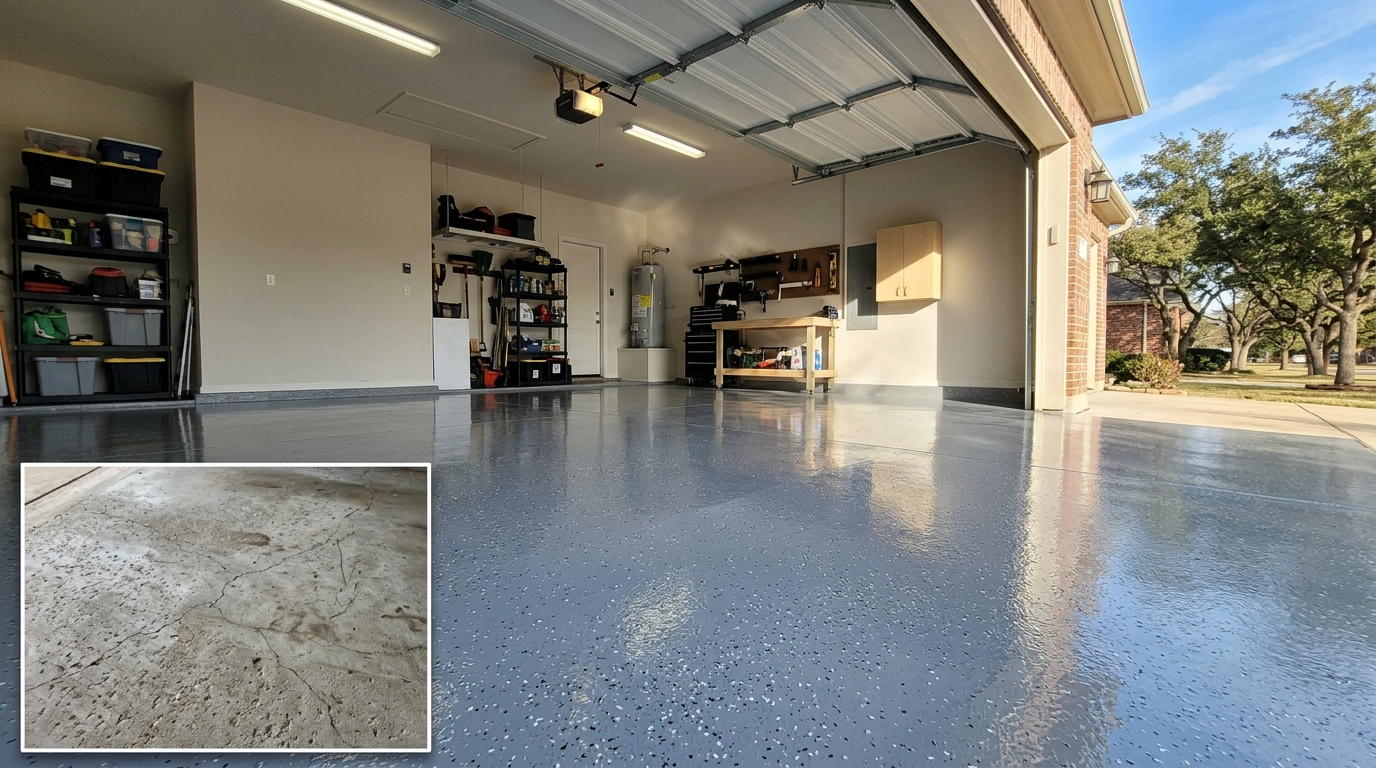
Control joints handle some of this movement by design. Cracks that develop away from control joints are a different story. Diagonal cracks near corners and mid-slab cracking signal that the concrete is responding to stress without a planned relief point. We regularly see floors come to us in fall with cracks that started as hairlines in spring and opened to visible gaps through summer.
The window to address a small crack inexpensively closes in the heat. It doesn't reopen in October.
That's what makes the timing conversation matter: small problems fixed before summer are straightforward. The same problems addressed after summer require more repair work before the coating can go down. The crack doesn't get cheaper with age.
Everything in Your Garage Has a Gray Film. The Floor Is Why.
Concrete dusting happens when weak surface material breaks down into fine particulate. It settles on tool storage, vehicle finishes, boxes on shelves, and your HVAC intake if it returns through the garage. In summer, with the garage door opening and closing more frequently, it circulates constantly.
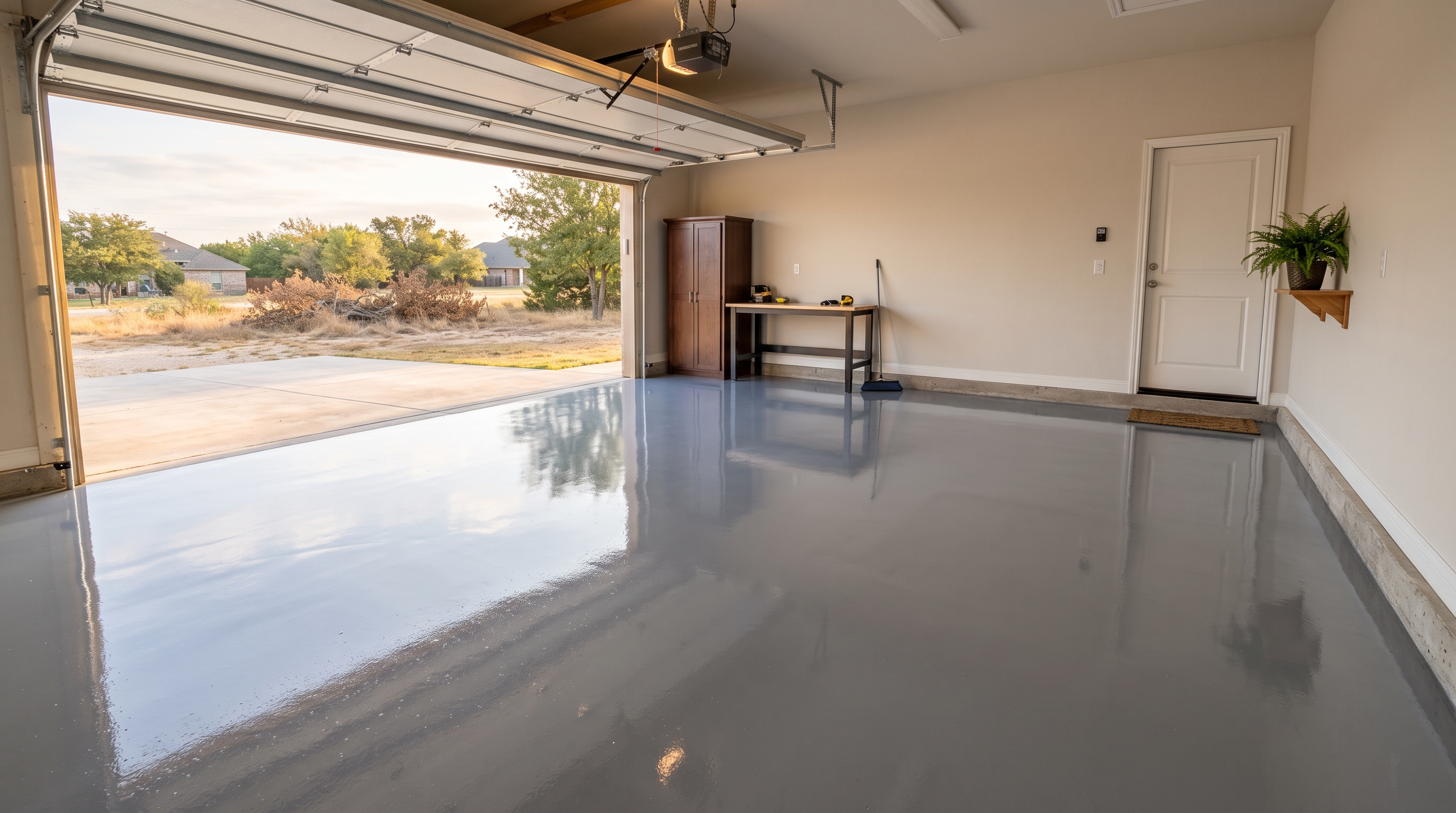
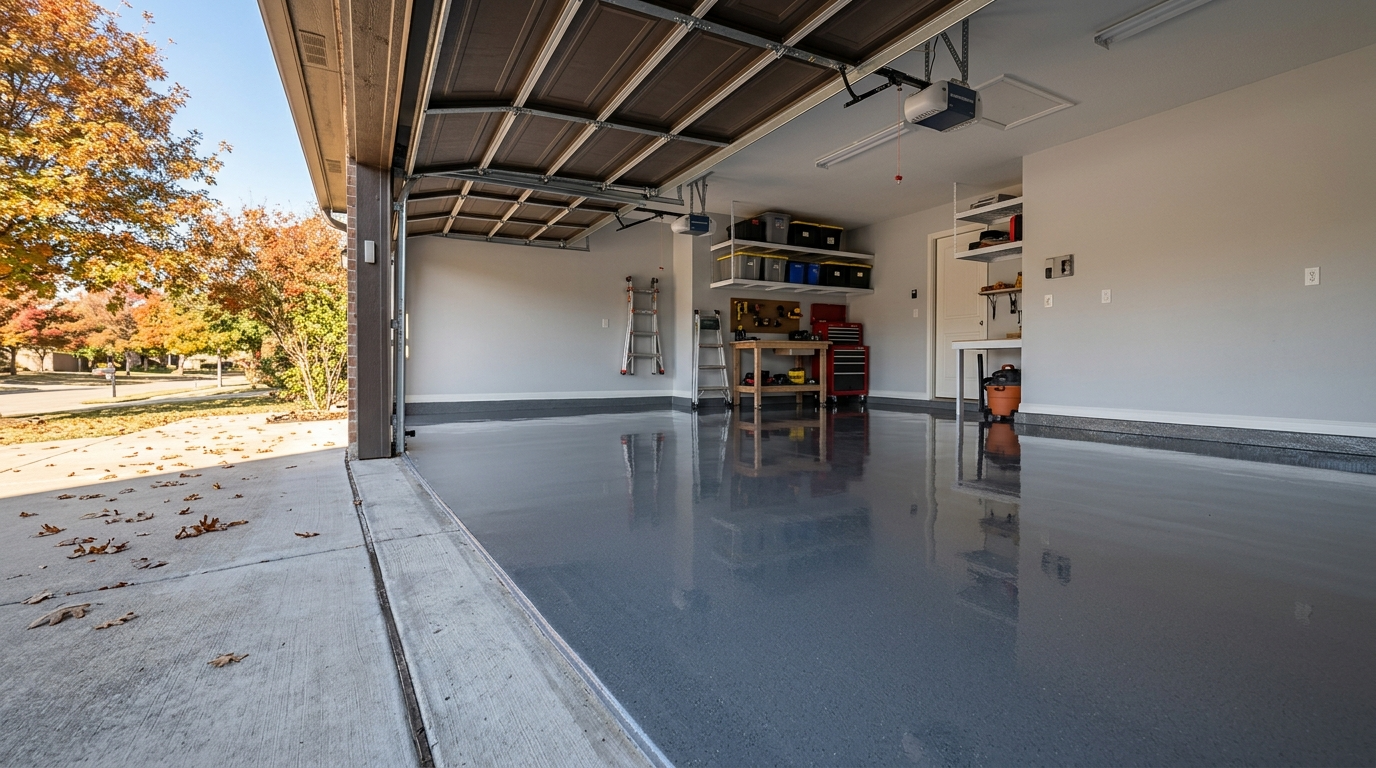
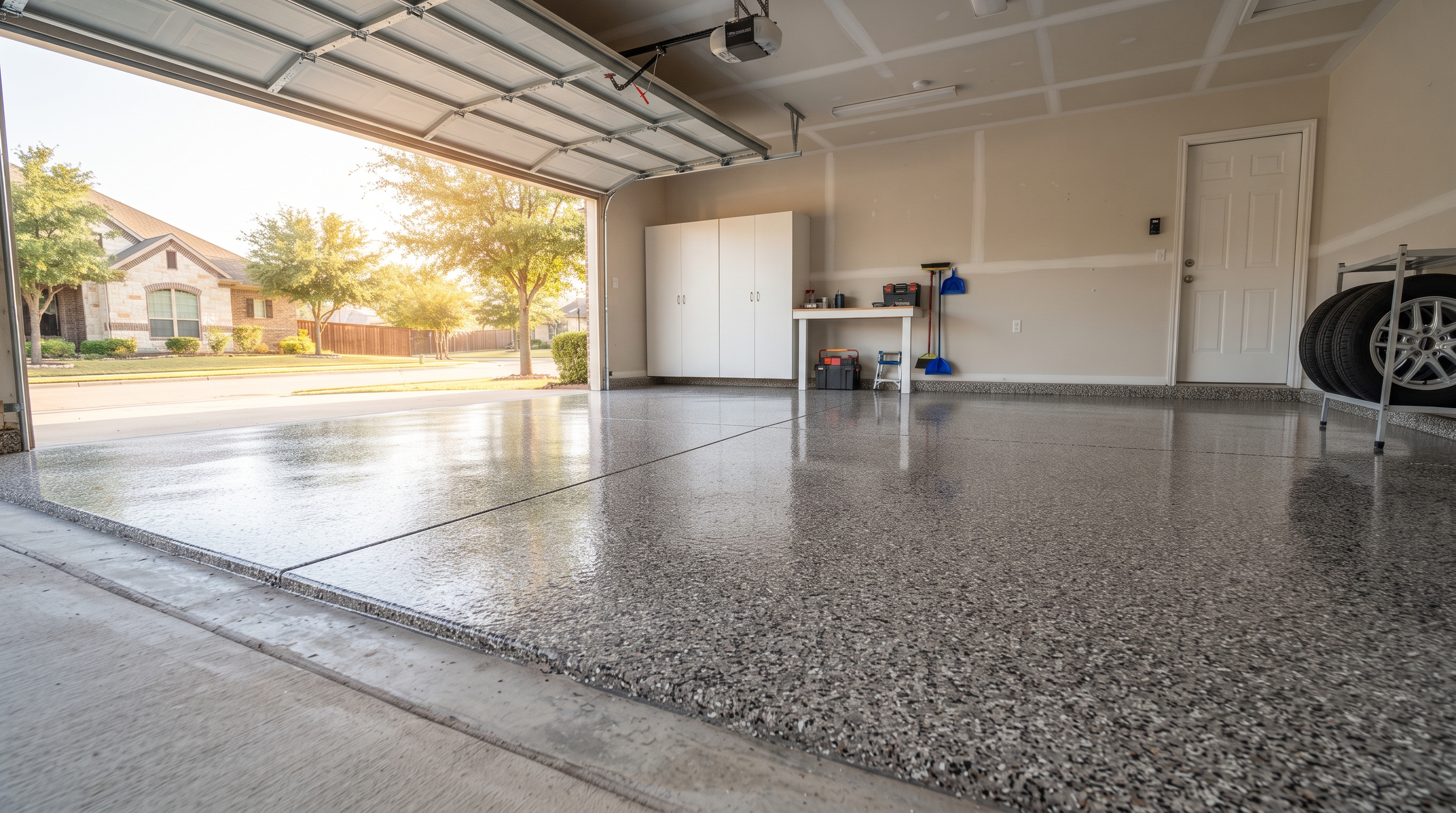
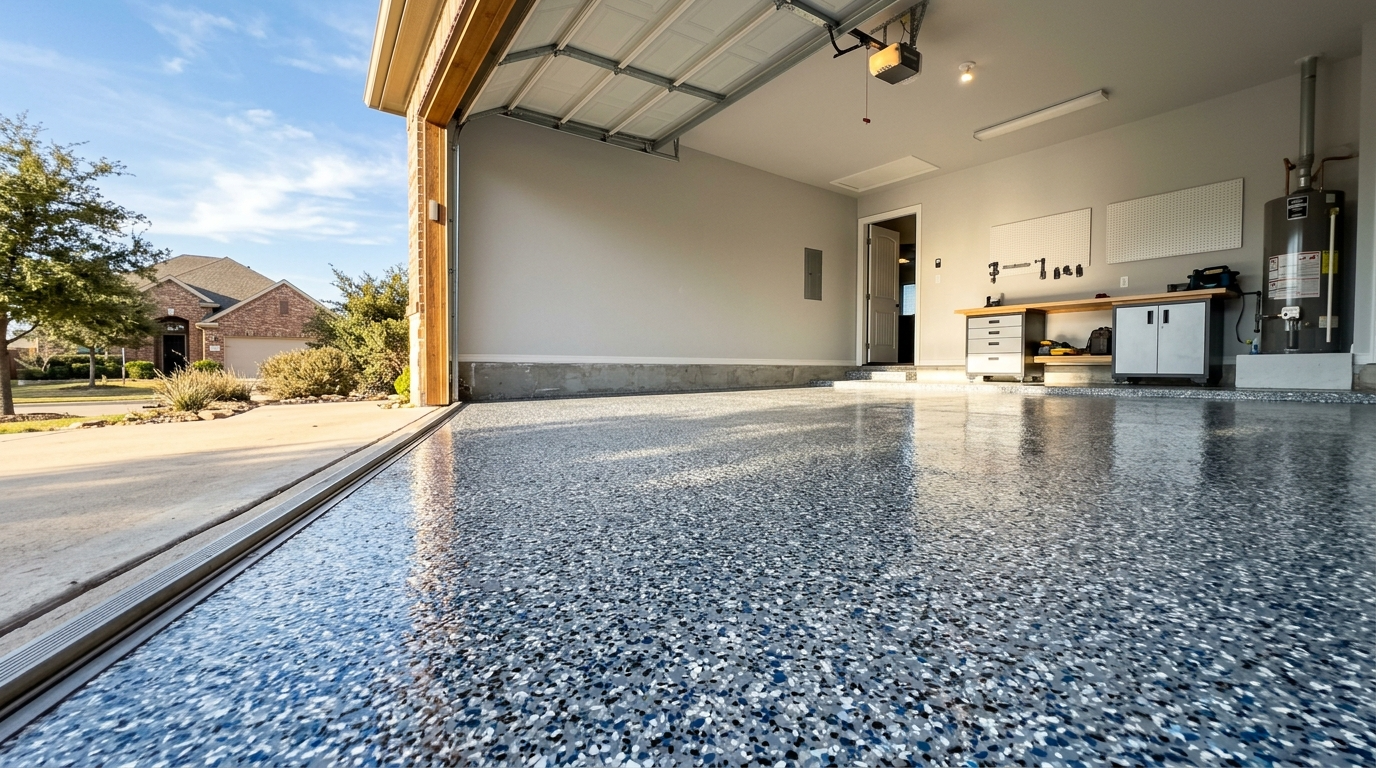
A coated floor seals the surface and eliminates concrete dusting entirely. That single benefit changes how usable the space feels day to day.
Summer Damage Doesn't Prevent a Coating. It Makes Preparation More Critical.
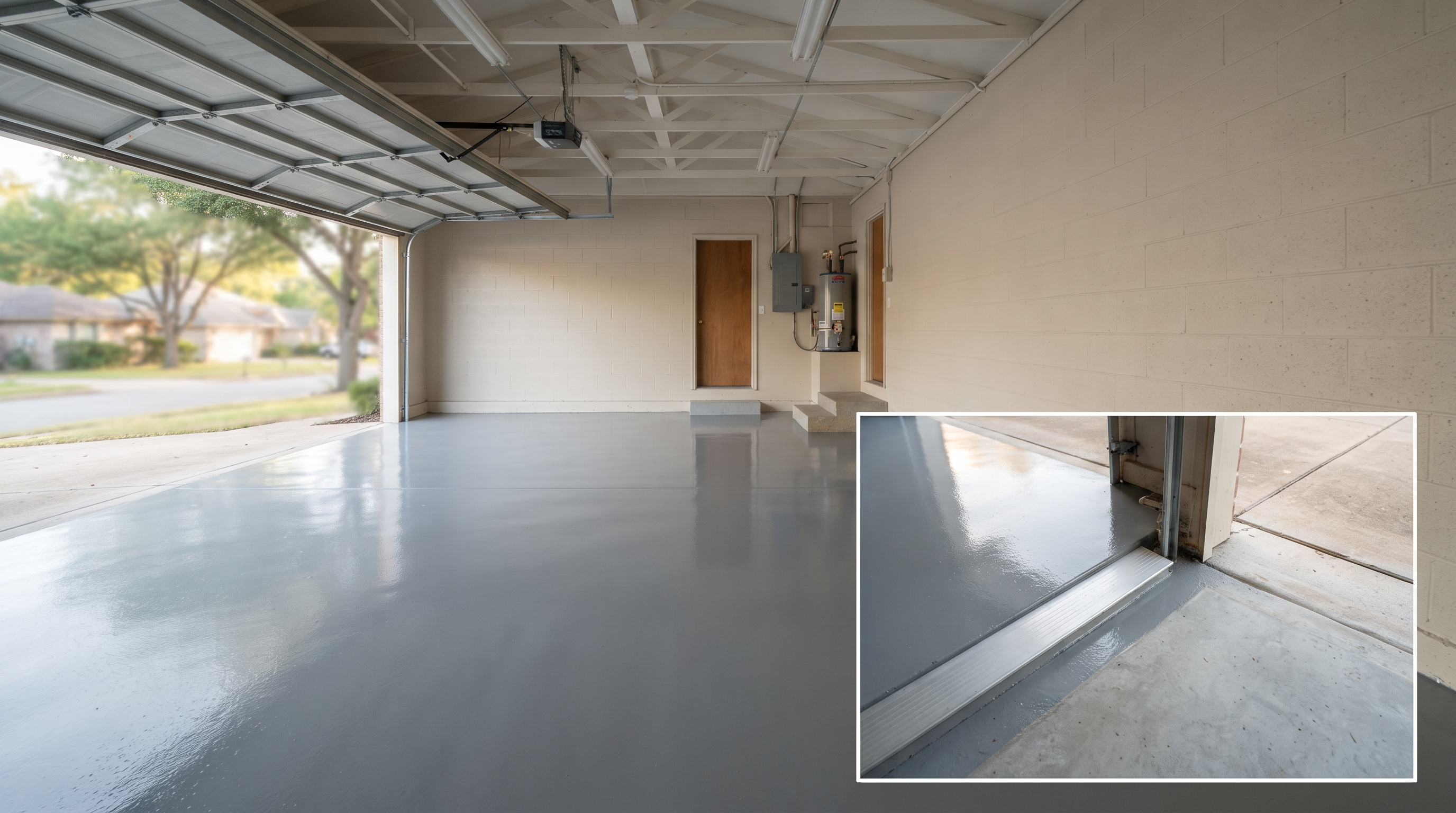
A rough summer doesn't make a coating impossible. NES Flooring uses mechanical diamond grinding on every installation. That removes the compromised surface layer, opens the concrete pores for adhesion, and surfaces any hidden cracks that need repair before the coating goes down. The process doesn't change based on the season. But the time it takes and the repair work involved often increases with a floor that's absorbed a full Texas summer unprotected.
Understanding what drives the cost of an epoxy installation helps homeowners see why prep isn't a line item to cut. It's the reason a coating lasts 10 years instead of two.
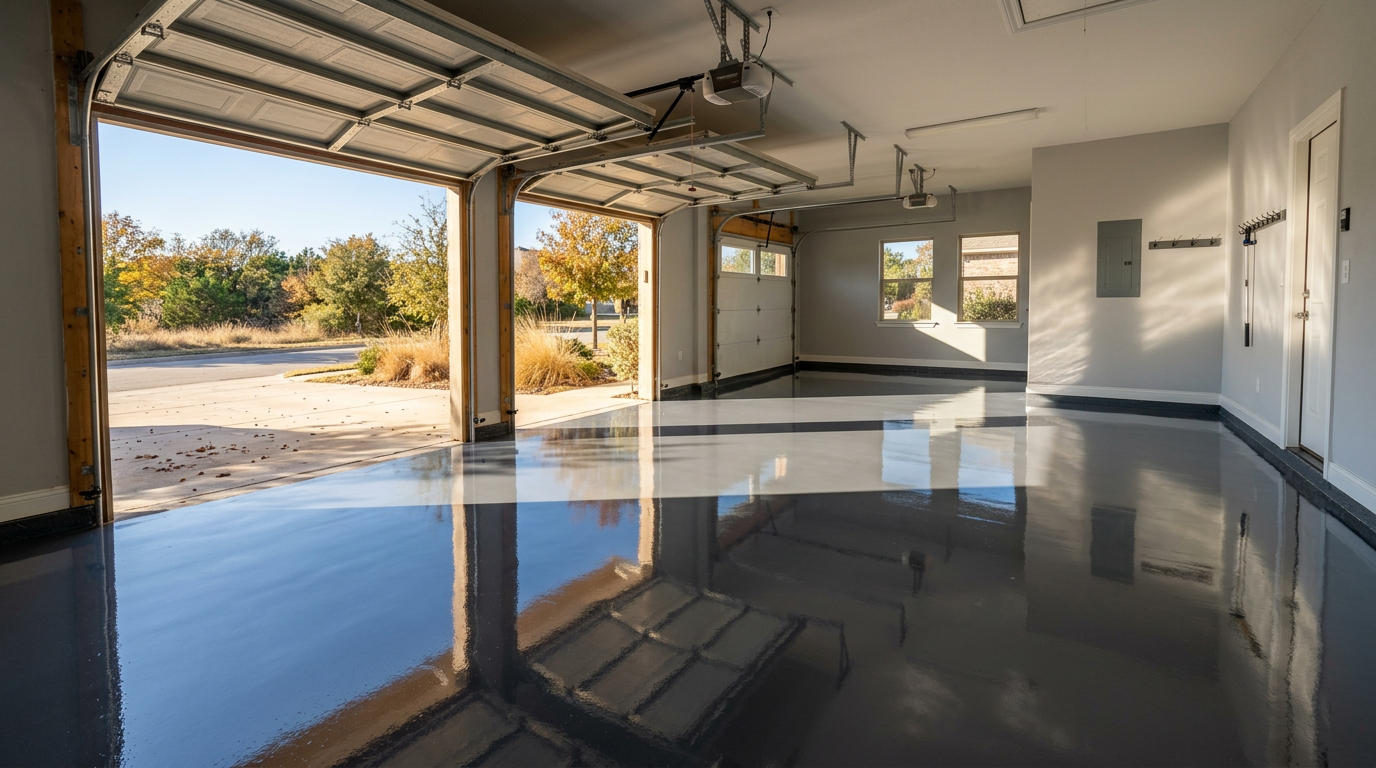
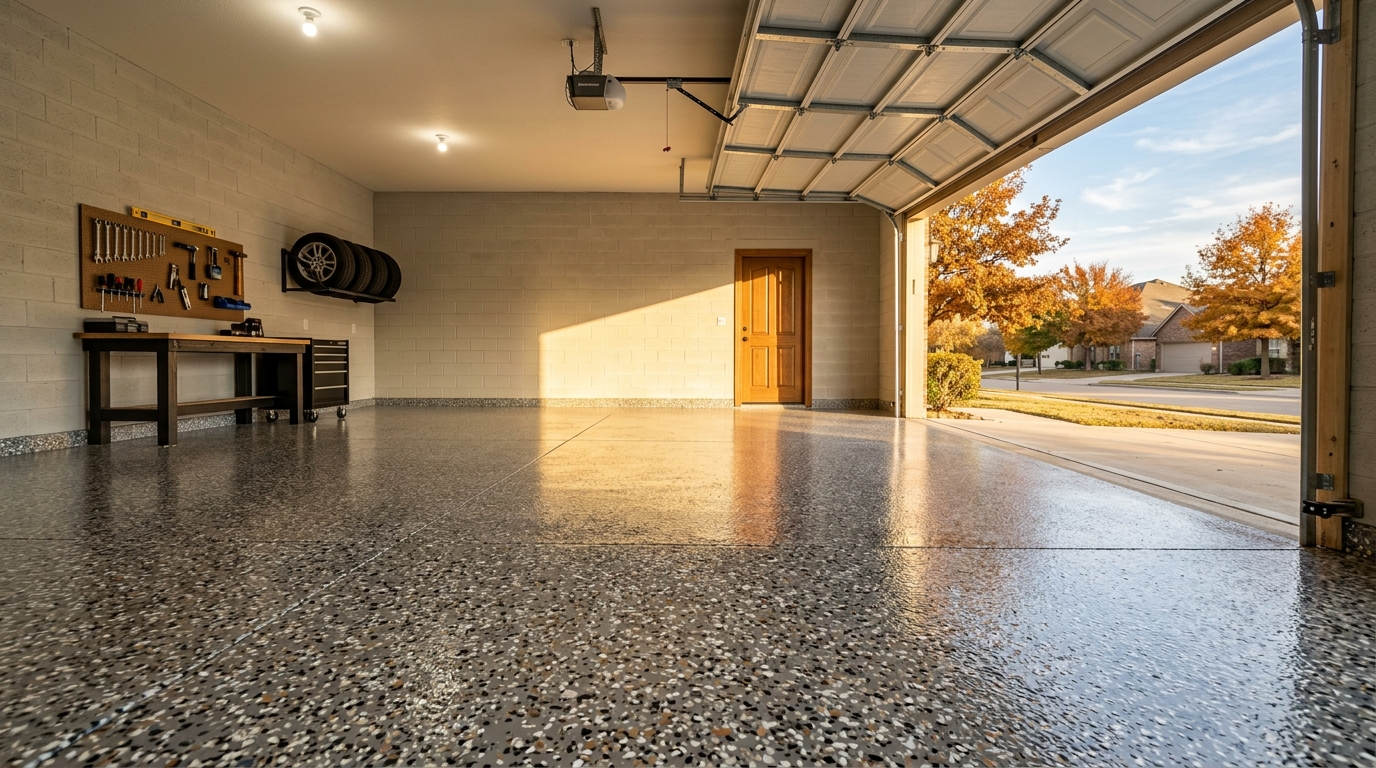
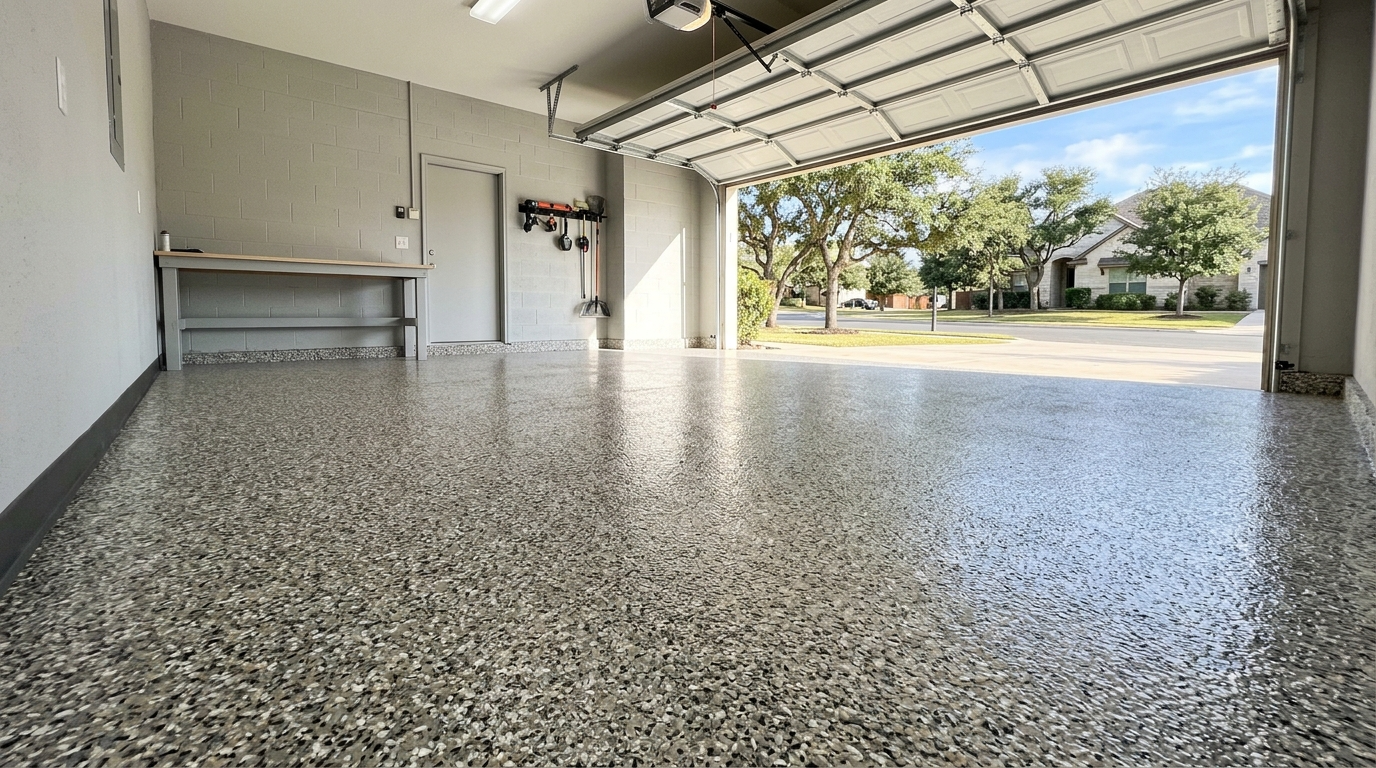
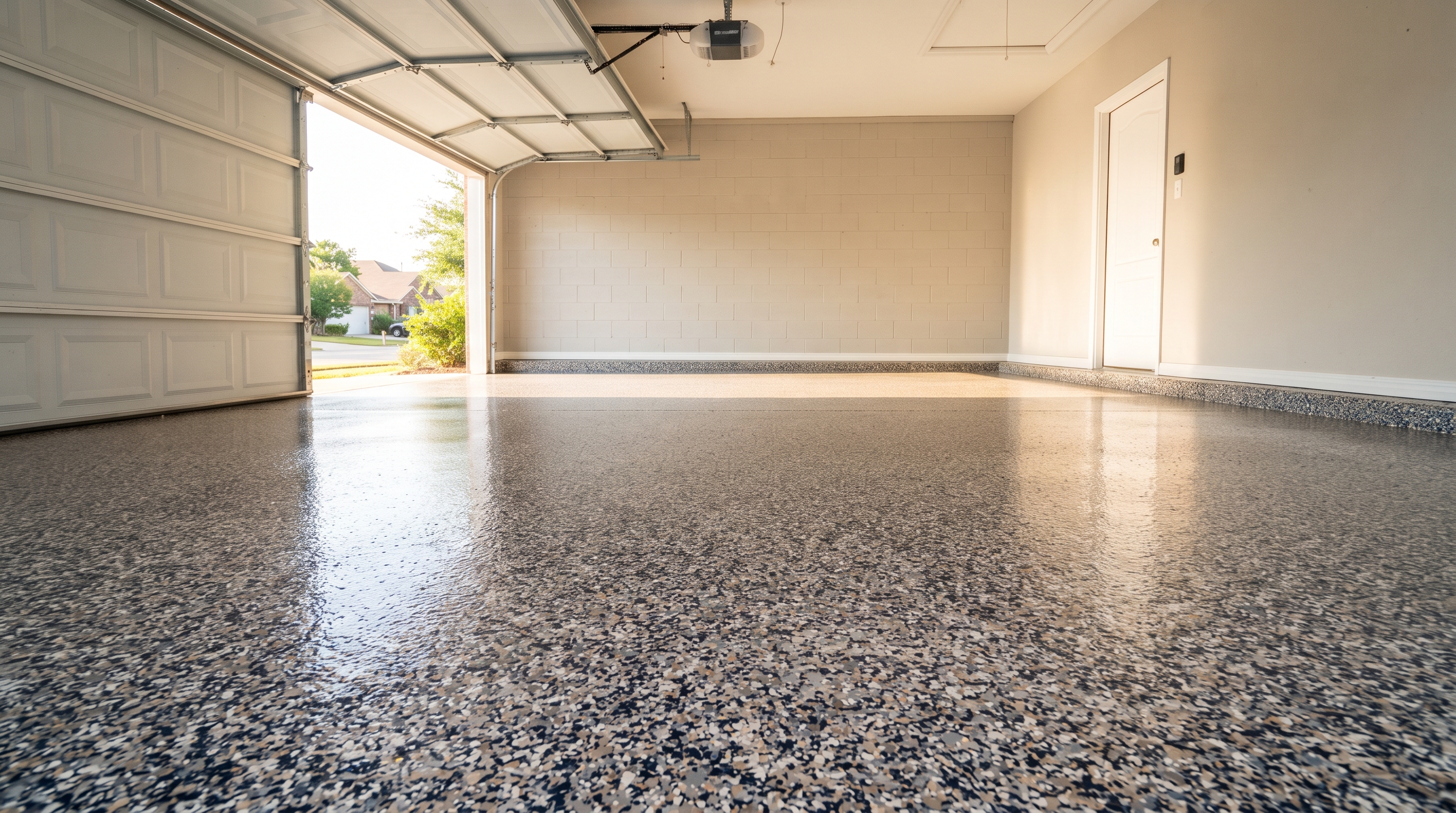
For homeowners weighing options after a rough summer, flake epoxy systems offer texture, chemical resistance, and durability that bare or painted concrete simply can't match.
What Homeowners Ask Before Booking a Fall Consultation
My floor has years of oil staining. Does that mean I missed my window?
No. Oil-contaminated concrete requires mechanical grinding to remove the saturated surface layer before any coating bonds correctly. Applying a coating over oil contamination is one of the most common reasons budget installs fail within the first year. NES grinds every floor before coating, without exception. The staining doesn't disqualify your floor. Skipping the prep does.
I've heard epoxy peels in Texas heat. Is that true?
That frustration is real, but peeling is a prep and materials problem, not a climate problem. Coatings fail when they're applied over unground concrete, over moisture that wasn't tested for, or with materials not formulated for heat exposure. Those problems almost always trace back to installation shortcuts. NES uses industrial-grade materials with mechanical surface prep and backs every floor with a 10-year workmanship warranty because the process is built to hold in Texas heat, not in spite of it.
How long will I be without my garage after installation?
Walk on it within 12 hours. Drive on it within 72 hours. Most homeowners schedule installation on a Thursday or Friday and have full use of the space by the weekend.
What if I get a quote and decide the timing isn't right yet?
The consultation is free and comes with no pressure to book. NES will assess your concrete, note any cracks or stains, measure the space, and give you a detailed quote before any work begins. If you want to sit on it, you'll at least know exactly what your floor needs and what it costs. Most people who wait wish they hadn't, especially after the first hard freeze opens those summer cracks another millimeter or two.
The Floor You've Been Stepping Over All Summer Doesn't Improve on Its Own
Every month a garage floor goes uncoated, the concrete absorbs more damage and the cost to correct it increases. If you're in Fort Worth, Weatherford, Aledo, Springtown, Granbury, or anywhere in Parker County and your floor took a beating this summer, the time to act is before winter freeze-thaw cycles add another layer of stress to already-weakened concrete.
NES Flooring is a family-owned operation. The same team that walks your space for the consultation is the crew that shows up to do the work. No subcontractors. No handoffs. Every installation carries a 10-year workmanship warranty.
Call NES Flooring at 817-668-5051 or request your free consultation today. We'll assess your floor, explain exactly what it needs, and give you a complete quote before we touch a tool.
Ready to work with NES Flooring?
Let's connect! We’re here to help.
Send us a message and we’ll be in touch.
Or give us a call today at 817-668-5051
More from NES Flooring: