When Epoxy Flooring Is NOT the Right Choice
Epoxy flooring is widely known for durability, chemical resistance, and long-term performance in garages, workshops, and commercial facilities. However, despite its many advantages, epoxy is not the right solution for every floor or every environment. Choosing the wrong flooring system can lead to premature failure, unnecessary costs, or performance issues that could have been avoided with the right assessment.
Understanding when epoxy flooring may not be the best option helps property owners make better decisions about surface preparation, coatings, and long-term durability. In certain situations, alternative flooring systems or surface treatments may provide more reliable results.
Understanding the Limitations of Epoxy Floor Coatings
Epoxy is a high-performance coating designed to bond to properly prepared concrete. When the slab conditions, moisture levels, and usage demands align with the material's strengths, epoxy flooring performs exceptionally well. However, when underlying conditions are unfavorable, the coating may not adhere properly or may degrade faster than expected.
The most important factor in epoxy performance is the condition of the concrete substrate. If the concrete is compromised or unstable, the epoxy system cannot compensate for those structural issues.
Some of the most common limitations involve moisture problems, structural movement, extreme outdoor exposure, or surfaces that were not properly prepared. These factors can prevent epoxy from bonding correctly or maintaining long-term performance.
Situations Where Epoxy Flooring May Not Perform Well
While epoxy is extremely durable in the right conditions, there are scenarios where it simply is not the best flooring option.
- Concrete slabs with excessive moisture vapor
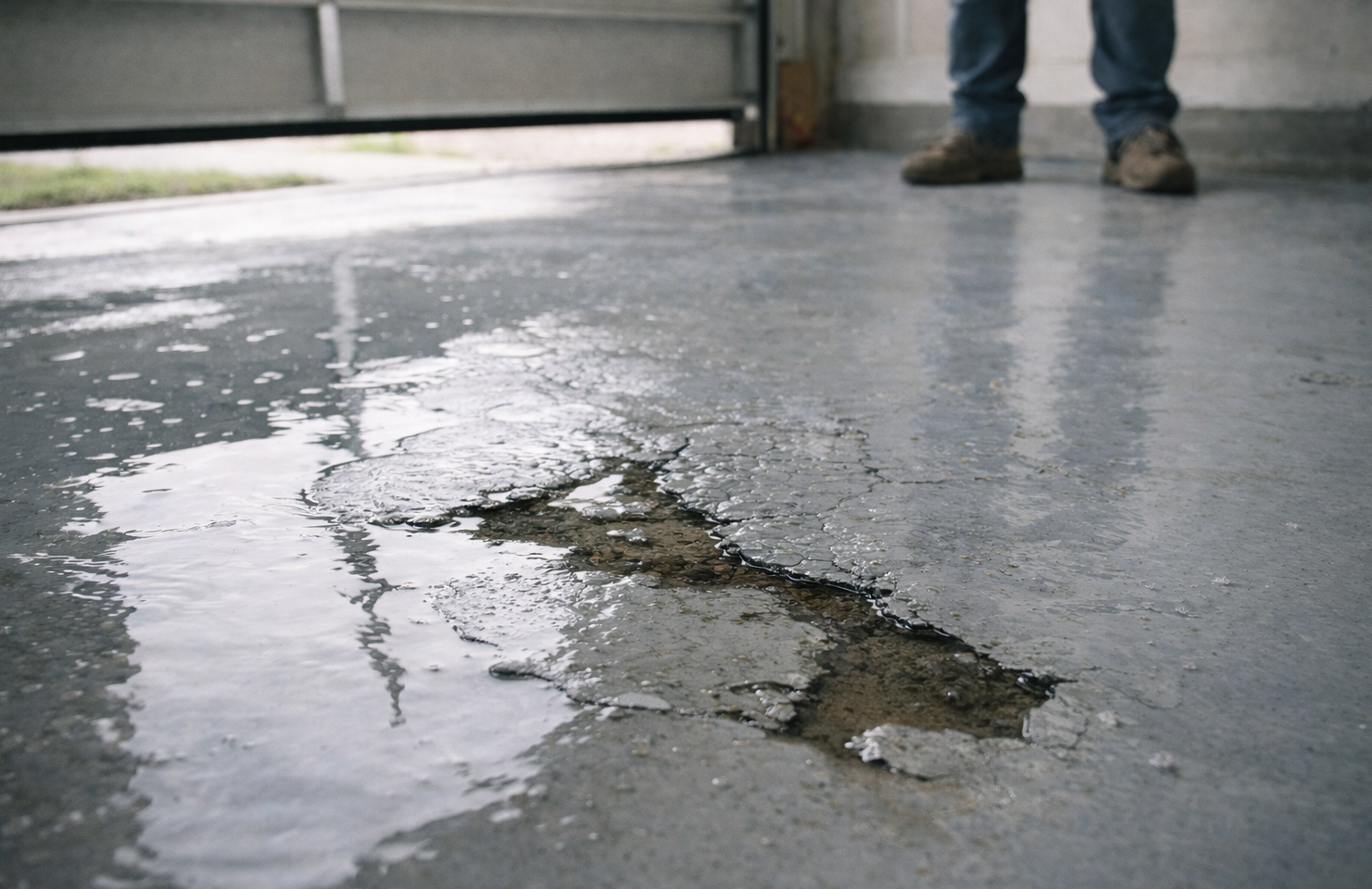
Concrete that releases moisture from below the slab can cause coatings to blister, peel, or delaminate. If moisture vapor transmission is high, epoxy may fail unless specialized mitigation systems are installed first.
- Structurally damaged or severely cracked concrete
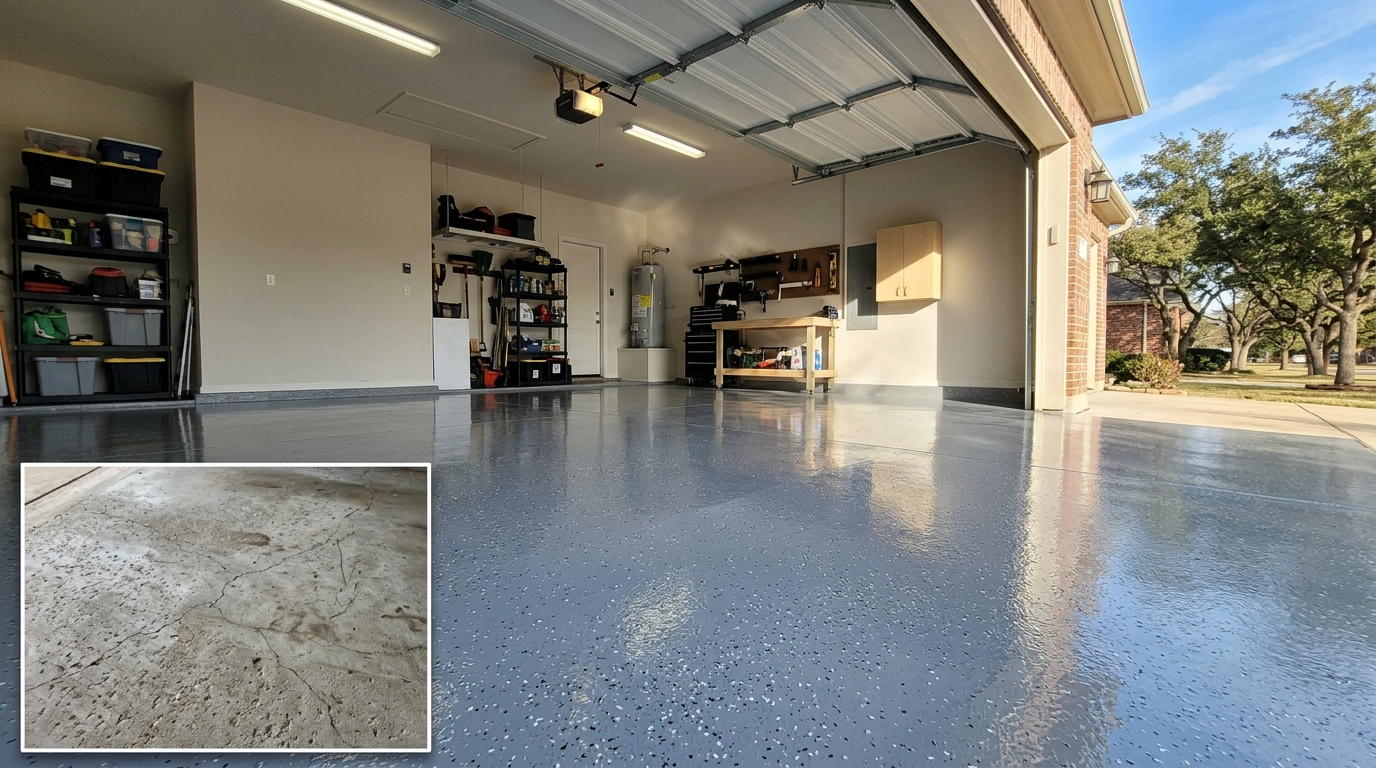
Epoxy coatings are not structural repairs. Large cracks, unstable slabs, or deteriorated concrete surfaces must be repaired or replaced before coatings can be considered.
- Outdoor areas exposed to constant UV radiation
Standard epoxy systems can discolor or chalk when exposed to direct sunlight over time. For outdoor areas like patios, walkways, or driveways, other coating systems typically perform better.
- Temporary or short-term flooring needs
Epoxy flooring is designed as a long-term solution. If a facility only needs a short-term surface upgrade or expects future demolition or remodeling, epoxy installation may not be the most cost-effective option.
- Extremely uneven or poorly finished slabs
Severely uneven surfaces require extensive preparation and leveling before coating systems can be installed. In some cases, resurfacing or grinding alone may be a better solution.
These scenarios do not mean epoxy flooring is impossible, but they do require additional evaluation and sometimes different flooring systems altogether.
Moisture Problems - The Most Common Reason Epoxy Fails
One of the biggest challenges for epoxy flooring is moisture vapor transmission through concrete slabs. Even when a floor appears dry, moisture can migrate upward through the concrete due to groundwater pressure or lack of a vapor barrier beneath the slab.
When moisture becomes trapped beneath an epoxy coating, it can create pressure that causes bubbling, peeling, or coating separation.
Professional flooring contractors typically perform moisture testing before recommending epoxy installation. If elevated moisture levels are detected, specialized mitigation systems may be required before the coating process can begin.
In some cases, the most responsible recommendation is to delay coating installation until moisture conditions are properly addressed.
Outdoor Concrete Surfaces Often Require Different Systems
Epoxy is primarily designed for indoor environments such as garages, workshops, warehouses, and manufacturing spaces. Outdoor areas present additional challenges that standard epoxy coatings are not optimized to handle.
Constant UV exposure, temperature swings, and weather conditions can degrade certain epoxy systems over time. Surfaces such as driveways, patios, and pool decks often require coating systems specifically engineered for exterior use.
This is why experienced contractors carefully evaluate the intended environment before recommending any coating solution.
Who Should Carefully Evaluate Epoxy Before Installation
While epoxy flooring works extremely well in many applications, certain property owners should take extra care when considering it.
This includes homeowners with older concrete slabs, commercial facilities with high moisture exposure, and properties where the concrete condition is uncertain. Buildings that have experienced prior flooding, slab movement, or drainage issues should also be evaluated thoroughly before installing any coating system.
A professional assessment ensures the flooring system matches the condition of the slab and the demands of the environment.
What Professional Epoxy Flooring Evaluation Looks Like
A proper flooring evaluation involves more than simply looking at the surface. Professional contractors assess several critical factors before recommending epoxy installation.
These evaluations typically include checking slab integrity, inspecting cracks and surface deterioration, performing moisture testing, and determining the level of surface preparation required.
Surface preparation is especially important because epoxy bonds mechanically to the concrete. If the surface is not properly prepared through professional grinding or profiling, the coating may not achieve the necessary bond strength.
A responsible contractor will always evaluate these factors before moving forward with installation.
How the Right Preparation Determines Epoxy Success
When epoxy flooring is the right choice, proper preparation is what ensures long-term performance. Concrete grinding, crack repair, moisture testing, and surface profiling are all essential steps that allow epoxy coatings to bond correctly.
Skipping preparation or applying epoxy over compromised concrete is one of the leading causes of coating failure.
Experienced installers understand that the success of an epoxy floor is determined long before the coating is applied.
Epoxy Flooring FAQ
Can epoxy flooring fix damaged concrete?
No. Epoxy coatings protect and enhance concrete surfaces, but they are not structural repair solutions. Major slab damage must be repaired before coating installation.
What happens if epoxy is installed over a wet slab?
Excess moisture can cause the coating to blister, peel, or separate from the concrete over time. Moisture testing is critical before installation.
Is epoxy flooring suitable for outdoor driveways?
Standard epoxy coatings are typically designed for indoor use. Outdoor areas usually require different coating systems that can handle UV exposure and weather.
Can uneven concrete be coated with epoxy?
Minor imperfections can often be addressed during surface preparation, but severely uneven slabs may require resurfacing or additional repair before coating.
Why Property Owners Trust NES Flooring for Honest Flooring Recommendations
Choosing the right flooring system starts with an honest evaluation. At NES Flooring, the goal is not simply to install coatings but to ensure the flooring solution actually fits the condition of the concrete and the needs of the space.
Every project begins with a careful assessment of slab condition, moisture levels, and usage requirements. When epoxy flooring is the right choice, it delivers exceptional durability and performance. When it is not the best option, professional guidance helps property owners avoid costly mistakes.
This straightforward approach ensures that every flooring system installed is built to perform under real-world conditions.
Schedule a Professional Epoxy Flooring Evaluation
If you are considering epoxy flooring for your garage, shop, or commercial facility, it is important to make sure the conditions are right for long-term performance. NES Flooring provides professional evaluations and high-quality epoxy installations designed for durability and reliability.
Ready to work with NES Flooring?
Let's connect! We’re here to help.
Send us a message and we’ll be in touch.
Or give us a call today at 817-668-5051
More from NES Flooring: