Why Summer Is When Most Property Owners Notice Epoxy Floor Problems
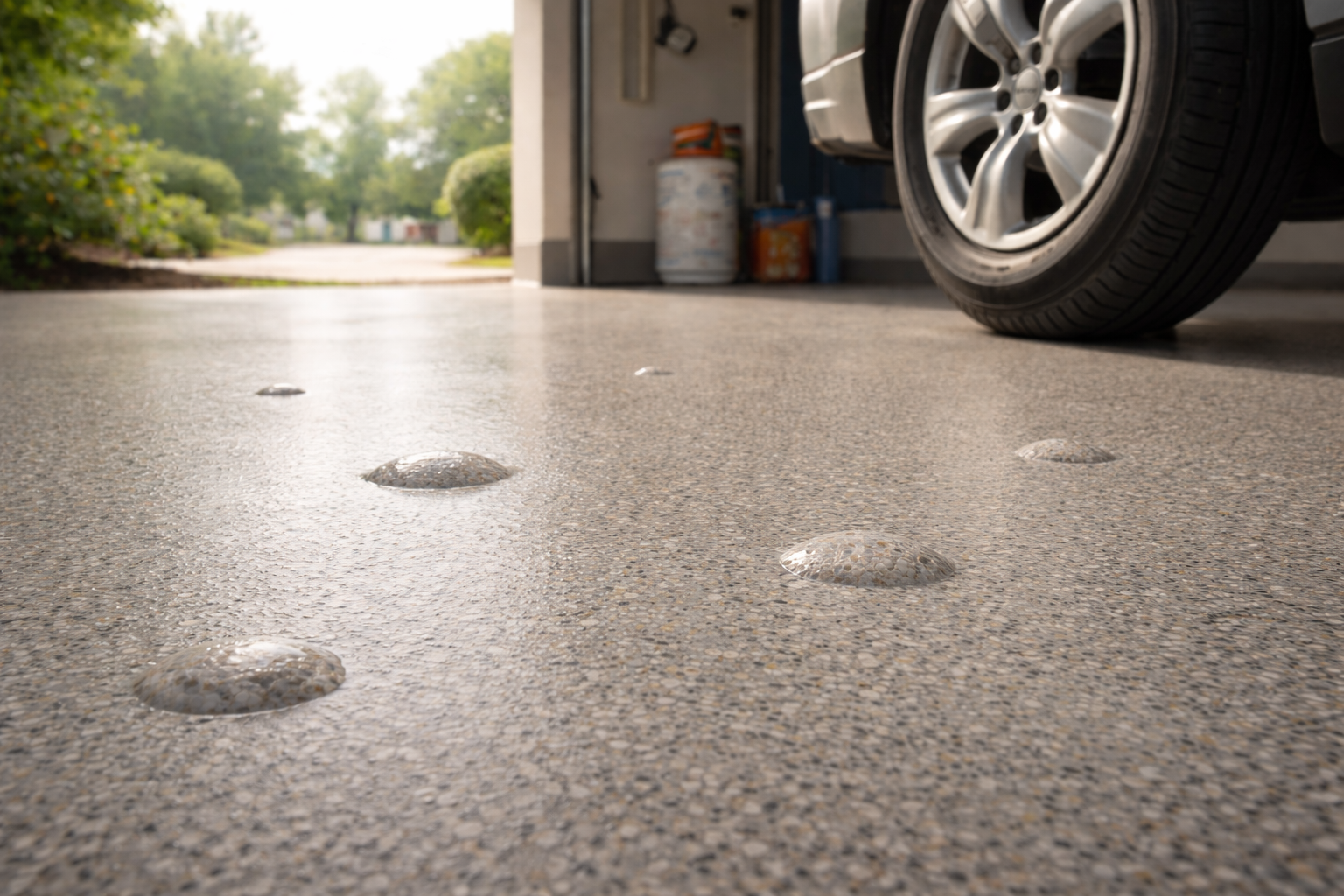
Surface problems in epoxy flooring are most noticeable during summer because heat and moisture place maximum stress on the coating system, exposing weaknesses in preparation, installation, or underlying concrete conditions. What may have looked flawless in cooler months can begin to show peeling, bubbling, discoloration, or coating failure once temperatures rise and moisture pressure increases.
How Summer Heat Exposes Weaknesses in Epoxy Flooring Systems
Epoxy coatings are designed for durability, but they rely heavily on proper installation and stable conditions. Summer creates the exact opposite environment. High temperatures accelerate expansion in concrete slabs, increase vapor pressure, and push materials to their limits.
In Texas, where heat is sustained and intense, concrete slabs naturally expand and contract more aggressively. At the same time, trapped moisture within the slab becomes more active. If the epoxy system was installed without proper moisture mitigation or surface preparation, summer conditions will reveal those weaknesses quickly.
This is why many property owners first notice issues months after installation. The coating did not suddenly fail. It was installed under conditions that could not hold up under real-world stress.
Common Epoxy Flooring Problems That Show Up in Summer
When epoxy floors begin to fail, the signs are usually visible at the surface. Summer conditions make these problems more pronounced and harder to ignore.
- Peeling or delamination - The coating separates from the concrete due to poor adhesion or moisture pressure
- Bubbling or blistering - Vapor pressure pushes up through the coating, creating raised areas or bubbles
- Hot tire pickup - Epoxy softens under heat, and vehicle tires pull the coating away from the surface
- Discoloration or yellowing - UV exposure and heat can alter the appearance of certain epoxy systems
- Surface cracking or flaking - Expansion and contraction stress the coating, especially if the slab was not properly prepped
These are not cosmetic-only issues. They indicate a breakdown in the bond between the coating and the concrete, which will continue to worsen if not addressed correctly.
Why Moisture Vapor Is the Real Cause Behind Most Failures
Many assume heat is the main problem, but moisture is usually the root cause. Concrete slabs naturally hold moisture, and during summer, vapor pressure increases significantly. That moisture tries to escape through the surface.
If an epoxy system is installed without proper moisture testing or mitigation, the coating acts like a barrier. Pressure builds underneath until it forces its way out, causing bubbling, peeling, or full system failure.
This is especially common in garages, warehouses, and slab-on-grade properties throughout Texas. Even if the surface appears dry, moisture deep within the slab can still compromise the coating.
Without addressing moisture properly during installation, failure is not a matter of if. It is a matter of when.
Who Is Most Likely to Experience Summer Epoxy Issues
Certain properties are more likely to experience epoxy flooring problems during peak summer conditions.
Garages are one of the most common areas, especially where vehicles bring in additional heat and stress the surface through hot tire contact. Homes and commercial spaces built on concrete slabs without moisture barriers are also at higher risk.
New installations can be vulnerable if the contractor rushed surface prep or skipped moisture testing. Older coatings may also begin to fail if they were never designed to handle prolonged UV exposure or high heat.
In all cases, summer acts as a stress test. If the system was installed correctly, it holds. If not, the problems become visible quickly.
What Proper Epoxy Flooring Evaluation Should Focus On
When issues appear, the focus should not be on surface repair alone. The real question is why the failure happened.
A proper evaluation includes checking for moisture vapor transmission, inspecting surface preparation quality, assessing adhesion strength, and reviewing the type of coating system used. It also involves understanding how the space is used and how environmental conditions affect the floor.
Quick fixes like recoating over a failed surface rarely work. If the root cause is still active, the same problems will return, often faster than before.
The only reliable solution is identifying the cause and correcting it at the system level.
What Professional Epoxy Installation Looks Like in Texas
NES Flooring focuses on epoxy systems that are built to handle real conditions, not just look good at installation. That starts with proper surface preparation, including mechanical grinding to ensure strong adhesion.
Moisture testing is not optional. It is a critical step in determining whether mitigation is needed before coating. Without it, any epoxy system is at risk.
The right materials also matter. Not all coatings are designed for high heat, UV exposure, or heavy use. Selecting the correct system for the environment ensures long-term performance instead of short-term appearance.
The goal is simple. Install a floor that performs in summer, not one that fails when conditions get tough.
Steps to Take When You Notice Epoxy Floor Problems
When surface issues appear, early action can prevent larger and more expensive failures.
- Avoid parking vehicles on visibly damaged areas to prevent further peeling
- Do not attempt patch repairs that may trap moisture or worsen adhesion issues
- Document the damage with clear photos
- Monitor whether the problem is spreading or localized
- Schedule a professional evaluation to determine the root cause
Taking the right steps early helps preserve the surface and ensures the problem is handled correctly.
Why Summer Is the Best Time to Fix Epoxy Flooring Issues
Summer is when epoxy flooring systems are under maximum stress, which makes it the best time to diagnose and fix problems. The conditions that caused the failure are active, allowing for accurate testing and long-term solutions.
Waiting until cooler weather may temporarily hide symptoms, but it does not resolve the underlying issue. Repairs made under mild conditions may fail again when temperatures rise.
Addressing problems now ensures the solution is built to withstand the toughest conditions, not just ideal ones.
Why NES Flooring Is the Right Choice for Epoxy Solutions
NES Flooring takes a straightforward approach focused on durability and long-term performance. Every project is built on proper preparation, correct system selection, and installation methods that hold up under Texas heat.
There is no guesswork and no shortcuts. Just epoxy flooring systems designed to perform under real conditions, whether in residential garages or commercial environments.
When problems appear, the focus is always on fixing them the right way, not covering them up.
Get Your Epoxy Floor Evaluated Before It Gets Worse
If your epoxy floor is showing signs of peeling, bubbling, or surface failure this summer, now is the time to act. NES Flooring provides clear evaluations and durable solutions built for Texas conditions. Contact today to schedule an assessment and restore your floor the right way.
Ready to work with NES Flooring?
Let's connect! We’re here to help.
Send us a message and we’ll be in touch.
Or give us a call today at 817-668-5051
More from NES Flooring: