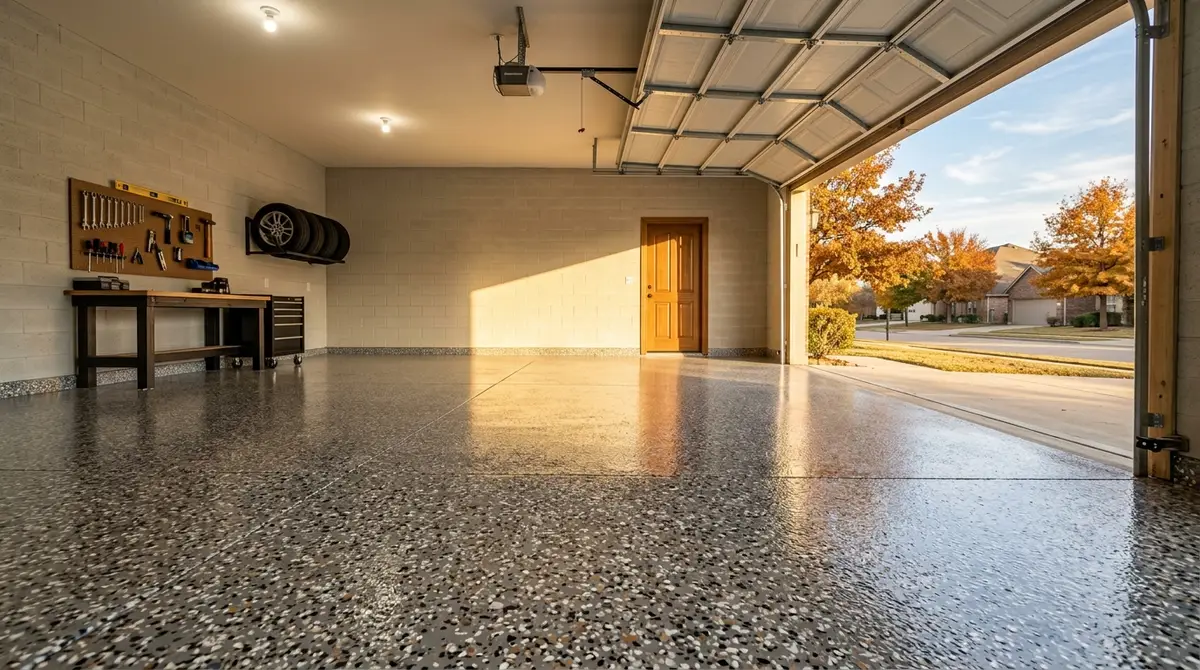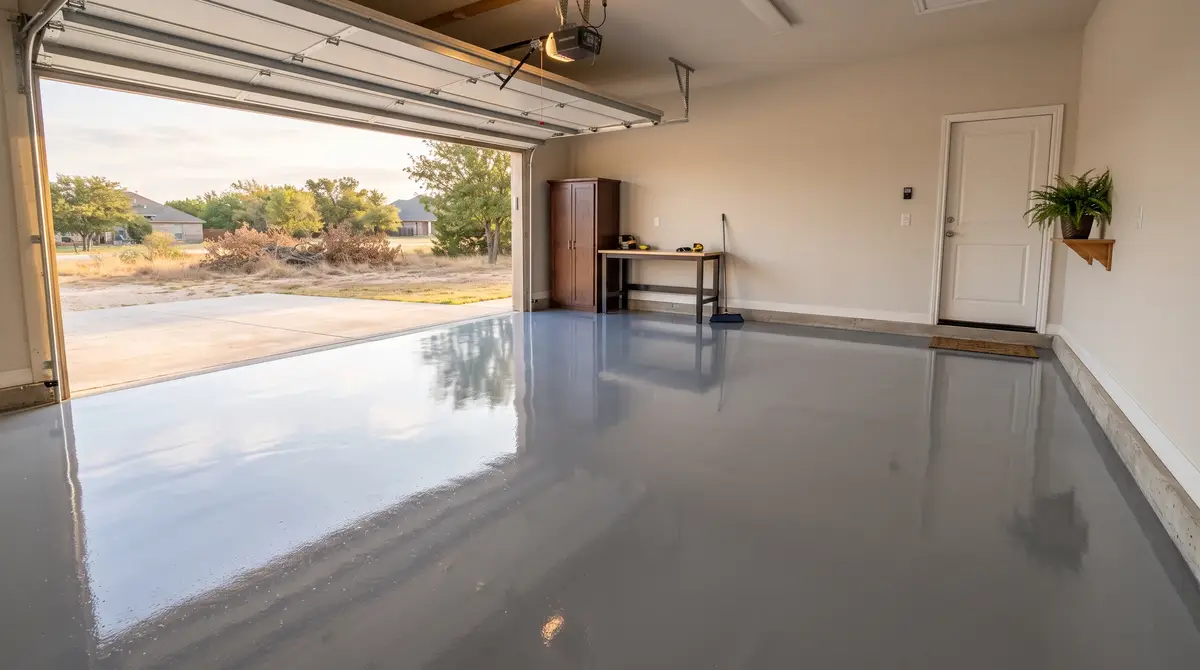
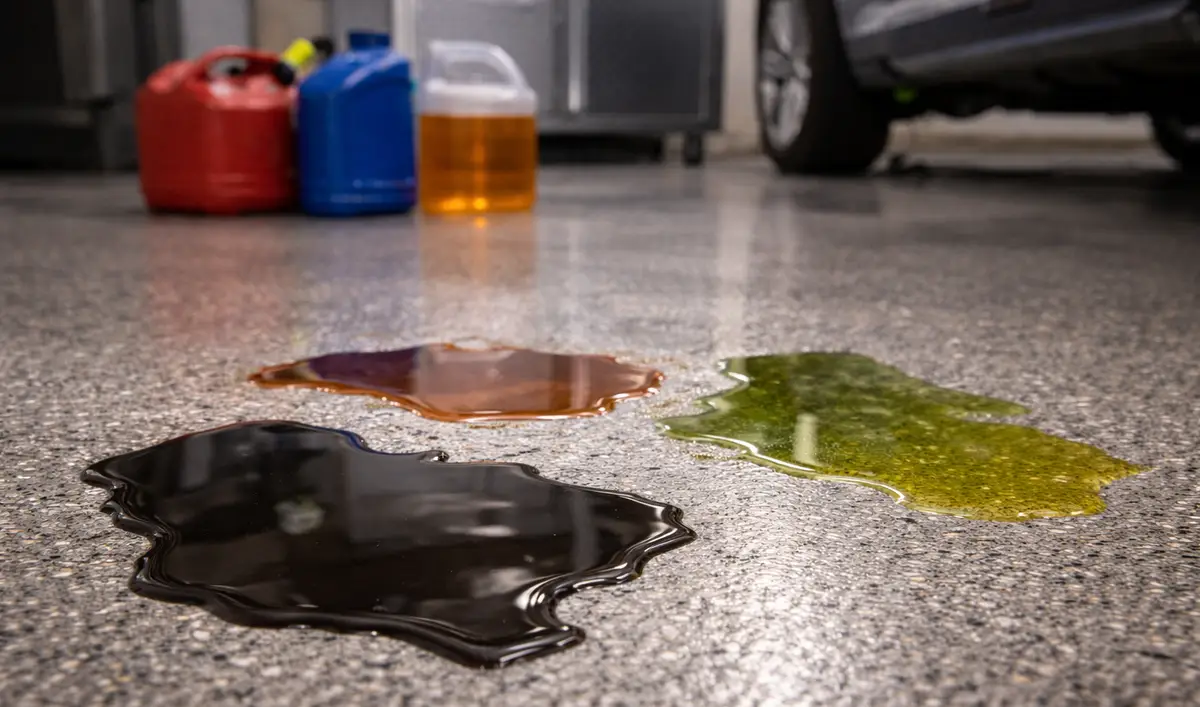
Yes, it can. The brine and ice melt that drip off your tires after a drive on pretreated North Texas roads carry chloride salts, and research from highway agencies shows those salts, especially calcium chloride and magnesium chloride, break down bare concrete from the inside, usually starting at the joints where meltwater collects. A garage floor with a continuous coating keeps that salty water on the surface, where you can squeegee and rinse it away before it soaks in. Here is what is actually happening to the slab and what to do about it before the first icy week.
Why North Texas Roads Get Brined Before a Freeze
Ahead of winter storms, the TxDOT Fort Worth District pretreats highways, interstates, bridges and overpasses with brine, a salt and water mixture that, in the words of a TxDOT spokesperson, acts like an antifreeze by keeping ice from bonding to the road. The district has nearly 3,500 miles of main lanes to prepare in Tarrant County alone.
That brine does not stay on the highway. Every trip into Fort Worth or across Parker County on a treated road coats your tires and wheel wells, and when you pull into the garage the salty water drips onto the same few spots on the slab, day after day, for as long as the cold snap lasts.
What Chloride Salts Do to a Bare Concrete Garage Floor
The Federal Highway Administration describes a growing problem it calls chemical deicer distress, which has become more common and more severe as road agencies use more calcium chloride and magnesium chloride solutions.
An Iowa DOT guide on concrete joint deterioration explains the two ways salty water damages concrete. First, calcium chloride and magnesium chloride react with cement paste to form calcium oxychloride, an expansive material that cracks the concrete from within. Second, concrete that stays saturated is damaged when it freezes, and salts make that worse by keeping the concrete wet. The guide recommends keeping concrete saturation below approximately 85 percent.
A bare garage slab with brine dripping on it all week is exactly the wet, salty condition that guide describes. North Texas sees fewer hard freezes than Iowa, but the chemical reaction with the cement paste is a separate mechanism from freezing.
Why Salt Damage Starts at Garage Floor Joints and Stays Hidden
On highways, the FHWA notes that deicer damage often first appears as a shadowing at the pavement joints and then progresses into disintegration of the concrete. A garage slab behaves the same way: meltwater runs to the saw cut control joints and cracks, settles there, and keeps those edges wet long after the rest of the floor dries.
The worse news is that some of this damage cannot be seen. Washington State University researchers found that concrete exposed to magnesium chloride lost more strength than concrete exposed to rock salt while showing no typical visible distress. Cores taken from bridge decks treated with magnesium chloride lost as much as 50 percent of their splitting tensile strength, the worst deterioration sat below the surface, and some of those decks had been rated in good condition.
In a garage, the signs to watch for are dark lines along the joints that never seem to dry, a white crust where the tires sit, and joint edges that start to chip or crumble.
Rock Salt vs Magnesium Chloride and Calcium Chloride on Concrete
Not every deicer is equally hard on a garage slab. In a study for the Indiana DOT, Purdue University researchers found that calcium chloride and magnesium chloride solutions caused more deterioration than the other solutions tested, while specimens exposed to sodium chloride (rock salt) showed the least damage. The Iowa DOT guide likewise notes that sodium chloride is not as reactive with cement paste.
Rock salt is not harmless. The WSU research points out that rock salt damage shows up as visible scaling and spalling, which at least makes it easier to spot early. For a homeowner, the practical takeaways are:
- Read the bag. Many ice melt products are labeled as calcium chloride or magnesium chloride. Those are the salts the research links to the most damage.
- Keep deicer off the garage floor. Spread it on the walk or driveway only if you need it, and do not track it inside.
- Treat road brine the same way. You cannot control what is on the highway, so control how long it sits on your slab.
How a Coated Garage Floor Handles Salty Meltwater
Both damage mechanisms in the Iowa DOT guide depend on one thing: salty water getting into the cement paste and staying there. A properly installed epoxy garage floor coating puts a continuous, non-porous layer between the meltwater and the concrete, so brine dripping off a truck sits on top as a puddle instead of soaking into the slab.
The protection is only as good as its coverage. Control joints, cracks and the edge at the garage door are where salty water goes first, so they need to be cleaned out, repaired and sealed during prep rather than coated over. A coated floor also still needs rinsing: brine left to dry into a crust is a bad habit on any surface. The way coatings stand up to other garage fluids is covered in how epoxy floors hold up against chemicals and spills.
Cleaning Salt and Brine Off a Garage Floor After an Icy Week
Whether the slab is bare or coated, the goal is the same: get the salt off before it dries and before it settles into the joints.
- Squeegee meltwater out the door as soon as you can, before the water evaporates and leaves salt behind.
- Rinse with clean water and mop, paying attention to the spots under the wheel wells and along the joints.
- Let the floor dry fully before closing it up, so the joints do not stay wet for days.
- Repeat after each round of driving on treated roads while the cold snap lasts, rather than once at the end of winter.
This routine is much quicker on a sealed surface, since nothing soaks in. More on that in why epoxy flooring is easier to clean than bare concrete.
When a Winter of Road Salt Means the Garage Slab Needs Repair Before Coating
If the slab already shows flaking at the surface, crumbling joint edges or patches that feel soft or powdery, that concrete needs to be ground and repaired before any coating goes down. A coating bonds to sound concrete, not to a layer that is already breaking apart. The checklist in your garage slab has to qualify for epoxy walks through what to look for.
If the floor is still in good shape, the best time to protect it is before the brine trucks roll for the first freeze. NES Flooring coats garage floors for homeowners in Weatherford, Aledo, Granbury, Springtown, Fort Worth and across Parker County. Contact NES Flooring to have your slab and its joints looked at, and get a clear answer on whether it is ready for a garage floor coating this winter.