Most barndominiums in Parker County sit on one large concrete slab that has to do two jobs: a shop bay that takes tractors, trailers and fuel spills, and a living side that has to feel like a finished home. The usual answer is two coating systems on the same slab, a textured flake system in the shop and a smoother, more decorative finish in the living area. The best time to plan both is before the concrete is poured, not after the drywall is up.
Why a Barndominium Slab Ends Up With Two Very Different Floors
A barndominium puts a working building and a house under one roof. The shop bay sees hot tires, trailer jacks, dropped tools, hydraulic fluid and whatever comes off a tractor after a wet day. The living side sees bare feet, dog nails, kitchen spills and a mop. Bare concrete serves neither side well: it stains, it sheds dust, and it is hard to keep clean.
In unincorporated Parker County, the county states that there are no zoning requirements and that it does not issue building permits or certificates of occupancy. That freedom is a big part of why barndominiums are popular outside town limits, but it also means no county inspector is looking at the slab details that decide how a floor coating performs. The owner, the builder and the concrete crew make those calls, so the floor deserves a place in the plan from the start.
The Barndominium Shop Bay: Tractors, Trailers, Hot Tires and Spills
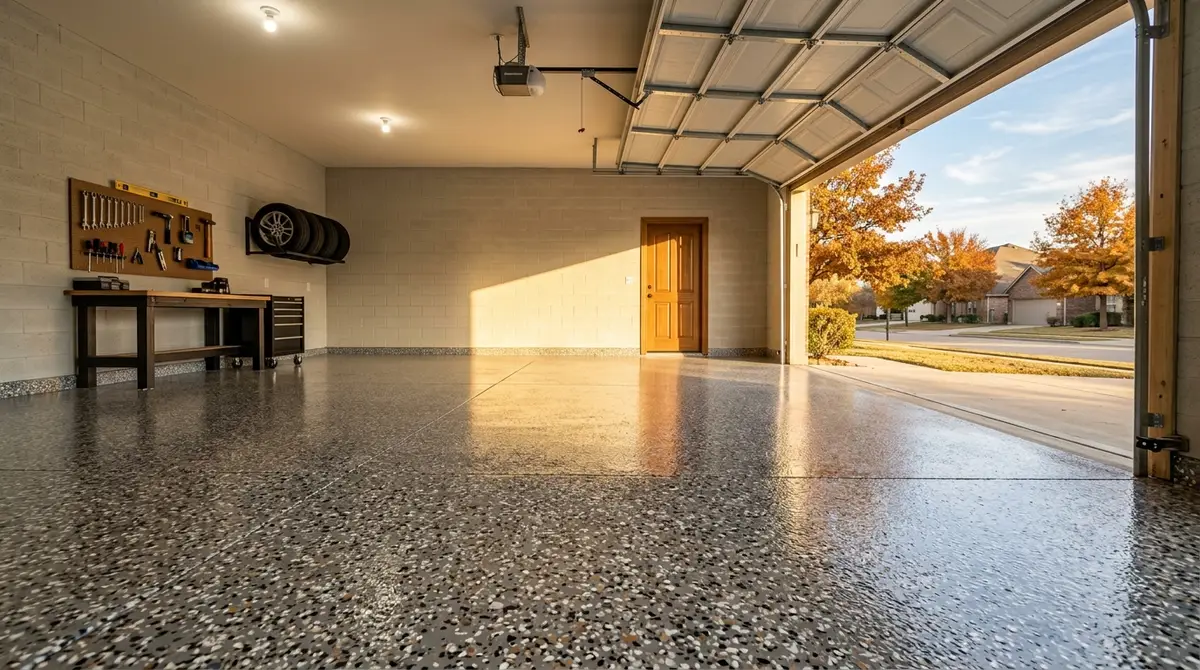
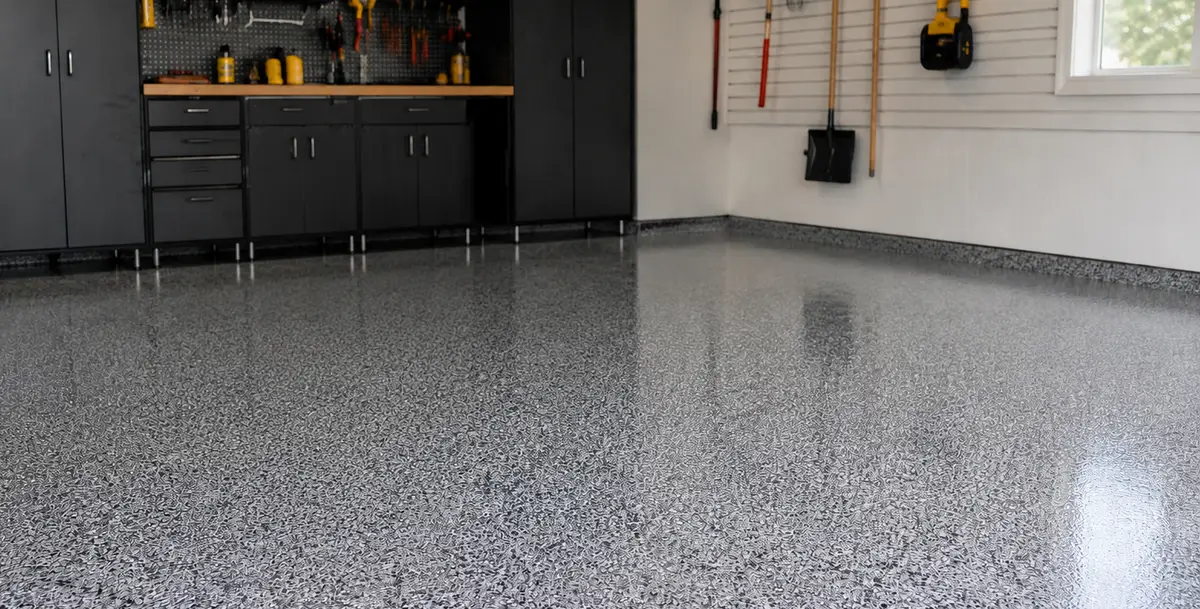
A shop bay floor in a barndominium works like a heavy residential garage or a light commercial shop. A flake epoxy system suits it well: a base coat, a full broadcast of vinyl flake, and a clear topcoat. The flake adds texture for grip when the floor is wet, hides dust and small scuffs between cleanings, and gives the topcoat something to protect.
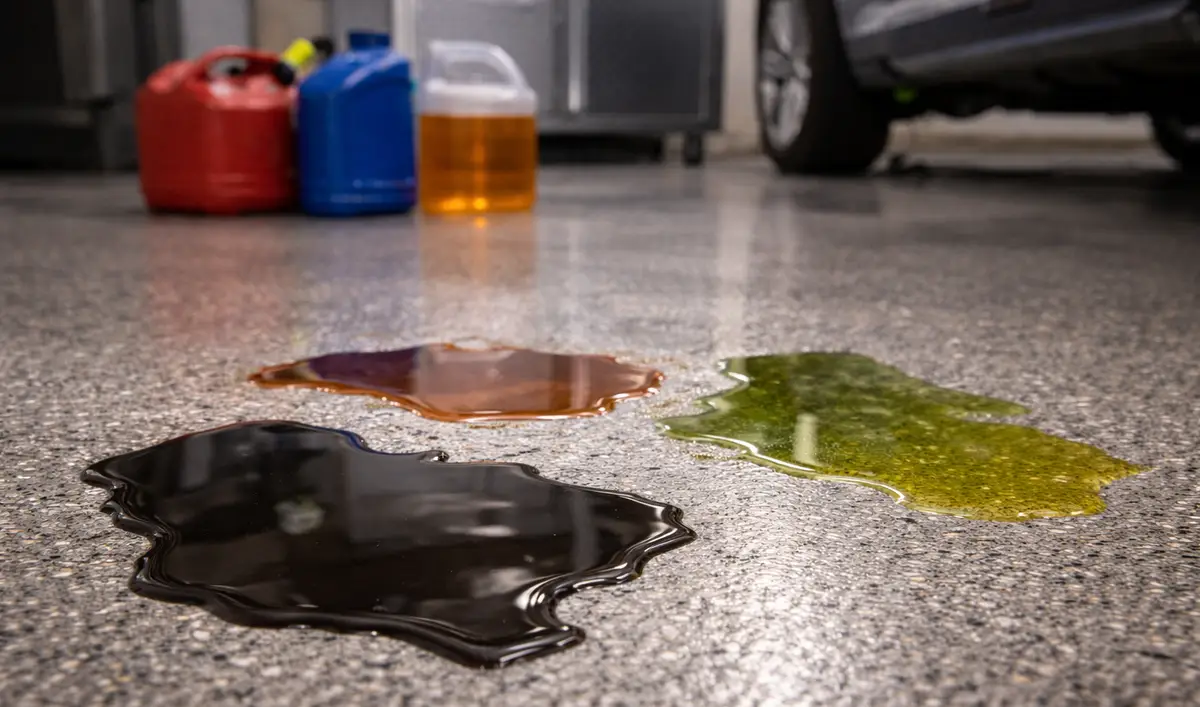
When you compare systems for the shop side, ask what the topcoat resists, and name the things you will actually spill: diesel, gasoline, hydraulic fluid, brake fluid, fertilizer and lawn chemicals. Ask how the floor handles hot tire pickup, since a truck parked after a summer drive is one of the harder tests a garage coating faces. For jack stands, trailer tongues and equipment with steel feet, plan on pads or plates under the contact points rather than expecting any coating to take point loads forever. Our garage floor page covers the residential side of this, and the shop and facility coatings page covers heavier shop use.
The Barndominium Living Side: Comfort, Cleaning and a Finished Look
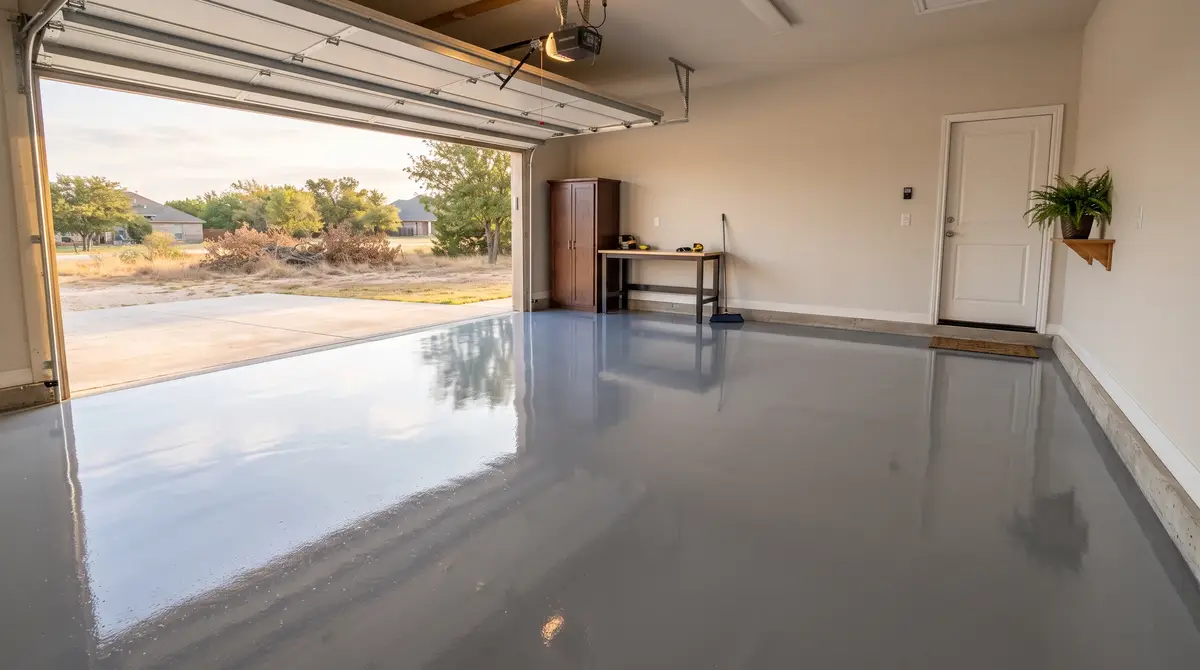
The living side of a barndominium needs a floor that looks like it belongs in a house. Coated concrete there is seamless, so there are no grout lines or board edges to trap dirt, and a damp mop handles most cleaning. A solid color finish or a tighter, smoother flake blend reads as an interior floor rather than a garage, and a satin topcoat cuts glare in rooms with big windows.
Coated concrete is hard and stays cool, which many Texas owners like in summer. In bedrooms and living rooms, area rugs add softness and warmth where people stand or sit for long stretches. For a smooth interior finish, ask about a slip-resistant additive in the topcoat for kitchens, entries and bathrooms, where water lands on the floor.
Many owners choose one color family for both sides so the change from shop to living space looks intentional. The natural place for the change is the wall or door between the two areas. Our indoor epoxy floors page shows the finishes made for living spaces.
When to Coat a Barndominium Floor, and What to Tell Your Concrete Crew
The coating decision starts before the pour, because a few choices made by the concrete crew decide how easy the slab is to coat later.
- Curing compounds and sealers. Ask the coating installer before the concrete crew sprays a curing compound or sealer on areas that will be coated. Some of these products have to be ground off before a coating will bond, which adds work and cost.
- Cure time. New concrete has to cure before it is coated. Rust-Oleum, for example, tells users to allow newly poured concrete to cure for a minimum of 28 days before coating. Professional systems follow their own manufacturer's data sheet, so ask your installer which one applies.
- Living side timing. The living side is usually coated after the messy trades (drywall, texture and paint) and before baseboards and trim go on, so the coating runs to the wall and the trim covers the edge. Settle with your builder whether cabinets and a kitchen island go in before or after the coating, because that choice changes how the edges are finished.
- Shop side timing. Coat the shop bay before it fills with equipment, shelving and workbenches. Moving a full shop out later is the part most owners would rather skip.
- Protect the slab during the build. Trades drop paint, mud, adhesives and fuel. Ask the builder to keep the slab covered where heavy work happens, since stains and gouges all have to be dealt with during prep.
Moisture, Slab Cracks and Control Joints in a Large Barndominium Slab
Vapor retarder. Moisture moving up through a slab is one of the main reasons coatings lift. A Concrete International Q&A from the American Concrete Institute notes that when a project has a vapor-sensitive floor covering, a vapor barrier is required, and that ACI's guidance for that case points to a barrier in direct contact with the slab. A coated living area is exactly that kind of finish. Before the pour, ask whether a vapor retarder goes under the whole slab, including the shop bay, and ask the crew to tape the seams and avoid tearing it while they work.
Moisture check before coating. A simple first check is to tape a sheet of plastic to the bare concrete and leave it for 24 hours. Rust-Oleum's instructions say that droplets under the plastic or concrete that looks darker mean moisture is trapped in the slab. A professional installer may test more precisely, and our post on hidden moisture problems explains why the test matters.
Control joints. A large open barndominium slab gets saw-cut control joints so the concrete cracks along planned lines instead of at random. A coating does not stop concrete from moving, so the installer should tell you whether each joint will be filled and coated over or kept open through the coating. Ask the concrete crew to place a joint at the wall line between the shop and the living side if the layout allows it, where it is easier to hide.
Cracks. Hairline cracks are common in new slabs and are repaired during prep. Cracks that keep moving can show back through any coating, which is worth knowing before you choose a smooth solid color for the living side, where a crack shows more than it does under flake.
What to Ask Before You Choose a Finish for Each Side of a Barndominium
- Which system do you recommend for the shop bay, and which for the living side, and why are they different?
- What chemicals is the shop topcoat rated to resist, and how does it handle hot tires?
- Is the living side finish slip resistant when wet, and in which rooms would you add more texture?
- How long does the coating maker require new concrete to cure, and how will you check moisture before you start?
- Will curing compounds or sealers on the slab need to be ground off?
- How will you treat control joints and cracks on each side?
- Where will the change from the shop finish to the living finish happen, and how will that edge look?
- At what point in the build do you want to coat each side, and what do you need from the builder first?
NES Flooring installs flake and solid color coating systems for garages, shops and indoor floors across Parker County, including Weatherford, Springtown, Aledo and Granbury. If you are planning a barndominium, the earlier the floor comes into the conversation, the more options you keep. See our indoor epoxy floors for the living side, then contact NES Flooring to talk through both sides of your slab and get a written quote.