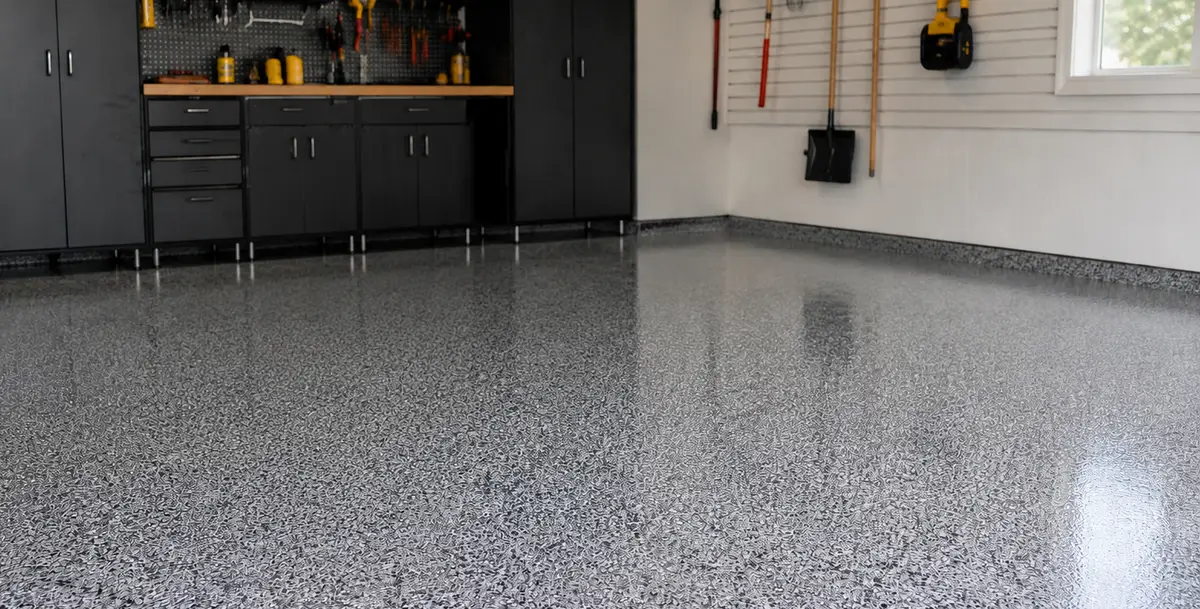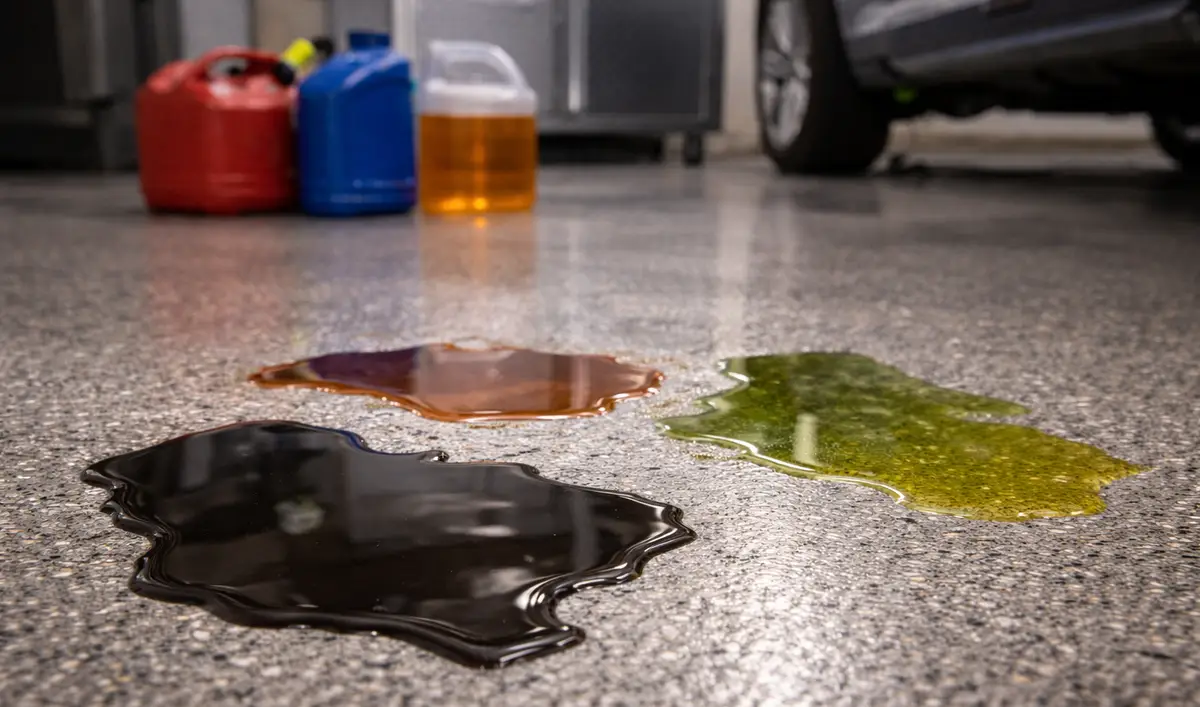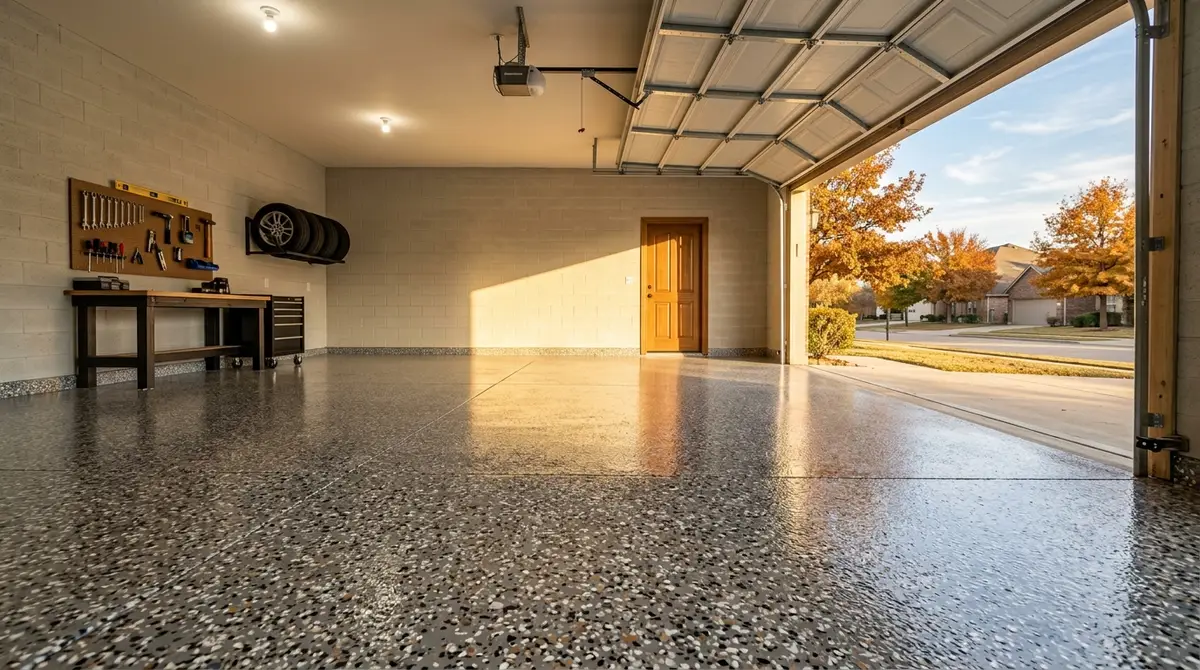
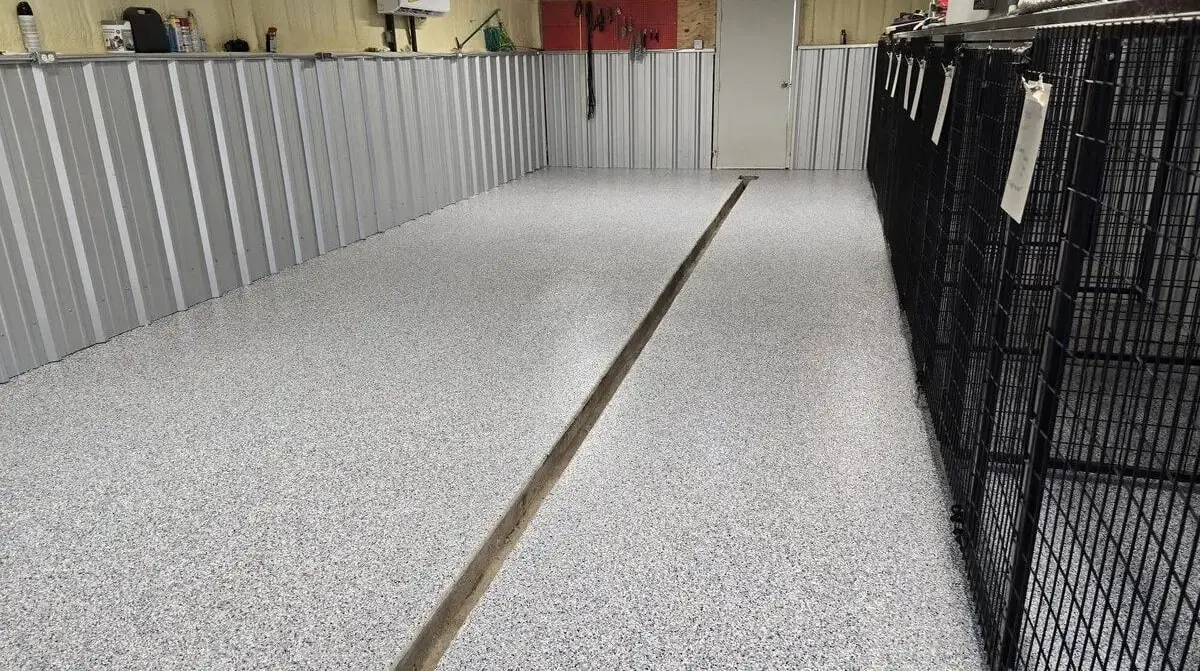
The floor coating that holds up best in a dog kennel or boarding facility is a seamless, nonporous resin system (epoxy or urethane cement) that runs up the wall as an integral cove, has a fine slip-resistant texture, and is rated for the disinfectants your staff actually uses. Bare or lightly sealed concrete soaks up urine and wash water, which is why the smell keeps coming back. If you want that floor in place before Thanksgiving and Christmas boarding, the install and the full cure have to fit in the quieter weeks you have right now, so early November is the time to plan it.
Why bare concrete in a kennel keeps smelling no matter how often you hose it
Concrete is porous. Urine, wash water and disinfectant soak into the surface of a kennel floor instead of running off, and what soaks in cannot be scrubbed out from the top. Hosing a bare concrete run rinses the surface while the slab underneath stays loaded, which is why a kennel can smell clean while it is wet and sour again once it dries.
Federal Animal Welfare Act rules for licensed dog facilities require that the floors and walls of indoor housing, and any other surfaces in contact with the animals, be impervious to moisture. Texas rules for sheltered housing facilities for dogs and cats say the same about floor areas, walls and other surfaces the animals touch. Even if a boarding business is not covered by those rules, they describe the standard a kennel floor has to meet to be cleaned properly. Shelter veterinarians point the same way: the ASPCA facility design checklist, built on the Association of Shelter Veterinarians guidelines, recommends sealed, nonporous flooring such as epoxy or urethane, with floors gently sloped toward drains.
What urine, bleach and hot water washdowns do to the wrong coating
A kennel floor gets more chemical exposure in a month than most garage floors see in years. Urine sits on it overnight, and disinfectant goes down every day. The Merck Veterinary Manual's shelter cleaning guidance uses a 1:32 bleach dilution for bacteria, parvovirus and respiratory viruses, a 1:10 dilution for ringworm, and a 10-minute wet contact time. So the kennel floor coating sits under bleach daily, gets rinsed, and has to dry completely before dogs go back in.
Thin single-coat products and paint-on sealers are the usual weak point in that setting. Once the film wears through or lifts at a crack, urine and wash water get underneath it, the edge keeps peeling, and the bare concrete starts holding odor again. A kennel floor needs a commercial resin system chosen for that exposure. Give the installer the product names and dilutions your staff uses and ask which of them the topcoat is rated for. Sherwin-Williams, for example, builds its kennel flooring around impermeable surfaces that help minimize odor, with stain, scratch and odor resistant finishes, and its urethane cement cove base is made to resist hot water and impact, which matters where floors are washed hot. For how coatings handle chemicals in general, see how epoxy floors hold up against chemicals and spills.
Seamless coving up the wall and why the edges matter most
In a kennel, the floor coating usually fails at the edges first. The joint where the floor meets the wall, the base of each run divider and the lip around each floor drain are where urine pools, where the hose is aimed and where hair and debris collect. A coating that stops flat at the wall leaves a seam that traps waste and lets liquid get behind the coating.
Integral coving fixes that by carrying the floor coating up the wall in a curved, continuous base, so there is no corner for waste to sit in and no seam for water to get behind. The ASPCA checklist calls for wall-to-floor joints sealed against water and organic buildup, and Sherwin-Williams lists integral cove base options and floors that slope toward trenches or drains as part of its kennel systems. When you compare quotes for a kennel floor, ask whether coving is included, how high it runs up the wall, and how the coating is finished at every drain and at the base of every run gate.
Texture: grip for paws without trapping dirt
A wet, smooth coating is slick, and a dog that slips on a hard floor can get hurt. Too much texture causes the opposite problem: deep grit holds hair, dried waste and disinfectant residue, and every washdown takes longer. Water that lingers also matters for the dogs themselves: the Merck guidance notes that dogs returned to wet enclosures may develop sores on or between their footpads, so a kennel floor has to shed water and dry fast.
The usual answer for a kennel floor is a fine, even texture: enough grip for paws and staff boots when the floor is wet, and smooth enough to squeegee clean. Resin systems let the installer set that level, and Sherwin-Williams describes customized levels of slip-resistance, installed per facility needs for kennels. Ask to see and feel a sample of the finish before the job starts, wet if possible, and decide the texture for the runs and for the walkways separately if they see different traffic.
Fitting the install between boarding seasons
Thanksgiving and Christmas are peak boarding weeks, so a kennel or boarding facility that wants a coated floor needs the work done in the quieter stretch before that rush, not during it. A kennel floor coating that is still curing when holiday dogs arrive gets bleach and hot water before it is ready, which is one of the most common ways a new coating fails early. Cooler November slabs also slow the cure, so the schedule needs some slack.
Cure time and return to service depend on the system, the product and the slab temperature, so get the installer's answers in writing: when staff can walk on the floor, when carts can roll on it, and when it can take full chemical cleaning and dogs. Sherwin-Williams advertises extra quick turnaround systems for kennels, which can make a phased install possible, with one block of runs coated while dogs stay in another. For more on planning around the cure, see how long before you can use a floor after installation and how facility downtime factors into flooring decisions.
What to have ready before a crew arrives
- Your cleaning products. A list of every cleaner and disinfectant your staff uses, with the dilutions, so the topcoat can be matched to them.
- A plan for the dogs. Which runs empty first, where those dogs stay during the work, and when each section goes back into use.
- A simple floor plan. Drains, run dividers, gates and anything bolted to the floor, marked for removal or for coating around.
- Problem spots. Cracks, places where water stands, the areas that smell worst, and any earlier coating that peeled. Odor that has soaked deep into the slab and moisture coming up through it both have to be dealt with during prep, before any coating goes down.
- Your holiday booking dates. So the install and cure can be scheduled backward from the first busy week.
Getting a kennel floor coated in Parker County before holiday boarding
NES Flooring installs commercial floor coatings for shops, gyms, showrooms and kennels across Parker County and the west side of DFW. If your kennel or boarding facility smells no matter how often it is hosed, or an old coating is peeling at the walls and drains, contact NES Flooring for an on-site look at the concrete and a written quote, and ask about fitting the work in before holiday boarding starts.